

How organic pig breeder setup benefits business performance
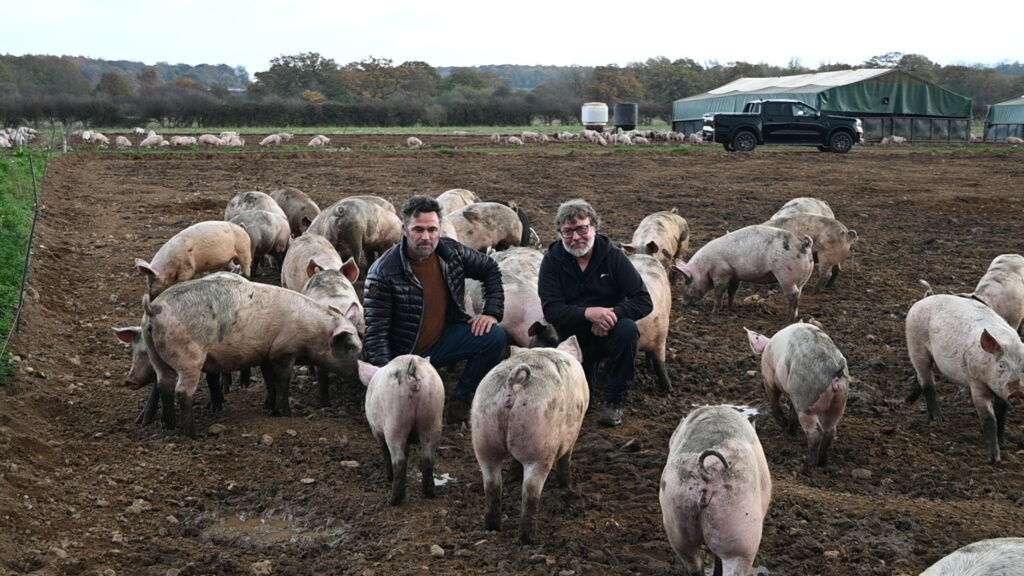 Guy King and Dave Lake © Guy King
 Producer Guy King has doubled sow numbers from 500 to 1,000, and the 2023 Farmers Weekly Pig Farmer of the Year is now selling 350-400 finished pigs a week from his breeding and finishing enterprise in Norfolk.
There are narrow margins for error in organic pig production – but meeting this challenge is what motivates Guy.
See also: Farmers Weekly Awards 2023: Pig Farmer of the Year
Farm facts
- Six conventional outdoor breeding herds
- 1,000-sow organic breeding herd run by GSK Pigs in partnership with the Organic Pig Company, which markets the pigs
- Finishing unit run in partnership with Green Lane Organic
- Organic pork sold mainly through Waitrose, plus independent butchers, pubs and restaurants
Great attention to detail is required at every stage of organic production, from managing pig health to selecting sale pigs at exactly the right weight.
“The organic business is the most enjoyable to manage because it’s challenging,” says Guy. “The rewards are really worth it, when you get it right.”
His business, GSK Pigs, also encompasses six conventional outdoor breeding herds, rearing weaned piglets for BQP.
He says many of the lessons learned in the organic herd have also been valuable on the conventionally managed units.
Breeding herd
The organic breeding herd is run on a three-week batch system, with piglets weaned at seven weeks old.
“We breed all our own replacement breeding stock from grandparent animals within the total 1,000 sows,” Guy explains.
This is to minimise biosecurity risk and to ensure all animals have organic status from birth.
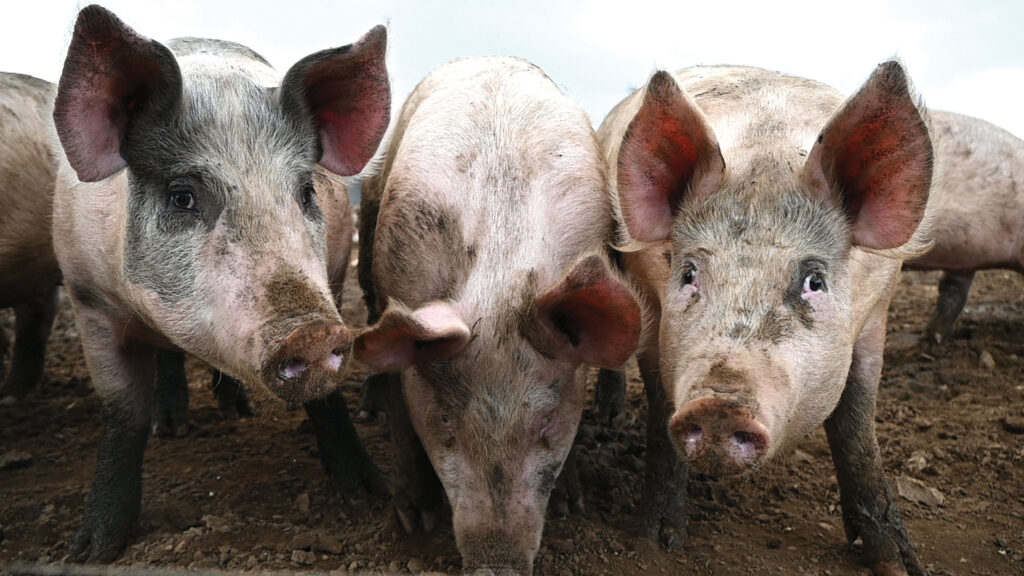
Grandparent sows are mated with PIC’s 1075 white duroc male, and parent animals are mated with the 327 Hampshire boar, to produce the commercial sale pig.
© Guy King
There are five breeding herd staff: the unit manager, three stockpeople, and a fieldsperson who ensures that the breeding and finishing teams are communicating with each other.
They are working towards a target of 21 pigs weaned a sow a year. This equates to a target 1,400 piglets weaned every three weeks, at an average weaning weight of 15kg at a minimum 42 days old.
The current average is 19.57 weaned a sow a year and 1,200 piglets weaned every three weeks at 12.5kg.
However, performance was exceeding target until last year when Guy bought a second 500-sow organic herd to complement the 500-sow herd he established in 2012.
© Guy King
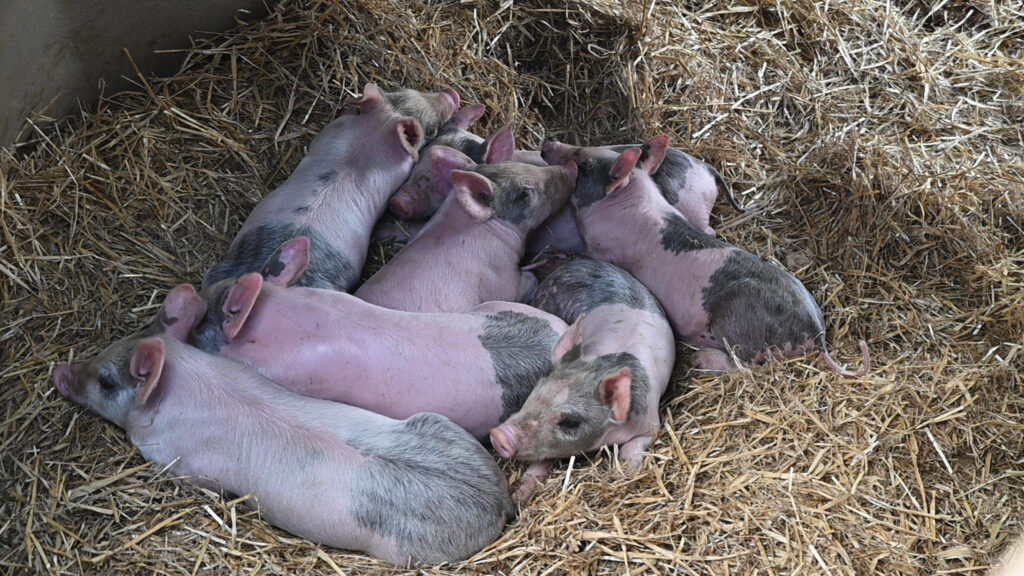
“Before the herd merger, we were achieving 21 pigs a sow a year at an average 16kg weaned.
“Performance dipped partly because it has taken time to adapt to managing a larger herd, and it’s been difficult achieving heavier weaning weights over the hot summer,” he explains.
Figures are now moving up again, aided by substantial investment in new plastic farrowing arks, which help regulate temperature and improve sow welfare.
“We’ve only been using them for a month or so and piglet mortality is already going down and performance is improving,” he says.
Role in arable rotation
The breeding herd is kept on 49ha (120 acres) of rented ground on a fully organic estate, moving once a year, and plays a vital role within a seven-year crop rotation.
The pigs eat volunteer potatoes and carrots and the roots of noxious weeds, while fertilising the land with manure.
Pigs are always moved on to green cover and ground is pre-sown with organic pink clover, rather than specific pig grass seed mixes, which are not organic.
Finishing herd
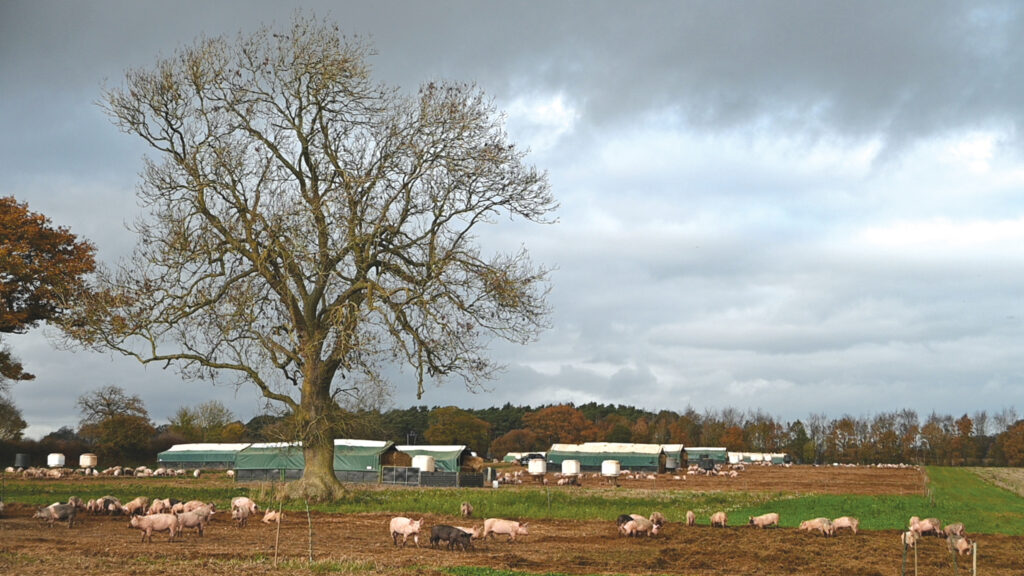
The finishing unit is two miles away on 61ha (150 acres) on the same estate, with 1,200 to 1,400 weaned pigs arriving from the breeding herd every three weeks.
These are looked after by four staff members. Piglets are sized, split-sexed and vaccinated on arrival and housed in tented accommodation.
Three weeks after weaning, they are given access to open grass paddocks alongside the tents, up until finishing, at around 23 weeks old.
Finishing tents are never used twice in succession, and are moved to a new block of land after every group of pigs, as part of a strict cleanliness and biosecurity policy.
Manure is moved and spread across the estate. Most of the straw comes from the estate, with more accessed from other local farms if needed.
Straw used for bedding does not need to be organic, however, clean straw is preferred, to avoid introduction of weeds.
Market requirements
Target finished liveweight is 115kg, with a carcass weight range of 85kg to 105kg and a 16mm probe, as customers require a good amount of back fat.
“We weigh every pig before it goes,” says Guy.
“It’s vital they go at the exact weight to hit the organic market requirements, as there are significant financial penalties for any overweight pigs.
“As long as you hit the Q box, an organic pig brings in a margin of up to 10% higher than on our conventional systems,” he adds.
Pigs are transported on a trailer to a handling system where they pass over an electronic scale and a stockperson operates an exit gate to select pigs.
A team of two or three people can weigh up to 230 pigs a day to achieve 175 pigs of sale weight.
“Supply and demand in the organic pork market is very tight.
“So it’s really important that we’re talking with customers regularly, looking at forecasting and adjusting sow service targets so that the right numbers are coming through to meet seasonal demand,” says Guy.
“Nothing is 100% certain, but the market feels secure at the moment.”
Adapting to challenges
Feed quality and cost are two key challenges, as the quality of organic grains is generally much poorer than conventional, and they are more expensive.
Organic, 3mm pelleted feed rations are bought in for both units.
Maintaining sow condition ready for weaning and service can be difficult because of fluctuating feed quality.
To help tackle this, farrow feeders have been introduced for lactating sows in place of ground feeding. These are now successfully used on all the conventional units too.
© Guy King
“At service, we can’t use heat synchronisation products in the organic herd, so we really rely on the stockperson’s heat identification, artificial insemination skills and ability to read the sows.
“I’d say the organic system requires an even higher level of husbandry than our conventional system – it’s not as forgiving.”
Vaccines are used but antibiotics can only be administered if really necessary.
“We go out of our way on both the units to ensure the unit, feed and water are always clean. We avoid mixing sows or anything else that causes stress.”
A scoop of creep feed is now provided inside the farrowing huts when piglets are three weeks old, to start getting them used to creep before they go outside, when they have constant access to feed and water.
This has boosted piglets’ early gut development and increased sale weights by an average 2kg a head across all farms, conventional and organic.
The numbers
19.57 Pigs weaned a sow a year (targeting 21)
42 Minimum weaning age (days)
1,200 Piglets weaned every three weeks (targeting 1,400)
350-400 Finished pigs sold weekly (on average)
+10% Margin for organic pork over conventional system