

Advice on protecting flocks from Newcastle disease virus
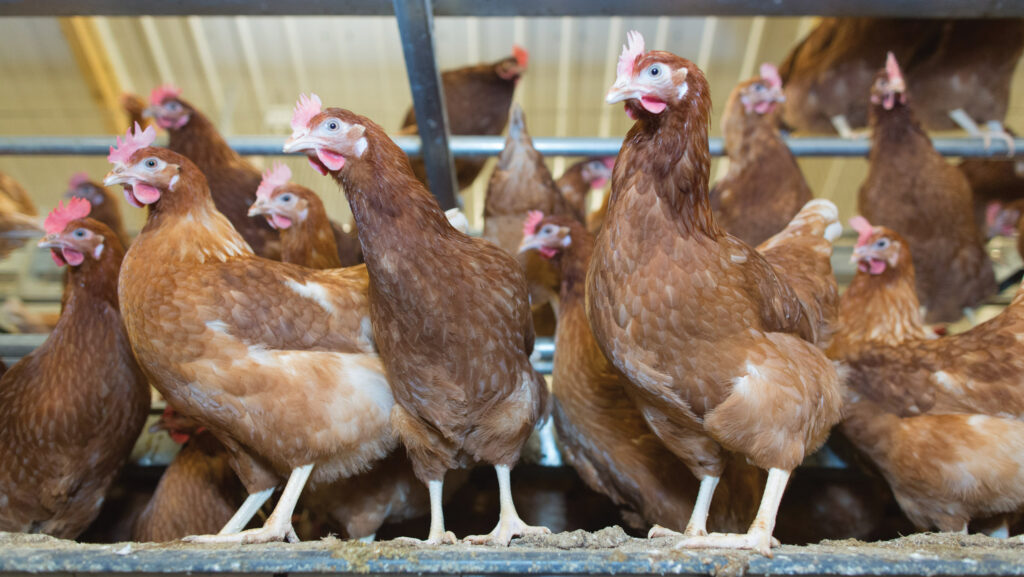 © Tim Scrivener
 It was in 2006 when Great Britain last had an outbreak of Newcastle disease.
With cases now confirmed in western Europe, it is possible that this highly contagious avian virus could return.
The UK’s commercial laying and breeding flocks are routinely vaccinated for Newcastle disease virus (NDV).
See also: Tips on ensuring poultry biosecurity measures are effective
Notifiable disease
Newcastle disease is a notifiable animal disease.
If an outbreak is suspected, it must be reported immediately by calling the Defra Rural Services Helpline on 03000 200 301.
In Wales, contact 0300 303 8268.
In Scotland, contact your local Field Services Office.
Failure to do so is an offence.
However, the historical challenge level has not warranted vaccination in broilers.
The virus now circulating is a different genotype from the classic strains against which the current UK-licensed vaccines protect.
This means that vaccination may not completely protect birds should NDV genotype 7 arrive here.
Planning for an outbreak
Poultry vet Daniel Parker points out “there is protection but not as solid as it is for the classical strains, genotypes 1 and 2”.
He says vaccination is likely to reduce high mortality rates, but it may not completely stop birds from becoming infected and shedding the virus.
“If a bird is a silent shedder, then virus could be unwittingly moved around and the chances of that happening are even greater if biosecurity is poor,” he adds.
It is impossible to predict if the virus will arrive in the UK, says Daniel, and while the threat is not yet at “panic-stations level”, the industry must “be aware, be ready, and be prepared”.
“There is no evidence the virus is in the UK, but if we did get an incursion, decisions would need to be made on whether the industry should start vaccinating broilers.
“It is sensible for producers to start having those discussions with their vets now and to keep their vaccination policy under review.”
Symptoms of infection will depend on poultry type and vaccination status.
However, both classical NDV and genotype 7 will result in high mortality and egg production drops in unvaccinated birds.
“We need to be taking this disease risk seriously, not just look upon it as being another respiratory disease,’’ Daniel advises.
Likely risks
One route for disease incursion to the UK is migratory birds, but that risk is likely to be greater in autumn and winter when birds migrate from continental Europe.
“The bird migratory aspect is unlikely to impact us until later in the year, and the risk of those birds carrying disease will depend on the extent of the disease challenge in Europe at that time,’’ says Daniel.
“What is more difficult to risk assess is the impact of movement of people and equipment – with higher movements of farm staff and equipment comes a higher risk of disease introduction.’’
While individual producers cannot stop NDV entering the UK, there are actions they can take to protect their flocks.
Daniel offers advice on some of those measures.
Biosecurity
Most viral diseases in poultry are spread between flocks by either people or equipment.
While many farmers have disinfectant boot dips on entry to houses, to prevent spread on footwear, a boot barrier system will provide a more effective disease barrier.
Every staff member should have a pair of boots to wear inside the house and another for outside.
Footwear should be changed at the barrier, and house boots should never leave the poultry house.
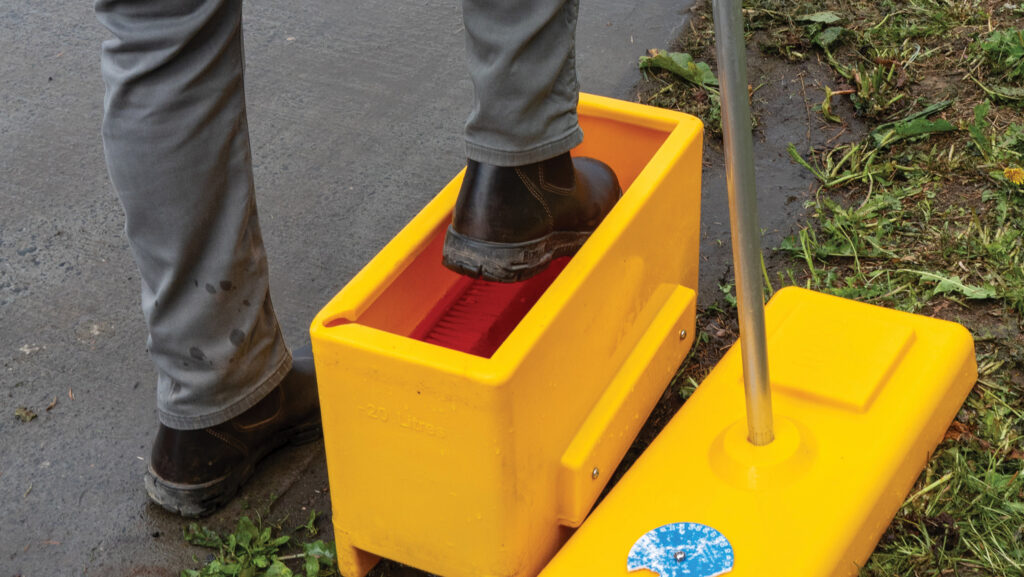
Disinfecting footwear outside poultry shed © Angus Findlay
Dedicated overalls provided in the entry service room for each house provide an additional biosecurity barrier.
The same principles must be applied to equipment going into the houses, to ensure there is no risk that anything going in will be carrying material that could harbour the disease.
Numbers of visitors should be limited to staff and others that have an absolute requirement to be there, such as the farm vet.
Some of the recent outbreaks in Poland and Germany have been linked to the sharing of catching crews, where biosecurity between their movements has been poor.
This highlights how seriously these factors need to be taken.
NDV is more resistant to disinfection than avian influenza, so it will survive for longer in the environment.
“It is a more robust virus so we must be more efficient with cleansing and disinfection,” says Daniel.
Rodent controls
Rodents are known to carry various pathogens into houses.
A strict rodent control policy – which every poultry business should have anyway – will minimise that risk.
Wild bird deterrents
Epidemiological investigations into the spread of this virus have yet to be concluded.
However, like avian influenza, NDV can be spread by wild birds.
Recent surveys in Egypt, for example, where the virus has been circulating for a while, have identified them as a source of infection.
Houses should be secured to prevent wild birds from entering, and they should be discouraged in the environment with devices such as bird scarers to keep them away from ranges.
Vaccination
Vaccine companies are working on developing vaccines that will be more effective against NDV genotype 7.
In the meantime, the classical strain vaccines offer a level of defence, but they will not offer complete protection.
If a flock is vaccinated, there generally needs to be a higher dose of the virus entering the shed to establish an infection than would be the case if there was no vaccination.
When developing a vaccination programme, a risk-benefit assessment needs to be made.
“My recommendation is to ensure you have a robust vaccination programme for longer-lived birds [breeders and layers], and to monitor the antibody response to ensure they have good antibody titres against Newcastle disease,” says Daniel.
“We have not reached a point where we need to vaccinate broilers, but we need to be preparing for that eventuality should there be an outbreak, to reduce the risk of it being spread across the country.”
Vaccination protocols
It is imperative that vaccines are stored and administered correctly so they are of maximum effectiveness.
To give birds the best opportunity to respond to the vaccine, they should be healthy when vaccinated.
In breeding stock and layers, the combination of live vaccine priming and an inactivated vaccine before the onset of lay will provide the most robust protection.
Close monitoring of birds
Farmers should monitor the immune response to vaccines to ensure birds are well protected.
Regular assessments of antibody levels through the life of the flock can provide reassurance that the birds have mounted a good immune response to the vaccine programme.
“Discuss the monitoring programme with your veterinary surgeon, specifically the frequency and number of samples to be taken to adequately monitor the ongoing protective levels of antibodies in the flock,” Daniel advises.