

How free-range egg diversification solved labour dilemma
 © Tim Scrivener
 Labour is one of the biggest costs associated with running a business and can be a barrier to farmers becoming employers.
For Aberdeenshire farmer Bruce Irvine, it was integrating a 32,000-bird free-range egg unit into his existing setup that allowed him to take on two full-timers and share that extra labour and cost across his arable, beef and sheep businesses.
See also: How a free-range egg producer is achieving an 86-week lay
Bruce farms at Sauchentree Farm, New Aberdour, in partnership with his wife, Vicky, and mother, Aileen.
Until 2025, apart from student placements during lambing and other busy periods, the Irvines farmed with family labour only.
Farm facts: Sauchentree Farm, New Aberdour, Aberdeenshire
- 263ha farmed
- 400 Highlander and Texel ewes lambing from 1 April
- 110 Stabiliser cattle
- Lambs and finished bulls sold to Morrisons, Turriff
- Heifers marketed as replacements and stores
- Barley grown to finish bulls and lambs, with surplus sold into the livestock feed market
- Silage making, plus drilling and harvesting of arable crops outsourced to contractors
Labour demand
Three years ago, after his father, Wilson, suffered a stroke, a rethink was needed on labour requirements.
Bruce had already been contemplating diversifying into free-range egg production to generate additional farm income.
After a conversation with Iain Chapman, of Aberdeenshire egg producer Farmlay Eggs, he saw its potential for solving labour challenges too.
Without that diversification, adding to cost of production by taking on staff would have been financially tricky, he says.
In 2025, with the new poultry unit in place, he took on two full-time workers, with one based mostly at the poultry unit and the other working across the farm enterprises.
© QMS
The egg business has been operating for less than a year and the improved work-life balance Bruce had hoped for is a work in progress, as the poultry enterprise currently requires his labour input too.
But as the system becomes more established and the routine work takes less time, he believes that benefit can be realised.
“We finish packing the eggs a bit earlier each day and that is starting to open up opportunities to lighten the workload,” he says.
Investment
The Irvines have spent £2.2m to establish the poultry business, an investment projected to pay for itself within seven to nine years.
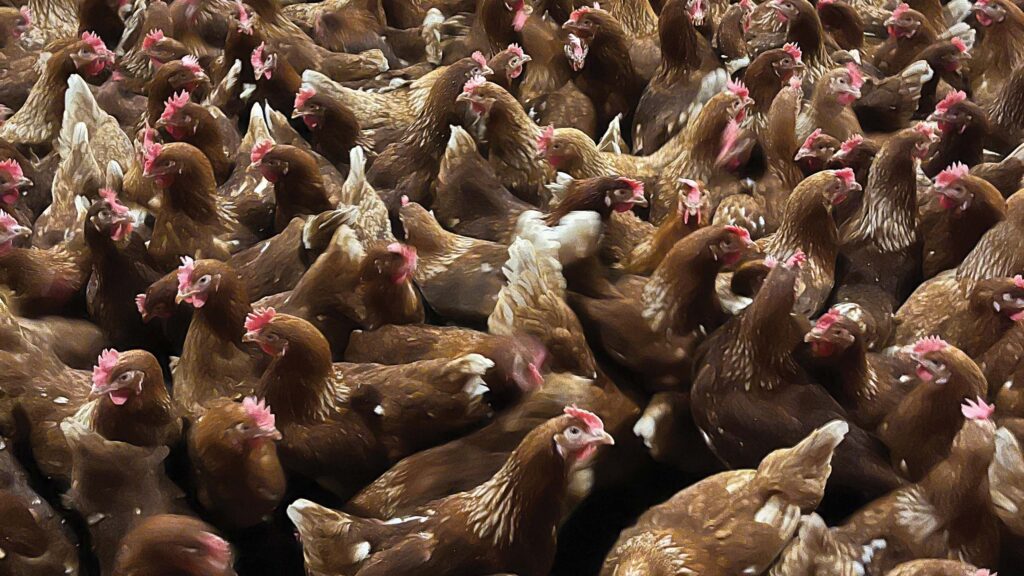
Securing planning permission for the infrastructure – a shed supplied by Morspan Construction, incorporating a Big Dutchman 284 multi-tier system – was relatively straightforward.
Bruce had anticipated the RSPCA’s plan to update regulations applicable to farmers who market their eggs with the RSPCA Assured logo, and installed popholes that would meet enhanced daylight requirements.
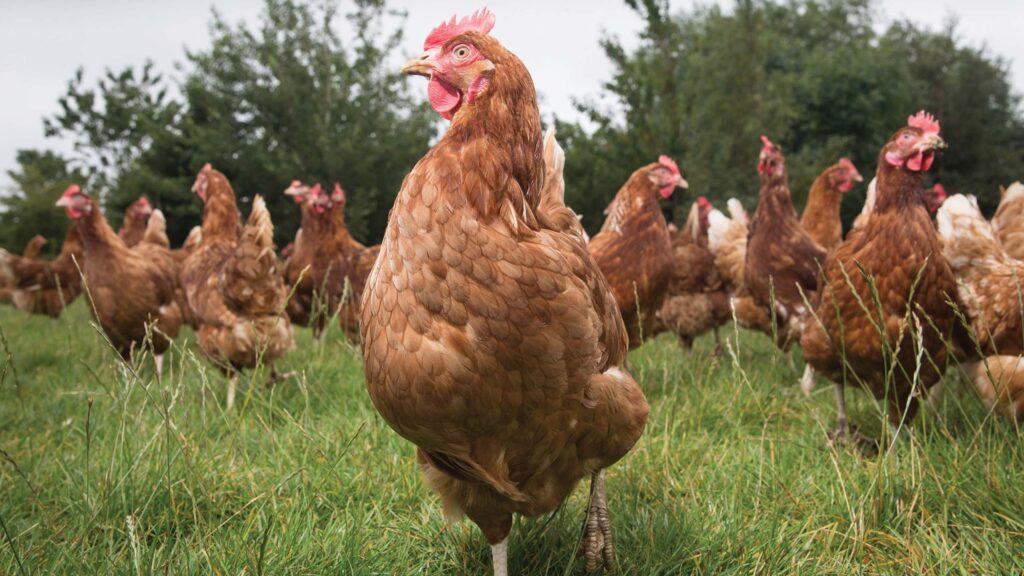
The shed is stocked with Hy-Line Brown Plus hens and eggs are sold to Farmlay Eggs, which also supplies pullets to the Irvines.
As Bruce diversified into poultry from a standing start, he needed to quickly gain knowledge and has been grateful for the support given by existing producers and others involved in the industry.
Advice and support
These included his 16-year-old daughter, Amy, who had a weekend job at Farmlay.
“It was very helpful that she had a fair idea about everything we needed to know,” says Bruce, whose youngest daughter, Robyn, 14, also helps out.
He also spent two days at a Farmlay farm and sought advice on poultry from specialists Doug Steel, of Harbro, and Elwyn Lewis, an adviser at Hy-Line.
“They were fantastic and were on hand when the shed was going up, to make sure we didn’t make any mistakes,” he says.
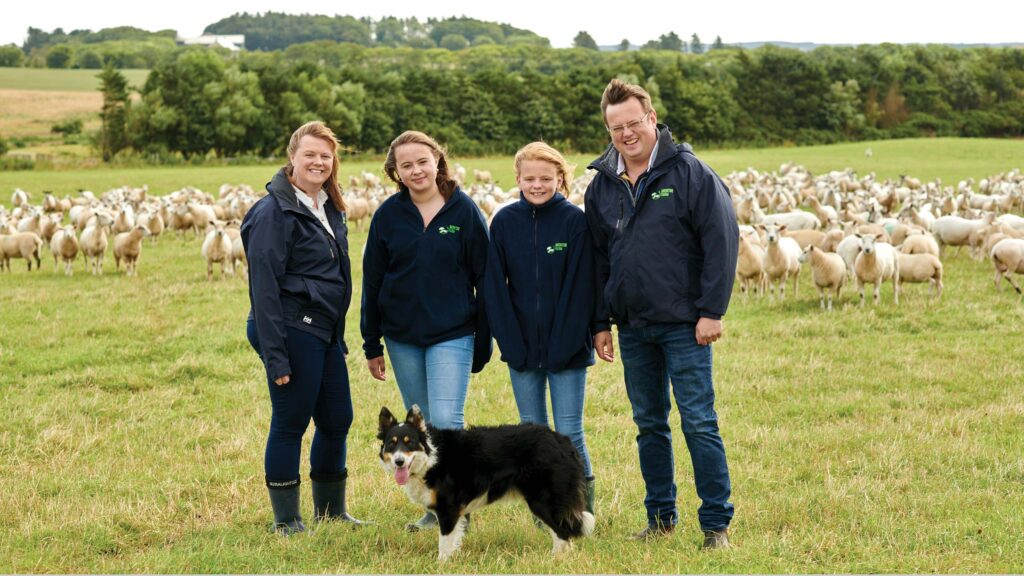
Left to right: Vicky, Amy, Robyn and Bruce Irvine
Sauchentree Farm is a Monitor Farm Scotland farm, an initiative managed by Quality Meat Scotland with support from the AHDB, and that has been an important source of knowledge and support too.
The flock ration is currently bought-in – birds consume 121g a head a day – but Bruce is in his third year of trialling growing wheat, as he hopes to produce the poultry feed on-farm.
“We had a very poor yield in our first year, but the weather was terrible and we then saw a big improvement in 2025, so we are giving it another go this year,” he explains.
Challenges
One of the biggest threats to the new enterprise is avian influenza, and Bruce has insurance cover in place. Although the annual premium is costly, it is a must, he reckons.
“We are heavily invested so we don’t have the financial leeway that we might have if we were more established. Insurance is a safety net.”
One of the biggest challenges so far has been feather pecking. “We have had to learn pretty quickly how to control it,’’ says Bruce.
“There is usually an underlying reason why the birds do it. For us, it was fatty liver, and when the shed was too bright, it made the problem worse, so we have had to reduce the light a fair bit.”
Providing ample quantities of lucerne for the hens to peck on has also been an important element in that control strategy.
Savings and further opportunities
Muck from the hens provides valuable nutrients for the land at Sauchentree – it is saving the business about £22,000 a year, because before the flock was established, poultry manure was bought in.
In the coming years, Bruce hopes to scale up hen numbers to 64,000.
He believes that number will better suit his system and allow him to take on a third employee to provide extra cover during annual leave and at busier times in the farming calendar.
He says: “I was going to be gung-ho, just go for it, but there is a little bit of fear from committing to further debt.
“So I’m holding back a bit until we have a decent bit of money in the bank to make sure the business is in a strong financial position to support that development.”
Making the leap to becoming an employer adds to financial pressure, he says, as employing staff is expensive.
“Between pensions and national insurance contributions, there is more cost to being an employer than just paying a salary. It is quite depressing when you are paying your staff more than you are paying yourself.”
But it has allowed expansion and business growth, and the elusive work-life balance Bruce aspires to might just be more easily within his grasp.
Lessons learned from taking on staff
- Strike the right balance between being firm and patient. “I am probably too soft, but I have also seen employers who are too hard on their staff,” says Bruce Irvine. “I do need to harden up, but I don’t want to upset folk either. As an employer, it is about striking a happy medium.”
- Encourage staff to learn on the job. “If you encourage the staff to pay attention to what you are doing, to learn by watching, you shouldn’t then need to have to spend extra time showing them,” he advises.
- Discourage private use of mobile phones. “We can all get distracted by our phones – ourselves as employers included – but when the staff are on their phones, it takes their attention away from the job in hand, which eats into the working day and can also be dangerous.”