

Poultry appetite regulator discovered
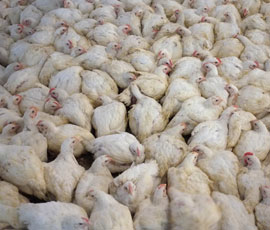
New research has identified why faster-growing chickens don’t stop eating when they are full, which could lead to developing diets that reduce excessive growth and improve welfare.
Researchers at the Roslin Institute found that genetic differences affect a chicken’s ability to detect signals from the stomach that tell it to stop eating. They believe that these differences – most pronounced in birds bred for fast growing – could date back to when poultry was first domesticated.
The study focused on the gene receptor for the hormone cholecystokinin (CCK), a protein released following consuming food, that has a key role in sending signals of satiety from the stomach to the brain. Different breeds have a varying ability to detect it.
Methodology involved crossbreeding a fast-growing broiler with a relatively slow-growing chicken, and looking at how the protein was processed by both types of bird, as well as the new cross breed. Researchers found that faster-growing breeds were less able to recognise CCK.
Dr Ian Dunn, who led the study, said that there were important differences between the way birds and mammals managed their appetite. “This discovery is a big leap forward in understanding what causes satiety, and this will help create diets that produce the feeling of fullness.”