

Quality grass silage better than alternatives
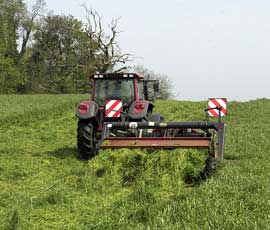
Beef producers should focus on making high quality, perennial grass silage rather than growing alternative forages an AgriSearch supported research project has concluded.
As bought-in protein prices have risen there has been increased interest by farmers in growing legumes as an alternative to costly animal feedstuffs. As a result an investigation supported by DARD and EBLEX looked at the costs, dry matter yields and animal performance on a range of forages including lupins, triticale, vetch, barley, wheat, peas and oats.
Dry matter yields of the legume/cereal silages ranged from 6.6t/ha of DM for vetch and barley to 8.9t for lupins and wheat. These yields are considerably lower than the yield of 14.4t/ha of DM for a two-cut silage system and 10.3 to 13t reported for wholecrop wheat.
In general the legume/cereal silages were of poor quality with low values of lactic acid, high ammonium concentration ad high pH. Animals offered legume/cereal wholecrop silage either as a sole silage or in combination with grass silage had 15% lower liveweight gain and carcass gain compared to animals offered perennial grass silage.
The total cost of producing legume/cereal wholecrop silage was 15% lower than for a two-cut grass silage system. However, when costs were expressed a tonne utilisable DM yield, legume/cereal wholecrop silages had 52% higher costs due to their low yields. Combined with poor animal performance this would produce a significantly lower gross margin.
The research team at AFBI concluded that these results show that beef producers must place increased emphasis on making good quality grass silage rather than legume/cereal wholecrop silages in order to optimise performance and reduce feed costs in finishing beef systems.
To view the results of this investigation conducted at AFBI, the NI Agri-Food and Biosciences Institute, Hillsborough visit www.agrisearch.org or contact AgriSearch project manager Jason Rankin, tel 028 8778 9770, email info@agrisearch.org