

RSPCA seeks permission to monitor Dover exports
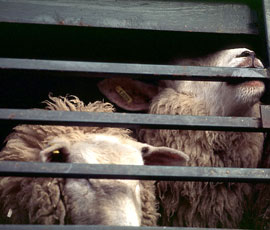
The RSPCA is seeking permission for its inspectors to be allowed into Dover port to monitor live exports.
Live exports resumed from the Port of Dover in Kent this month, after previously sailing from Ramsgate for over a year, but RSPCA inspectors have not been granted permission to enter the port.
The RSPCA applied for permission to be present in the port to safeguard the welfare of the animals but received no response.
The charity has called for public support to persuade Dover Harbour Board to accept the offer from its inspectors to monitor the trade.
RSPCA inspectors have been at the port of Ramsgate for every sailing throughout the past year and regularly highlighted health problems with the animals.
The MV Joline vessel – an “open-decked, flat-bottomed” converted Russian tank transporter – sailed from Dover earlier this month loaded with lorries of sheep for the journey to France and then possibly further afield.
RSPCA chief executive Gavin Grant said: “We were extremely saddened to see that live exports have resumed from the Port of Dover – a move that could see an increase in the number of animals that will unnecessarily have to endure long journeys to the Continent.
“Like Ramsgate, Dover does not have facilities at or near the port to deal with emergencies and our inspectors have not been granted permission to the port to monitor the welfare of the animals.”
He added: “Unfortunately, the animal transport industry has frequently shown violations of UK and EU regulations and RSPCA presence would bolster public confidence and ensure animal welfare issues are being fully addressed within the port environment.”
However NFU South East spokesman Frank Langrish, a sheep farmer and haulier, said the RSCPA’s request was “totally unnecessary” as all animals destined for live export are already rigorously checked by government vets from the Animal Health and Veterinary Laboratories Agency (AHVLA).
“There is demand for high-quality store lambs to go into Europe, especially France, which could take up to half a million sheep a year and make a huge difference to farmers’ prices.”
NFU South East spokesman Frank Langrish
“The AHVLA is the competent authority and all animals are checked, inspected and passed before they are allowed to travel by a vet – there’s no animal welfare issue,” he said.
Mr Langrish said transporters that carry animals were “much more sophisticated vehicles”, tailored for over eight-hour transport. These include satellite tracking monitoring systems, temperature gauges and drinkers.
Live exports were a “perfectly legitimate, legal and valuable trade” for English farmers, he added.
“There is demand for high-quality store lambs to go into Europe, especially France, which could take up to half a million sheep a year and make a huge difference to farmers’ prices,” Mr Langrish explained.
“The majority of animals only go to abattoirs as far as Belgium, Holland and the north of France.”
An AHVLA spokesman said: “Regulations governing the welfare of live animals during transport throughout the EU and to third countries require competent authorities to carry out regular non-discriminatory checks on an adequate proportion of animals transported each year within their territory.
“AHVLA, as DEFRA’s delivery agent, is legally required to carry out these checks fairly and impartially, and we take our responsibilities extremely seriously.
“Our checks involve both supervised loading at their port of origin and checks at port by AHVLA vets. All supportable claims of illegality, poor practice impacting on the welfare of the animals or non-compliance with the welfare in transport legislation are investigated and appropriate action taken.”