

Young couple transform livestock farm with focus on costs
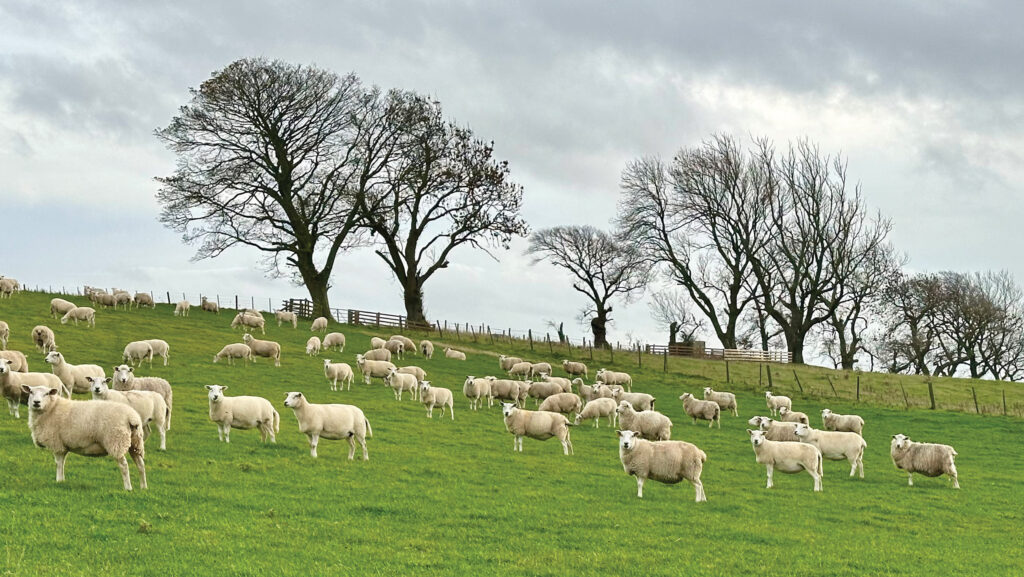 Colt Park Farm Lleyn and Easycare ewes © MAG/Judith Tooth
 Streamlining operations, a tighter grip on costs and a proper renumeration package are among key changes a young Northumberland farming couple has made since completing a profit-focused business course.
Rich and Jen Oglesby had been at Colt Park Farm, between Rothbury and Morpeth, for 18 months when they joined US rancher and consultant Dallas Mount’s Ranching for Profit course, delivered via AHDB’s Roots to Resilience programme, in late 2024.
See also: 3 ways suckler beef producer sharpened business skills
Farm facts
Colt Park Farm, Netherwitton, Northumberland
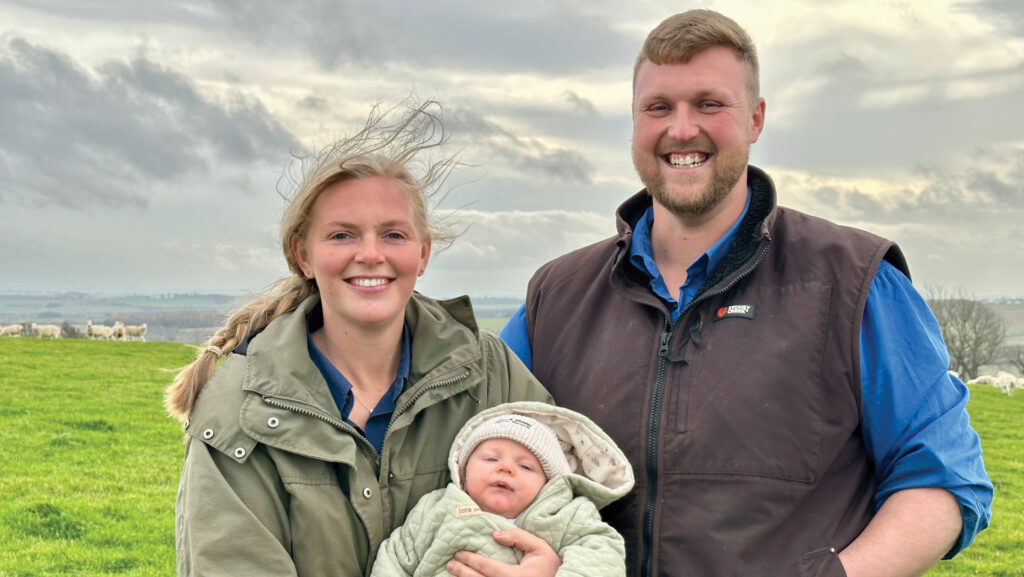
Jen and Rich Oglesby © MAG/Judith Tooth
- 585ha rough grazing, permanent pasture and reseedable grassland
- Contract farming agreement
- All fields in Countryside Stewardship or Sustainable Farming Incentive
- 1,700 ewes and 530 ewe lambs (changing from Lleyns to Easycare)
- Easycare rams, with New Zealand Suffolks used on “B” flock
- Lambing outdoors starting 20 April
- 100 Angus cows and 40 heifers
- Angus bulls bought from George Burrell
- First calving at two years
They had brought their flock of performance-recorded Lleyns with them to the 585ha (1,446-acre) farm, and agreed to take on its herd of Angus suckler cows and deer enterprise.
Under their contract farming agreement, they receive a management fee from owners Michael and Samantha Orde, with profit shared (after rent) between the two parties.
“We all have an incentive to do well – and we get on really well too,” says Rich.
This setup is a welcome change for the new farming entrants as their previous one in Yorkshire involved 22 landlords.
“We had a small base at my parents, but things were getting high risk.
“We’d applied for three tenancies with no luck,” he says.
Undeterred, Rich secured a Henry Plumb Foundation scholarship.
This gave him valuable mentoring in how to finish cattle on forage, as well as £3,000 of funding to invest in grazing infrastructure.
“All that knowledge – bale grazing, rotations, outwintering, deferred grass – was 90% [of the value],” he says.
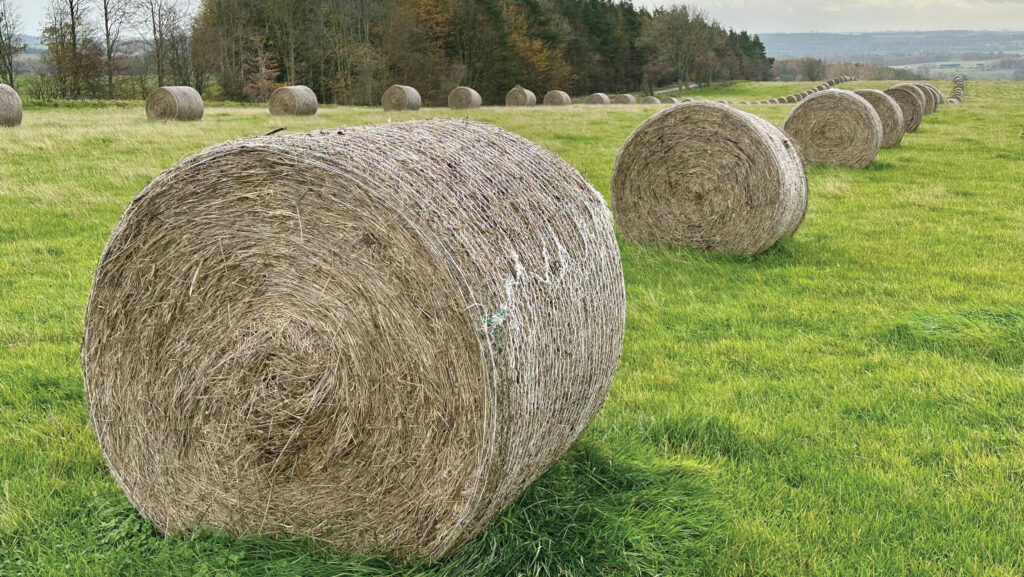
Bale grazing on deferred grass © MAG/Judith Tooth
The business course helped the couple to up their game and was well timed for them to fine-tune their future direction.
They share what they learned and how this has helped them set a clear path for their business.
Cut out dead wood
Most successful businesses focus effort on two streamlined areas, they discovered.
This confirmed their thinking that the deer enterprise was “dead wood”.
“The deer weren’t making money and were in a fenced-off area, so didn’t integrate with the rest of the farm,” says Jen.
“They needed concentrates to finish by November – and were using more than the whole of the rest of the farm.
“So, all the breeding stock have gone, and we’ll finish last year’s calves by November 2026.”
Instead of deer, they are expanding cow numbers to about 150.
“There’s only so much management time, and now we’ll have one less set of audits, assurance, planning and so on to do.
“It will free-up brain capacity and give more scale to the cow business,” adds Rich.
Removing dead wood from the sheep enterprise meant cutting out shearing costs, by moving from performance-recorded Lleyns to wool-shedding sheep.
“We bought 35 Easycare ewes and seven tups in 2024, and their lambs did very well,” says Jen.
In 2025, the Easycares scanned at 184% and reared 152%; scanning rate for the Lleyns was 162%, rearing 131%.
The focus now is on using as few inputs as possible. Lambing is outdoors; and ewes with lambs switch to rotational grazing when lambs reach eight weeks of age.
At weaning, ewes move daily. Grass growth is measured every 10 days to calculate stocking rates.
No fertiliser is applied to grazing ground, and no concentrates are fed.
Work ‘on’ the business
Freed-up brain capacity is being put to good use “working on the business, not in the business”.
This means focusing more on monitoring costs, setting budgets and working towards targets.
The course taught that fixed costs, for example, should be no more than 40% of turnover, says Rich.
“The aim is to get fixed costs down and put money into appreciating assets.
“Say our mower was worth £12,000. If we left that capital tied up in the mower, in 10 years it would be worth £5,000.
“But if we sold it and put it into cows at 8% return on investment, in 10 years that investment would be worth £25,907,” he explains.
“The opportunity cost – the difference between those two figures – is £20,907.
“A cow has a calf, but no tractor ever gives birth to a little tractor,” he adds.
The mower has been sold in favour of using a local contractor with a bigger, more efficient machine.
Also gone are the topper and a big stock box, and a small loader tractor has replaced a larger model.
Calculate cow depreciation
Rich and Jen were already tracking herd (and flock) replacement costs using Farmbench, AHDB’s benchmarking tool.
Yet they had never fully understood the significance of cow depreciation.
“If you’re buying in heifers – or shearlings – at great expense, then selling culls for less, that’s a big cost to the business that’s being overlooked,” Rich explains.
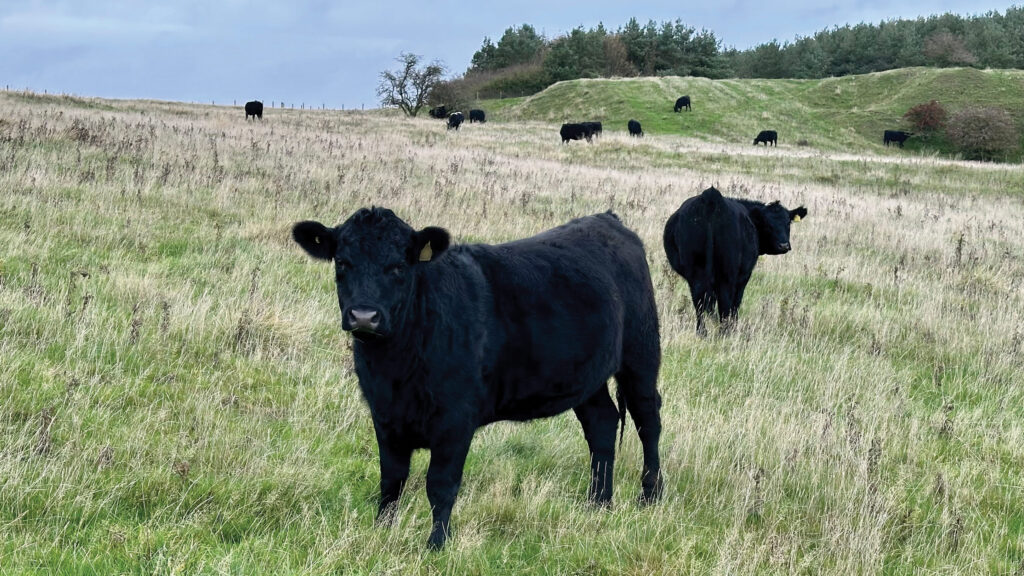
Colt Park Farm in-calf heifers © MAG/Judith Tooth
To minimise herd replacement costs, heifers (home-bred) outwinter cheaply on deferred grass and hay or silage, resulting in robust heifers that fit their system.
“They only put on 150g/day from 1 December to 1 April, but from then until 25 June, they average 1.5kg/day off grass.
“When the bulls went in on 25 June, their average weight was 416kg.
“What gets in-calf does, and what doesn’t, doesn’t. Of 35 heifers, eight scanned empty.
“We sold them at the end of October as forward stores at 18 months for an average £1,925, so they were still an appreciating asset.
“The rest come into the herd and calve at two years,” he says.
Reward work done
Another lesson learned was that renumeration is part of running a proper business.
“I’d never had a wage or a pension,” says Rich.
“Jen has a full-time job as a farm trader and small seeds specialist, and her income made mine look unprofessional by comparison.
“Now I have a monthly wage, a pension and life insurance. It was easy to implement.”
Next steps
The course also alerted Rich and Jen to the downside of their seasonal production system.
“Bar breeding stock, all calves go at weaning in November, and all lambs are gone by October.
That’s great for the winter workload, but the downside is that there’s no wriggle room in a drought when feed is scarce: all we have is our core breeding stock, so there’s nothing to offload in a drought.
“So, we will keep all our steers and heifers, and when we go into the following spring and summer, we’ll have a management tool for grass.
“If it’s good, we’ll keep them until October,” he says, adding that it gives them flexibility in a very dry year as they can then sell stock in May to free up more grazing.
“That’s good for grass growth and for cashflow – although there will be a lack of cashflow [as we transition].”