

How forage focus unlocked beef and sheep farm’s potential
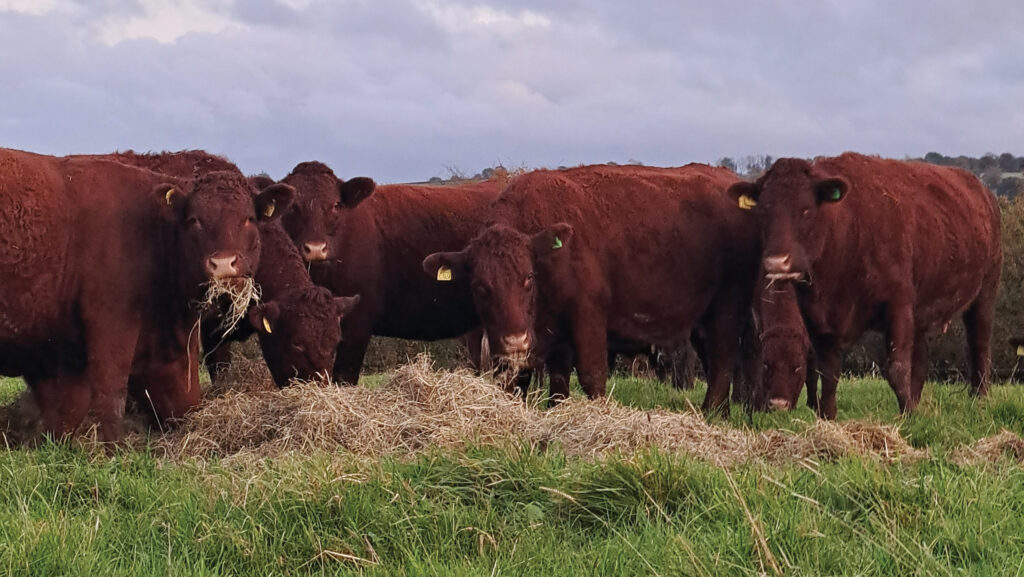 Cattle bale grazing © Richard Stanbury
 A switch to rotational grazing has increased grass production by 45% on a north Devon beef and sheep farm.
The change of system, which came as one generation handed over to the next, has allowed stock numbers to double, while labour demand has fallen.
Experience gained in New Zealand in his early 20s inspired Richard Stanbury to make changes at the family farm, near Knowstone.
See also: Benefits of embracing NZ grazing techniques – 30 years on
Farm facts
Weston Farm, Knowstone, Exmoor
- 202ha owned, 142ha rented, 61ha grass keep, plus 142ha common grazing
- 160-cow suckler herd: 50% pedigree Devon, 50% Devon cross Angus and Devon cross Shorthorn, using Stabiliser terminal sire
- 1,400 Exlana-type shedding ewes
- Permanent pasture and herbal leys
- Outdoor calving and lambing
The farming system he had grown up in – high-input, machinery-heavy and labour intensive – was productive enough on paper.
However, it came at the cost of time, energy and long-term resilience.
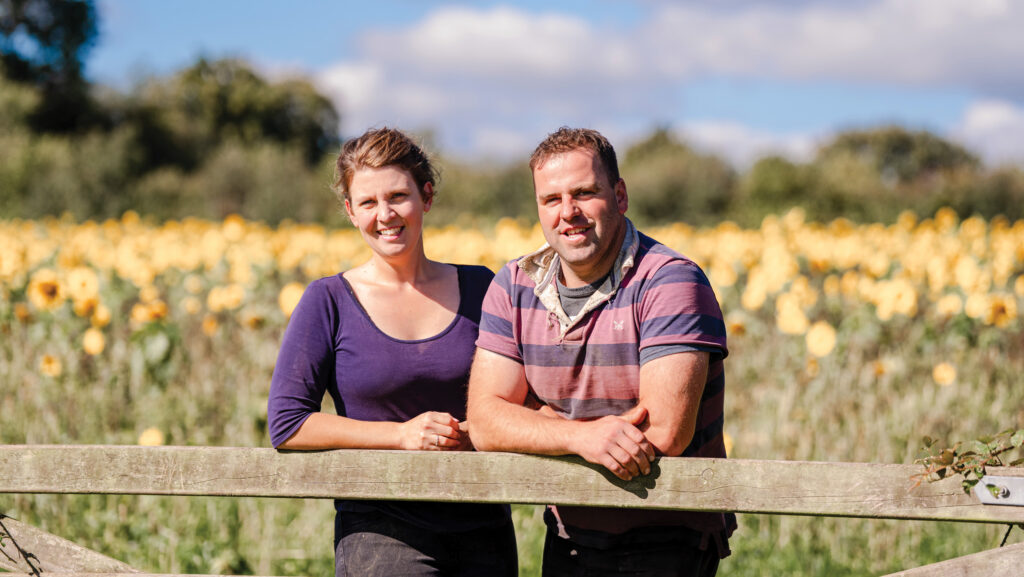
Laura and Richard Stanbury © Richard Stanbury
Crucially, his father recognised this too and told Richard it was time for the next generation to take over.
“Dad always said every farmer gets their 30 years,” explains Richard.
“He’d done his, and he handed me the reins. He told me to take it on and make it work.”
That early handover proved pivotal. It gave Richard both the responsibility and the freedom to overhaul the farm before exhaustion or tradition made change impossible.
Today, Weston Farm is run as a partnership between Richard, his parents, John and Rosemary, and his wife, Laura.
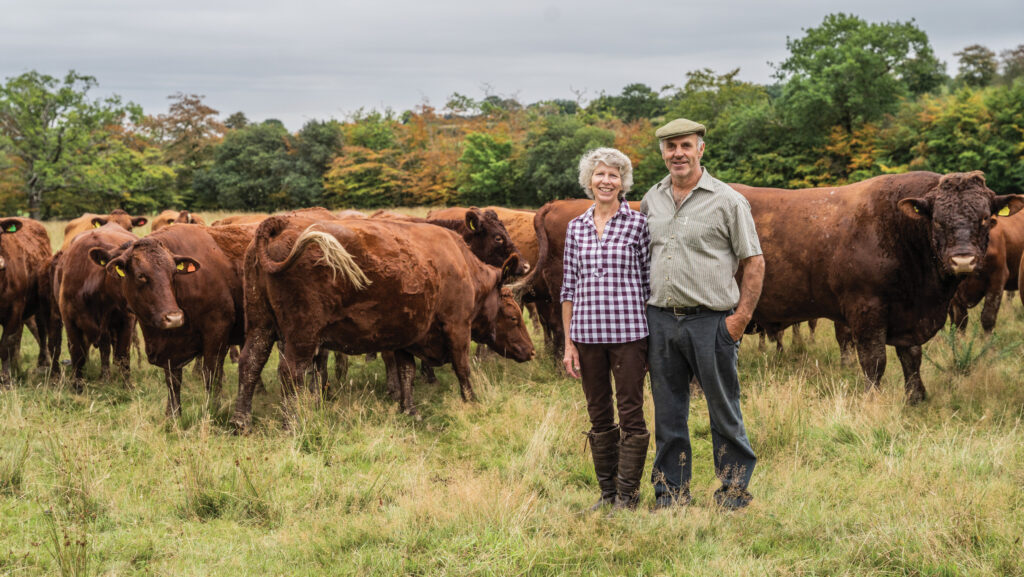
Rosemary and John Stanbury © Eleanor Davis
All land lies within a 1.5-mile radius of the main steading, with an additional 142ha (350 acres) of Exmoor common grazed seasonally.
The business supports 160 suckler cows and 1,400 ewes – double the stocking of the old system, yet operating on less labour than before the restructuring began.
Gradual change
Previously, indoor lambing, housed calving, creep feeding, bedding and heavy machinery use created a treadmill of work, according to Richard.
After visiting several UK farms using rotational grazing – and remembering his Kiwi experience – he began converting the farm to a forage-based system.
The changes were gradual at first – fewer housed groups, some trial paddocks – but soon evolved into a full redesign.
Permanent fencing, installed partly through stewardship schemes, now enables flexible paddock blocks across much of the farm.
Despite high rainfall and heavier Exmoor soils, rotational grazing has proven workable, even in challenging years.
The farm has also stopped using artificial fertiliser.
“We never used a lot of fertiliser before, but were achieving 7.5-8t dry matter [DM)]/ha of grass growth.
Now, with no fertiliser, just better management, growth sits at around 11-11.5tDM/ha,” he says.
Suitable genetics
Rethinking beef and sheep genetics to run stock better suited to a grass-based system has been one of the biggest changes on farm.
North Country Mule and Suffolk-cross types have been replaced with Exlana-type shedding ewes developed for outdoor systems.
Key features of the sheep system are:
- 100% outdoor lambing
- Zero concentrates fed
- Set stocking at lambing
- Lambing completed within 28 days
- 80% lambed within the first 17 days.
Two to three weeks post-lambing, ewes and lambs are mobbed up, typically in groups of about 750.
They rotate every three to four days initially and more frequently as grass growth improves.
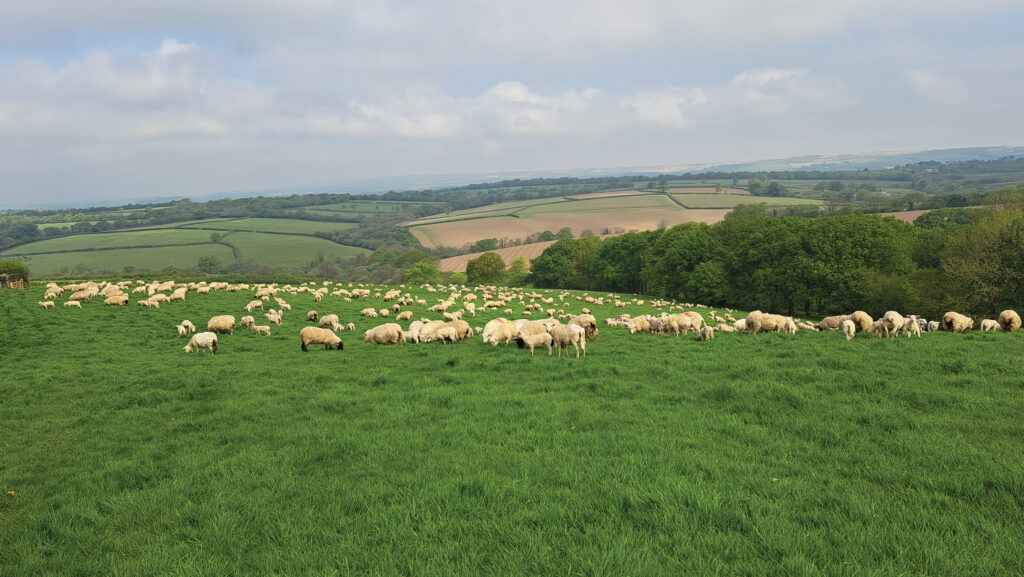
Ewes and lambs graze in mobs on permanent pasture © Richard Stanbury
Lamb growth and worming decisions are made using weight recording and faecal egg count testing rather than routine dosing.
Scanning rate is 175-177%, with potential to lift to 181-185% – but only within limits that keep triplet numbers manageable outdoors, says Richard.
He retains 20% of ewe lambs as replacements, as before, but now 20% of lambs leave the farm by weaning, up from 5% under the previous system.
The rest are sold by November, mainly finished; previously, 30-40% of lambs were taken to nearly a year old.
The suckler herd has also changed breed, from larger, continental-crosses to moderate Devons and Devon crossbred cows averaging 620kg.
“It’s a good-sized cow: hardy, very maternal and very cheap to keep,” he says.
Winter management is built around bale grazing, reducing feed, machinery and bedding costs.
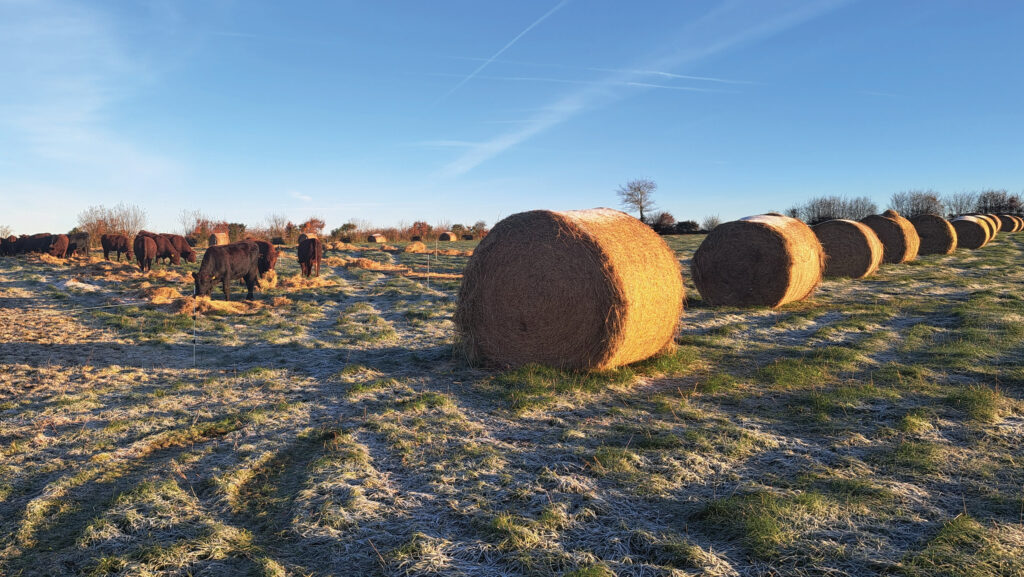
Cattle bale grazing © Richard Stanbury
To optimise genetics and keep the herd as functional as possible on the Exmoor terrain, Richard implements a strict culling policy.
“If I have to help at calving, help a calf suck or touch a cow’s feet, she’s gone. No second chances,” he says.
Recent breeding performance reflects this:
- 65 heifers put with bulls for just five weeks, with 51 in-calf in a five-week window
- 95% of cows calving in an eight-week block, and 100% in 10 weeks
- Heifers calving at two years old.
Finishing cattle are housed for their second winter on grass silage and wholecrop.
Most reach target weight by 24 months – a similar age to that of the previous system, but reached entirely off grass and conserved forage.
Business discipline
Richard has also improved his business skills.
He completed AHDB’s Roots to Resilience programme and began working with James Daniel of Precision Grazing to establish a more structured and accountable management approach.
Working alongside James has helped improve grass utilisation and forage planning, as well as financial management and decision-making.
Together they developed what Richard describes as a simple precision profit spreadsheet.
This tracks monthly cashflow, stock movements and stock-flow projections, predicted versus actual performance.
And running margins throughout the year. It also forms the basis for structured quarterly reviews.
“It makes you accountable,” says Richard.
“It shows where the money’s going, what’s working, and what needs attention.
“And the bank manager appreciates it, too.”
According to the most recent figures, Weston Farm is achieving a gross margin of £663/ha (without subsidies), up by £150-£200/ha since 2017.
One of the biggest advantages of knowing his figures has been improved flexibility, says Richard.
“We’re no longer selling stock just to pay last month’s feed bill.
“Cashflow is smoother, and we can sell when it suits us.”
When beef prices spiked earlier this year, for example, he used the figures to justify keeping cattle longer and adding an extra 50kg liveweight – a margin-positive decision the old system could not have supported.
“Before, we would have had to sell because we were on a treadmill of expenses.”
Family time and headspace
One of the biggest benefits of the system rethink has been a reduction in labour demand.
Richard’s main support, Tom Thornton White, works as a subcontractor part time, carrying out mainly fencing and infrastructure work.
Richard and the family manage the rest of the farm, with fewer hours worked each week.
“The stock look after themselves, we just move them,” he says.
For Richard, this shift has unlocked something previously impossible on the farm: free time.
With a young family, he says this quality of life is not a soft measure but a business requirement.
“I want to spend time with the boys and create a business where they can come home [to work] if they want to.
“Farming can’t mean 100-hour weeks anymore, because why would anyone want to work for that?
“There’s plenty still to improve. But we’ve built a system that’s robust, profitable and gives us headspace. That’s worth a lot.”