

How Welsh hill flock benefited from performance recording
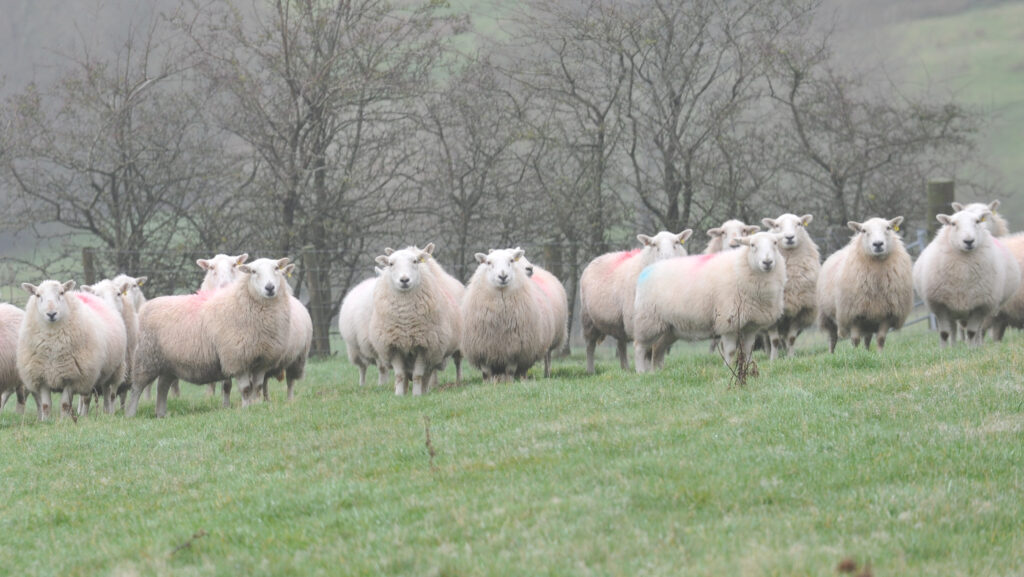 Llysfasi Welsh Mountain ewes © Farming Connect
 A flock of purebred Welsh Mountain ewes has seen multiple benefits as a result of performance recording – including a switch to outdoor lambing near Ruthin in North Wales.
Coleg Cambria’s Llysfasi flock of multiple-bearing ewes needed to develop traits that would allow the sheep to thrive on land ranging from 1,000-1,300ft.
Performance recording, which began in October 2023 and involved the 120 youngest Welsh Mountain ewes, has provided a new and valuable pathway to enhancing key traits.
See also: How recording lamb losses led to better flock performance
Since joining the Farming Connect Welsh Sheep Genetics Programme in 2023, the flock’s focus has been on using estimated breeding values (EBVs) to enhance maternal ability.
Being able to lamb the flock outdoors has saved money and labour as the ewes carrying triplets were previously lambed indoors, explains shepherd Alun Jones.
“The ewes are holding their body condition better, we haven’t had any problems with lambing them outdoors, and they keep their lambs very well,” he said.
Mr Jones added that they have also had fewer losses, no mismothering, and overall, less intervention was needed.
“In the 2025 lambing season, we only needed to assist two ewes out of 120.”
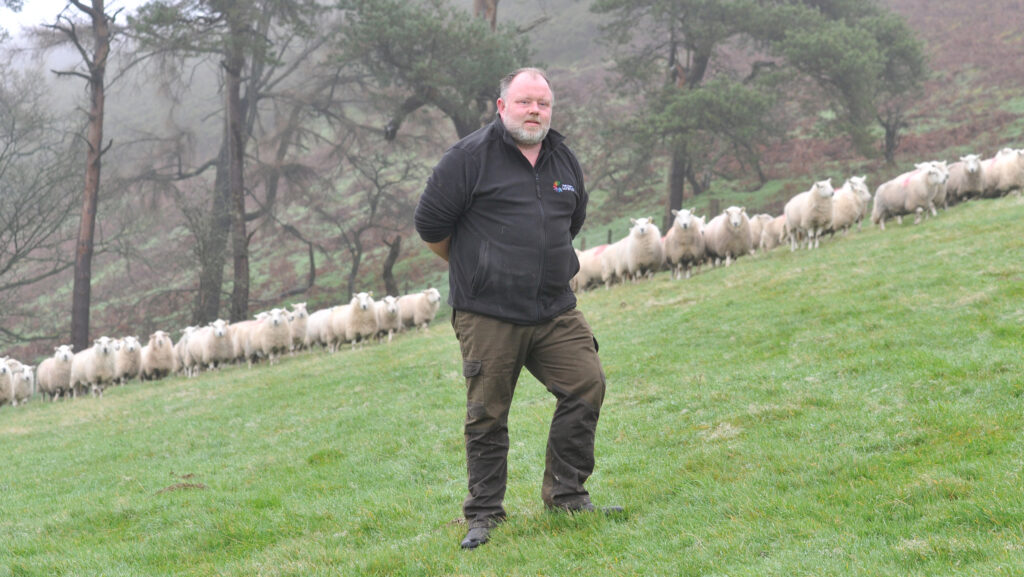
Shepherd Alun Jones © Farming Connect
Higher-value lambs
Until 2023, the Welsh Mountain breed was a hardy North Wales type. But breeding shifted to Llandovery Whiteface and Talybont Welsh, to give a bigger frame that can produce higher-value lambs within the same environment.
Lambs are sold at both Ruthin livestock market and to ABP, with liveweights averaging 38-42kg and deadweight 17kg-18kg.
Llysfasi’s farm manager, Dewi Jones, said that while breeding for desired traits in the Welsh Mountains will be a slow process, improvements in maternal ability are now evident.
“Because we also use the Welsh Mountain ewe for crossing, some of the growth and muscle depth characteristics will come a little bit further down the line, from the sire side,” he said.
Mr Jones added that improvements, however, are not necessarily linear because the sire has “quite a bit of an influence”.
“Our eight-week weight average is 28.1kg, which puts us in the top 25% for the breed, but on the EBV index, we are in the top 5%,” he said.
Removing bottom performers
Through performance recording and removing the bottom 20%, the index overall for the purebred hill flock has improved from £13 to £16.24.
“When we started recording, we could see that some of our ewes were already performing really well,” said Mr Jones, adding that the additional knowledge allowed them to breed selectively, based on data.