

Practical advice on reducing lamb losses from joint ill
 © Tim Scrivener
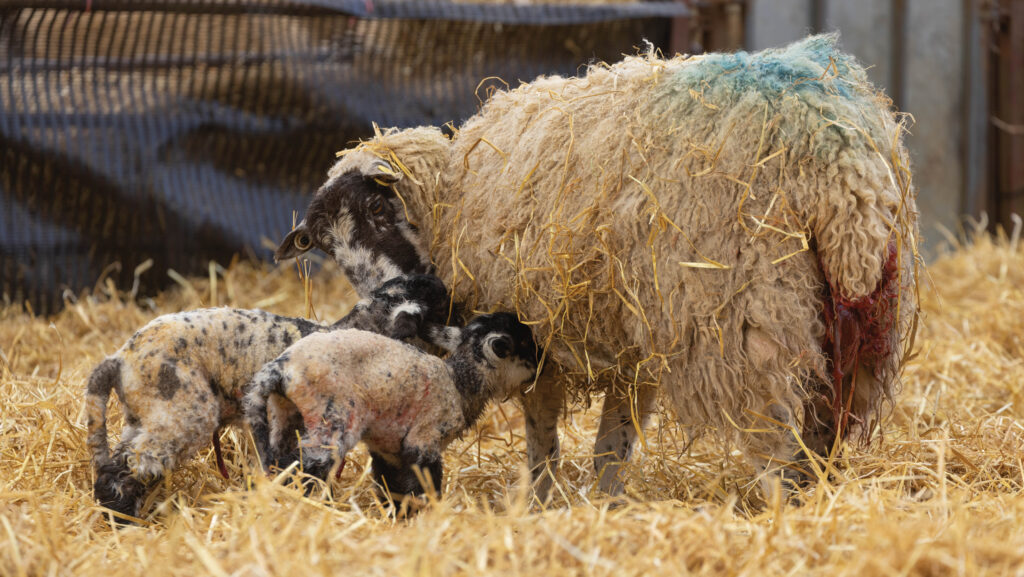
 Washing hands, wearing gloves, and sterilising tubes and taggers are simple steps in maintaining excellent standards of hygiene at lambing.
And they could go a long way to protecting flocks from one leading cause of lamb mortality.
See also: Why iodine alternative brings four benefits to lambing shed
The key to controlling neonatal infectious arthritis – the bacterial infection commonly known as joint ill – is attention to detail, according to vet and independent sheep consultant Fiona Lovatt of Flock Health.

Fiona Lovatt © John Eveson
Citing recent research into UK flocks (Jackson et al, 2024, at the University of Liverpool), Fiona said:
- Two-thirds of all flocks still get joint ill
- An average of 1.4% of lambs are affected in each flock
- Up to 20% of lambs will die from it.
The study showed larger flocks (more than 600 ewes) were 34 times more likely to see joint ill than smaller flocks.
Yet it was the impact of substandard hygiene that Fiona found most striking.
“If shepherds were not washing their hands, the flock was 3.5 times more likely to see joint ill than where they did wash their hands.
“Another big risk factor was if ear tags weren’t being cleaned,” she said.
Furthermore, outdoor flocks without shelter were three times more likely to see joint ill than those where shelter was provided.
Spread of bacteria
Joint ill is caused by Streptococcus dysgalactiae, which is found in the birth canal of carrier ewes.
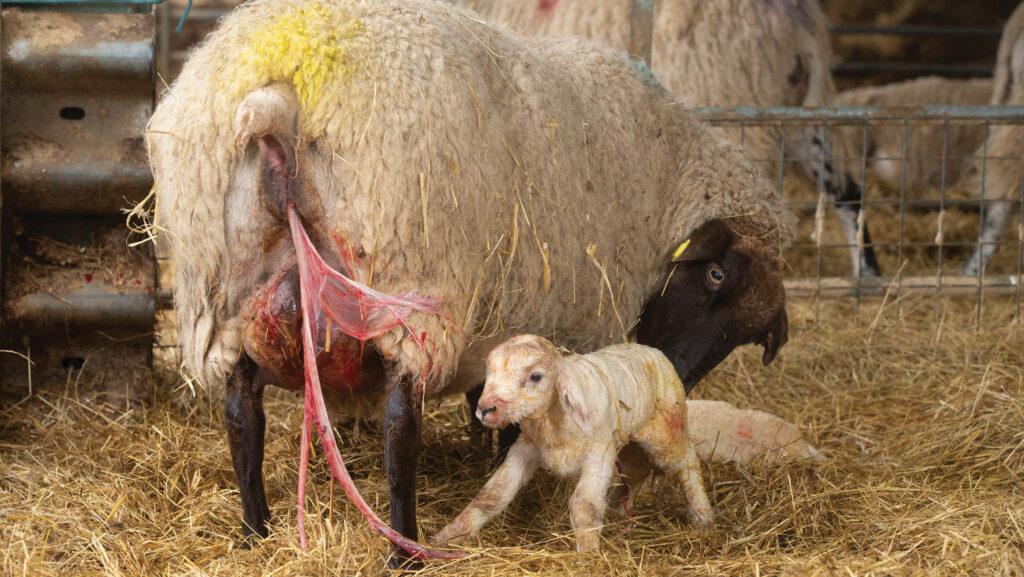
When the lamb is born, it is completely coated in the bacteria. The ewe will also shed the bacteria in her milk and on her teats.
It can then be transmitted to other lambs via stomach tubes, bottles, teats – and by dirty hands.
© Tim Scrivener
It also survives well in dry straw – though less well in wood shavings, according to the research.
Attention to detail in several different areas is essential for effective control. This is because any broken skin on a lamb offers a chance for the bacteria to enter via the blood supply.
“That might be through an ear tag, docked tail, castration wound or the navel, or a stomach tube or teat, as well as through the nose or mouth of the lamb,” explained Fiona.
Risk assessment
A risk assessment will establish potential weak points in the lambing setup.
“Speak to your vet and go through everything with a fine toothcomb to establish the [farm-specific] risk to your lambs.
“For example, if a lamb coated in bacteria is put in the lambing trailer and that trailer is not cleaned out regularly, every lamb that goes in will pick it up.
“If there’s an open wound, an unprotected navel, or a tail about to fall off, that’s a brilliant way for bacteria to get in,” Fiona said, adding that a regular review of antibiotics use was essential, as “just because you had joint ill last year, doesn’t mean you’ll have the same problem again”.
Protection of navels
Research led by Fiona Lovatt, prompted by previous shortages of iodine for treating the navels of newborn lambs, found significantly better survival rates using an alternative solution.
The study, involving 6,840 lambs in 11 commercial flocks, showed a 21% reduction in neonatal mortality when using Nobacz Navel rather than iodine.
“It also taught us that the treatment of ear tag sites [as well as navels] is hugely important, and dipping is significantly more effective than spraying,” she said.
Fiona Lovatt was speaking at an Rase Farm of the Future webinar on preparations for successful lambing.