

Sheep system change sees agreement between father and son
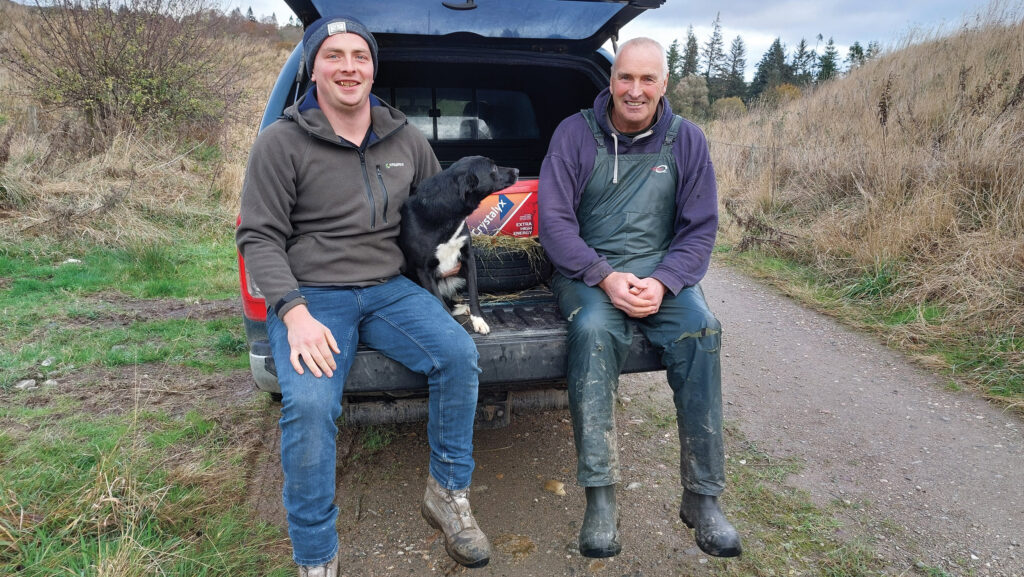 Ross Adam with his father, Ian and dog Fern © MAG/Shirley Macmillan
 Introducing some smart technology, buying a quad bike and replacing a sheep breed on the family livestock farm seem easy decisions for one young farmer, compared with managing his dad’s expectations.
Change has not always been plain sailing for Ross Adam and his father, Ian – a case of modernising carefully to ensure the farm is not left behind, without fracturing family ties.
See also: Benefits of breeding values in lamb weights and ewe fertility
Farm facts
Nether Turtory, Aberdeenshire
- Own 89ha across two steadings, two miles apart by road
- Rent 81ha of summer grazing
- Access to 810ha of winter grass on three estates
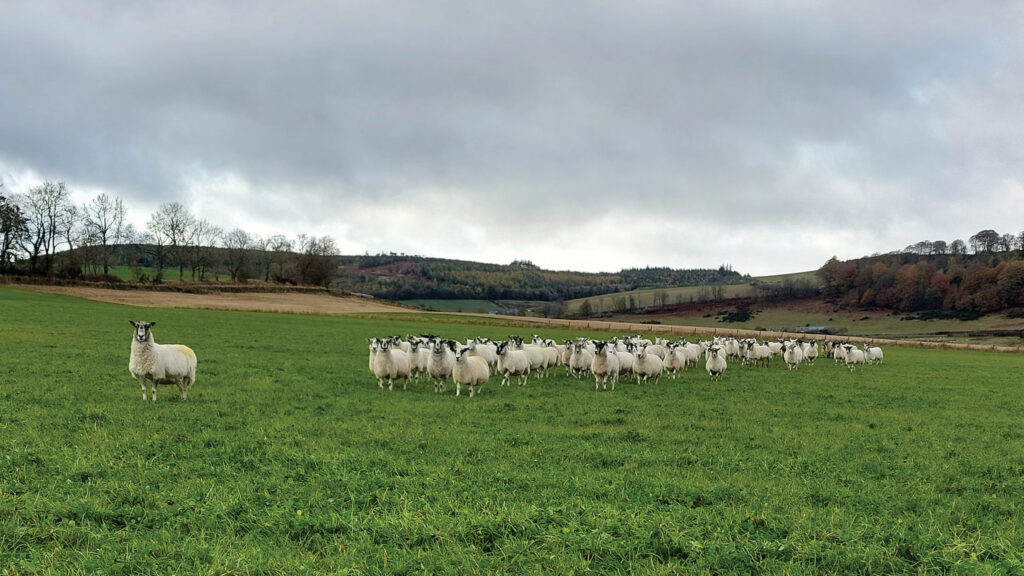
- 400 Scotch Mule ewes; 75 ewe lamb replacements bought a year
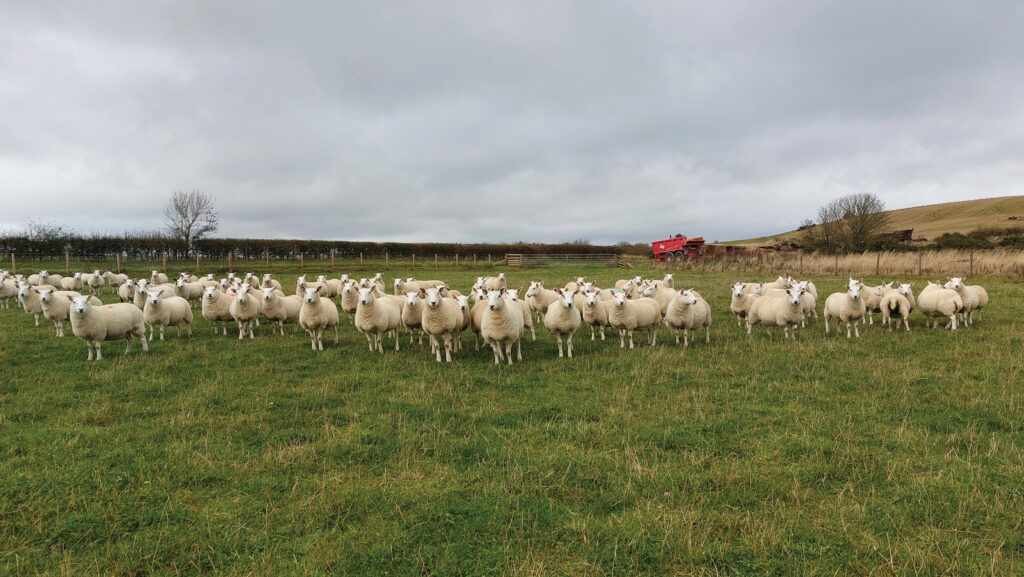
- 400 Cheviot and Aberfield-cross ewes; home-bred replacements
- 120m above sea level
- 875mm rainfall
- Mixed land, ranging from heavy clay to sandy loam
- Make 300 bales of silage for feeding in forage crops
But streamlining their enterprises has improved efficiency, resulting in a workload that suits both the older and younger generations.
It has also given them time to make the most of opportunities for land when they arise.
This has allowed them to more than double sheep numbers in the past five years, with potential to go further.
“We are a typical father and son: we don’t speak enough or set out a plan – things happen as opportunities come up. And we argue, but always make up,” says Ross.
The steading at Newton Turtory is one of two farms owned by the family, near Huntly in Aberdeenshire, totalling 89ha (220 acres).
The business had 220 Scotch Mules bred to a Suffolk tup, selling lambs from the end of May and buying in store lambs to finish.
The family grew malting barley, potatoes and turnips, and finished store cattle. It was, by Ian’s admission, labour intensive.
© MAG/Shirley Macmillan
Different priorities
He recognises, however, that the next generation wants to work differently – with efficiency, some free time, and keeping on top of the paperwork.
Fortunately, Ross’s purchase of a quad bike four years ago was the game changer for him.
“Ross didn’t want to walk everywhere! He was taking the tractor round the fields, but that made a mess when it was wet. Now he can go round 400 ewes in 15 minutes,” says Ian.
Further changes have followed.
Ross always knew he would need to work as a self-employed contractor because the farm was not big enough for two, but also realised things would have to change for the farm to be sustainable.
Seeing other systems on shearing stints at sheep stations in Australia and New Zealand made him think.
He decided he wanted to manage sheep without having to employ staff, and run a more extensive system.
Lambing work nearer home convinced Ross he wanted a breed that lambed easily outdoors, while retaining a strong maternal instinct.
He was also seeking a lighter animal that could perform on a forage-based diet.
“I wriggled my way in at home by buying some sheep. We were short on numbers, and I spied 60 in-lamb ewes for sale on Facebook: they were Cheviot and Cheviot crosses,” he says.
Flock expansion
The Cheviots turned out to be very productive, lasting “a bit longer” than the Mules with fewer bad udders and being “not much bother”.
Ross decided this was his route for the future “to make my life easier”. Ian appreciates the need to get a balance between managing sheep and leaving them alone, with welfare and health top priorities.
“We want to breed maternal instinct, but need to move to a sheep breed that gets on with it by itself.
“We want sheep that can be handled, because we lamb in paddocks then move sheep off, but it is less stress for them if we are not having to catch lambs,” he says.
© MAG/Shirley Macmillan
As more grazing has become available on neighbouring farms, Ross has expanded both flocks.
He is using a combination of Innovis genetics as terminal sires and to breed his own efficient ewe replacements, with a view to phasing out the Mules.
Lambing has been condensed into two, three-week blocks, by flushing ewes and using vasectomised teasers pre-breeding.
The result is that 95% of ewes lamb within the first fortnight, which fits into his schedule for getting off farm to start his contract work in May.
Another major change, this year, was to employ a lambing student for four weeks, which allowed Ross time to catch up, get ready for the next batch and rest.
Cameras in the shed mean they can house the last group and keep an eye on them from indoors.
Enterprise changes
As ewe numbers have grown, cattle and potatoes have gone. Buying stores in autumn and finishing them in spring often gave tight margins and required a lot of manual labour in unsuitable sheds.
Malting barley has been replaced with growing just 20ha (50 acres) of feed barley to sell or finish their own lambs.
Ross would prefer to grow none and collaborate more with arable neighbours to graze winter forage crops. Ian disagrees, valuing barley in the rotation at home.
“Soils benefit from the rooting structure. We have started growing fodder beet – successfully – and it is easier to keep clean of weeds than turnips,” he says.
The beet, stubble turnips and swede crops are grazed from December through to March; herbs are yet to come.
“We are interested in the anthelmintic properties of chicory,” says Ian.
“We don’t have a worm problem, but neither do we have any clean grazing, so we have to manage the worm burden, and chicory would mean we might not have to dose too much.
“Ross would like to get totally forage based; I wonder if we are too far north.”
He adds, however, that concentrates have been cut, with 17t of an 18% protein ewe roll fed last year – the lowest amount yet – to Mules with twins and triplets.
The Cheviot-based flock grazing forage crops went straight onto grass and did not need concentrates, he says.
New opportunities
As more arable neighbours appreciate the benefit of sheep in the rotation, the acreage offered to Ross and Ian continues to grow. This will ultimately determine maximum sheep numbers.
“I was aiming for 1,000 ewes, and we could still increase, but I’ve also had to increase sheep numbers quickly to eat grass, so [ewe] quality is not as good as I’d like.
“I need to consolidate, and work on that and efficiency,” says Ross.
Driving productivity is one reason why the younger generation is now getting to grips with electronic tags, recording data on the app and farm computer, then tackling the analysis.
The older generation has been introduced to a farm Whatsapp group to improve communication.
Ian acknowledges that he has no plans to retire, saying that as long as he is fit, he would like to “be useful” on the farm.
As Ross hopes to be able to farm full time one day, both are focused on setting the business up to be easy to run and profitable, networking and upskilling ready for any opportunities to acquire land, or work with other farmers.