

Wet weather exposes flaws in slurry spreading rules
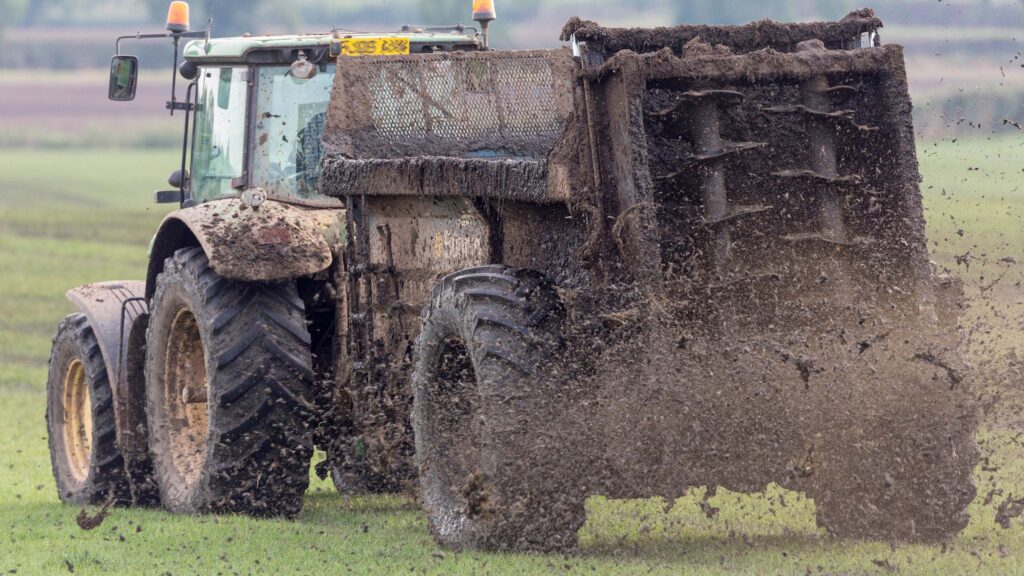 © Tim Scrivener
 Farm leaders have warned that the prolonged spell of wet weather is placing intense pressure on slurry storage, while inflexible rules on spreading are compounding the problem.
See also: How new slurry store sets up dairy to optimise spreading
In Wales, slurry and organic manures cannot be spread during set “closed periods” under the Welsh government’s Control of Agricultural Pollution Regulations. The dates are fixed in the calendar and designed to reduce nutrient run-off during high-risk winter months.
For most soils, the closed period is 15 October to 15 January (grassland) and 1 October to 31 January (tillage), while sandy/shallow soils have bans from 1 September to 31 December (grassland) and 1 August to 31 December (tillage).
However, NFU Cymru president Abi Reader said this year’s weather had exposed weaknesses in that approach.
“The persistent wet weather that has been a constant so far in 2026 is putting a significant pressure on Welsh farmers’ slurry storage capacity,” she explained.
“The relentless rain has left fields across Wales saturated, so although we are now out of the closed period for spreading, farmers have not been able to apply nutrients to ease the pressure on slurry stores due to the sodden ground conditions.”
Farmers’ frustrations at this challenging situation were being compounded, Ms Reader said, by the fact that the end of 2025 saw an extended dry spell where conditions were suitable for spreading, but the closed period in place at that time did not permit them to do so.
She added: “Once again, unpredictable weather patterns have highlighted that the farming-by-calendar approach underpinning the Welsh government’s Control of Agricultural Pollution (Wales) Regulations are not fit for purpose.”
NI latest situation
In Northern Ireland, farmers must also follow strict rules under the Nutrients Action Programme, including closed periods and buffer zones near waterways, boreholes and lakes, as well as prohibitions on spreading on waterlogged, frozen or steeply sloping ground, or when heavy rain is forecast.
The Ulster Farmers’ Union (UFU) said 28 consecutive days of rainfall had left soils too saturated for safe application, significantly limiting opportunities to empty stores.
UFU deputy president John McLenaghan said: “We recognise the strain many farmers are under at present.
“If storage capacity is becoming a welfare concern or issues are emerging, farmers should contact their UFU technical officer for advice and guidance and where ground conditions allow, and only where it can be done safely, farmers should use their judgement to identify suitable fields for slurry spreading.
“We have raised this issue directly with the minister.”
NI Water has urged caution, however, warning that poorly timed spreading can lead to phosphorus entering rivers and lakes.
In England, similar rules apply under Farming Rules for Water, with farmers also reporting that saturated ground and narrow weather windows are making compliance increasingly challenging.
Farming unions are calling for a more flexible, weather-responsive and evidence-led approach that protects water quality without penalising farmers when conditions fall outside their control.