

Contractor Comment: Diversification key for DRA Fabb
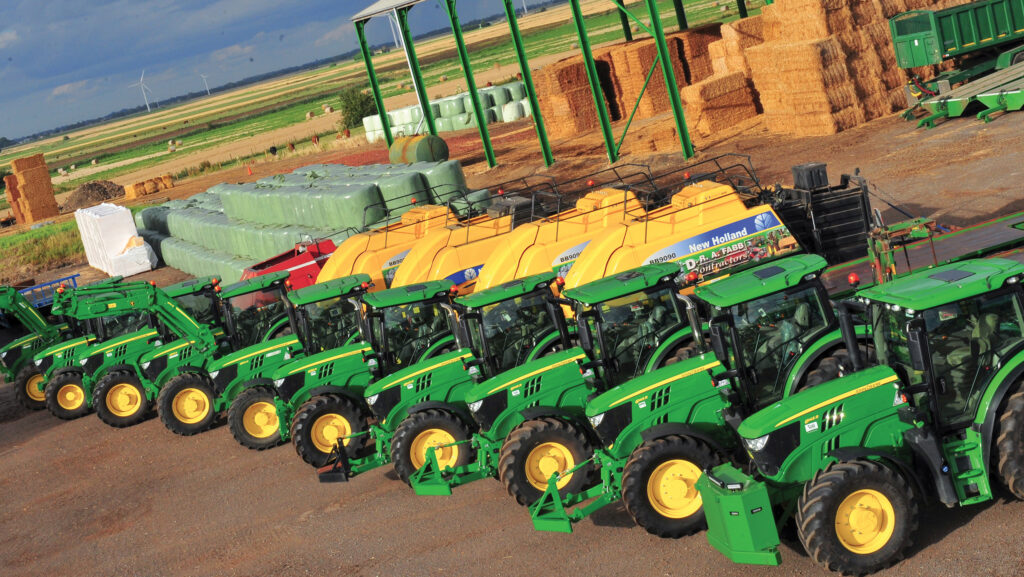 The baling fleet © DRA Fabb
 First in the hotseat for this new series of Contractor Comment is Dan Fabb, proprietor of eponymous Cambridgeshire outfit DRA Fabb.
Q: How did you get into contracting?
I worked on a farm from 13 to 16 and, at 17, bought my first tractor to cart beet.
Soon after, I was offered a contract to bale straw for Ely power station. Eventually I took on the power station’s acreage, which I supplemented by sourcing, baling and chasing my own straw.
See also: Contractor Comment: New ploughs arrive, Lexion next
In those days you could earn decent money, but I’ve subsequently worked hard to diversify the business, whether its building sheds, running diggers, or making and fixing machinery.
This helps keep staff on full-time, reduces our reliance on seasonal labour and balances the peaks and troughs of different sectors.
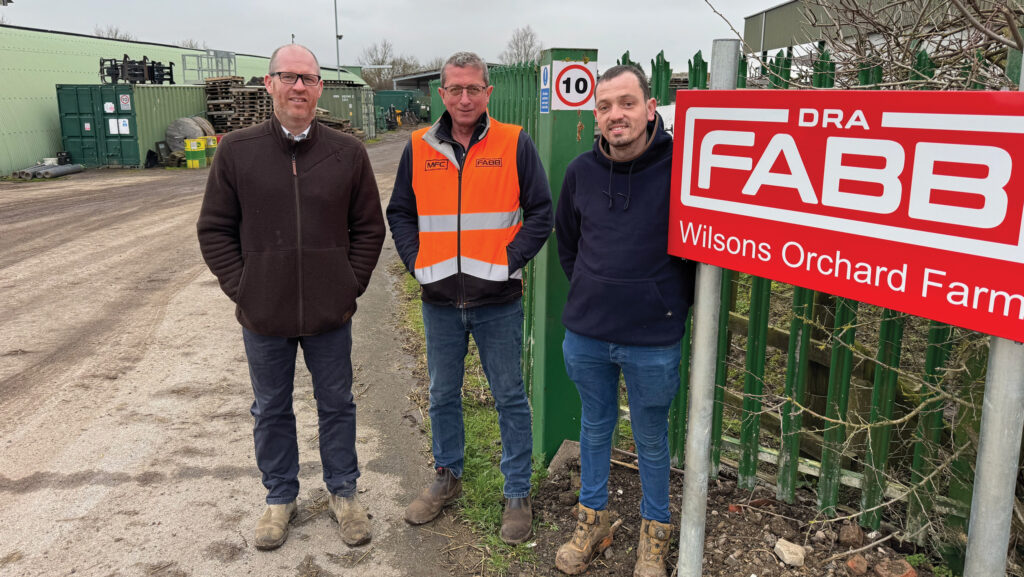
From left: Dan Fabb, Peter Keates and Johnny Rodger © DRA Fabb
About the contractor
Straw and hay baling, chasing and storage has been the cornerstone of Dan Fabb’s contracting business for the past 30 years. Alongside this, he has a newly established arable farming operation, offers construction and tree services, and supplies plant and machinery for hire.
Q: Main contracting enterprises today?
Straw is still the mainstay of the business. We bale up to 48,000 big squares across Cambridgeshire, Norfolk, Northamptonshire and Bedfordshire, and buy in as many again.
Last year, we sent 39,000t up to Brigg power station in north Lincolnshire.
Our site is also a holding site – straw is kept in sheds, under sheets and in high stacks – which allows continued supply in difficult seasons. We can store up to 20,000 bales from other contractors and have two Volvo wagons to haul it. The aim is always to do as much as we can in-house.
Q: Do you expect any major changes to the business?
We’re always looking to grow and diversify what we have. Over the past two years, the focus has been on establishing an arable farming business – Millenium Farming – that now encompasses three main arable blocks, the furthest of which is at Downham Market.
I’ve always wanted to farm my own land. It’s another string to the bow and knits neatly with the contracting operation, as we already had a lot of the machinery required.
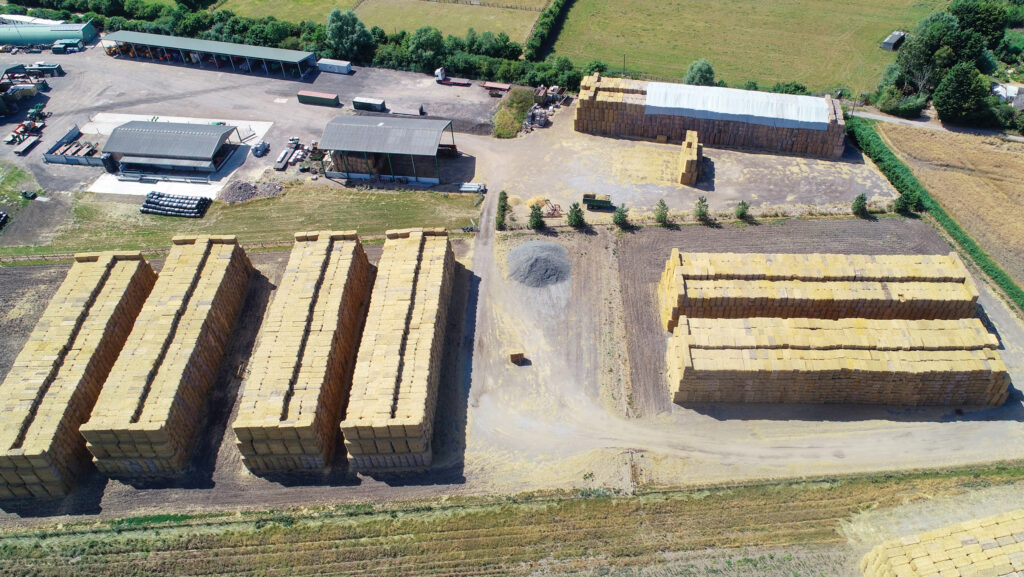
© DRA Fabb
The fleet we’ve assembled has plenty of spare capacity. We could handle another 400ha on top of the current 683ha, so we’re well placed to take any opportunities that arise.
Hopefully, this will bring us more mainstream arable contracting. Peter Keates, who runs the farming enterprise, picked up 100ha of drilling and sprayed another 100ha of potatoes last year, so it certainly has legs.
Either way, we hope to see more growth. In the past, we’ve got to the point of being happy with our lot, but that’s when the business stagnates.
Business facts: DRA Fabb, Orchard Farm, Warboys, Cambridgeshire
- Main services Stubble-to-stubble arable contracts (232ha), straw baling (40,000 bales/year), muckspreading (up to 9,000t/year), spraying (100ha/year), silage and hay baling (up to 500 and 1,500 bales/year), subsoiling and grass aeration
- Others Groundworks, steel frame building erection, landscaping and grass seeding of amenity areas, muckspreader and plant hire, straw storage, machinery repair and fabrication, tree felling, shearing and pruning
- Farming 80ha owned, 358ha tenanted, 325ha contract farmed
- Staff 10 full-time, plus another seven during seasonal peaks
Q: Any forms of diversification?
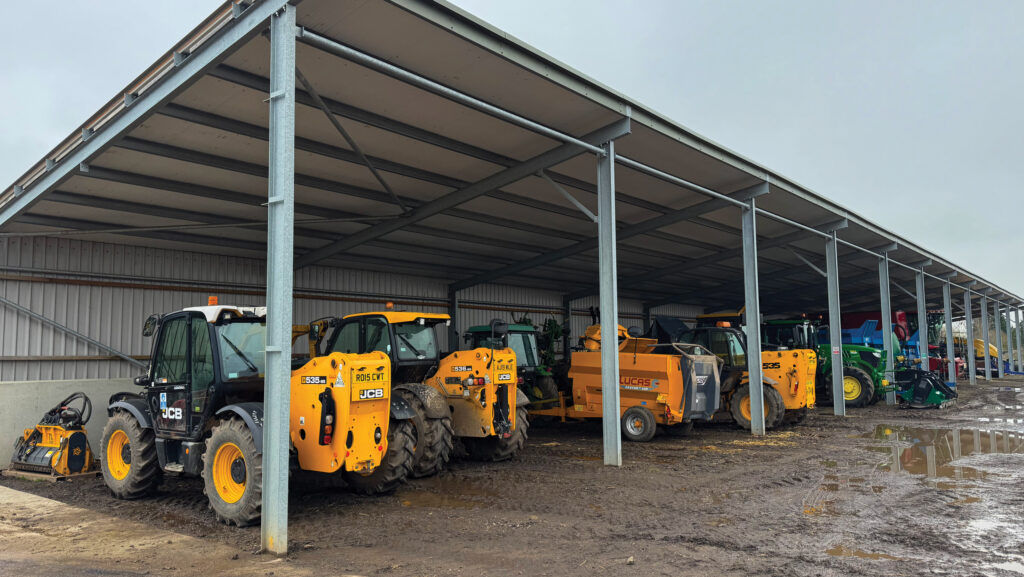
© DRA Fabb
We started branching out from hay and straw a decade ago and will now turn our hands to almost anything.
Steel frame erection and recladding have proved successful sidelines, in part because it keeps two members of staff busy all winter and maintains cash flow at an otherwise quiet time.
We put up a couple of grain stores and straw sheds every year and have done four within half a mile of our base.
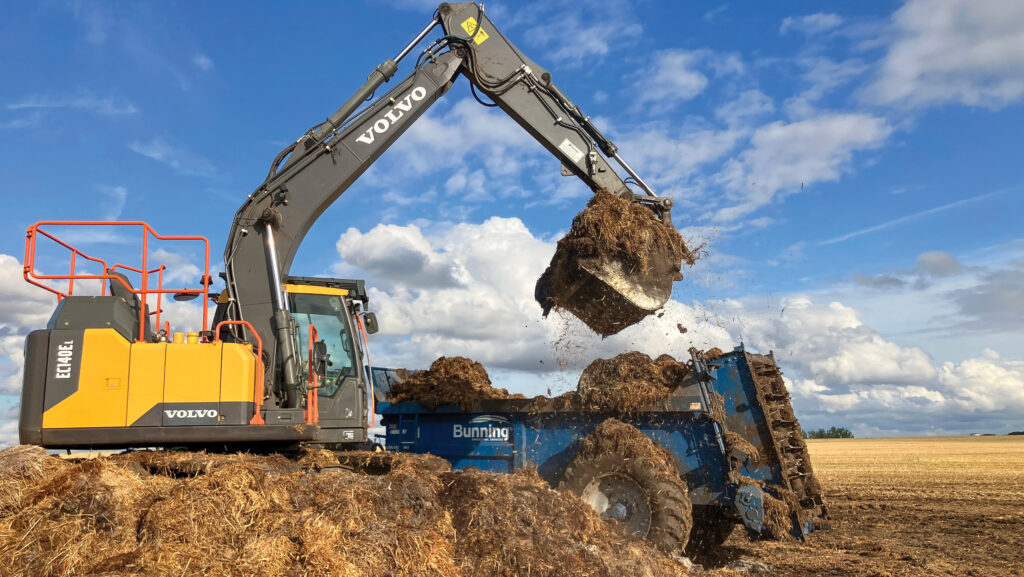
Allied to that is concreting, groundworks and drainage, for which we have three diggers. We also have mulchers for site clearance, tree shears, post hole borers and knockers, and various rippers and buckets.
© DRA Fabb
They’re available for hire, too – as are our three Bunning Lowlander 160 muckspreaders.
Some years we can spread up to 9,000t of muck, compost and chicken litter; in others it might be only half that if farmers have the time to hire and do the job themselves.
Keeping the spreaders in good nick is always a challenge. But it’s worth it. Customers are sent pre-rental pictures and are expected to return the machines in the same condition.
If they bend something, they fix it – or pay for us to do so. The same goes with cleaning, even if that means they have to take an extra day’s hire at £180.
The workshop also earns its keep. As well as maintaining and repairing our own kit, we do some welding and fabrication for other people. Building bale grabs used to be one of our side hustles.
And my partner runs 60 pedigree Herefords and a flock of 30 sheep. The numbers have been scaled back due to the workload – there were 200 cattle at one point – but it’s still a good use of reject straw.
Q: Most profitable contracting enterprise?
Seeding small amenity areas is the most lucrative – those for which we can charge by the metre but are big enough for our compact tractor and 3m Vredo disc drill.
Profitability across the other business divisions fluctuates, as it is largely driven by commodity prices.
Hay has been the big winner this winter. We had stacks of it sat in the shed from the last couple of years. The whole lot went – some for up to £200/t – and no one moaned about the quality.
It served as a good reminder to keep filling the barns and demonstrated the value in spreading risk.
Provided the Fabb group makes money, I’m less concerned about annual variations within individual divisions – unless there’s an obvious downward trend.
Kit list
- Tractors John Deere 6155R x3, 6215R and 6250R, plus 6R 185 x3 and 6R 155 x3 on hire
- Combine Case IH Axial Flow 9250 (35ft header)
- Balers Massey Ferguson 2290 x3, New Holland BB9090 Plus x3, Kuhn VB 2260
- Mowers John Deere 310 front and 3.1m Krone rear mo-cos, Spearhead 6.3m topper and 3m flail, McConnel hedgecutter
- Chasers Heath Super Chaser x5 (four 10-bale, one 12-bale)
- Telehandlers JCB 535-95 x3, 536-95 x3
- Cultivators Kuhn Cultimer 4m, Gregoire Besson six-furrow plough, Pottinger Synchro, 12.3m Dalbo rolls
- Drills Pottinger Terrasem Plus 6m, 4m combination
- Sprayer Amazone UX7001 (36m/7,000-litre)
- Spreaders Bunning Lowlander 160 x3
- Wagons Volvo FH and FM x2
- Groundworks Cat 953C, Volvo EC140 and ECR88D with Steelwrist, Hitachi 26u
- Site clearance and tree work Jak 300 tree shear, Fermac T15 fixed-head mulcher
Q: Least profitable contracting enterprise?
The arable sector isn’t in a good place, so establishing the farming division over the last couple of years has been a challenge.
One of the farms we took on required big investments in drainage and infrastructure, but we’ve got it for at least 10 years so hopefully the commitment will eventually pay dividends.
Q: Biggest threats to your business?
The current government – and maybe the future one, too.
There’s too much volatility, and there needs to be a much greater focus on self-sufficiency. This would help level the playing field against cheap imported commodities produced to different standards.
Global unrest doesn’t help either. With things kicking off in Iran, fuel and fertiliser prices could soar against a flat wheat price.
Q: Difficulties with staff recruitment?
There’s no question that quality seasonal labour is getting harder to find. It has hindered our growth, and I can’t see it changing.
New entrants are in short supply, despite the decent earning potential, in part because there is so much doom and gloom in the industry.
Like many straw contractors, we were far too dependent on casual staff. This was one of the motivations for diversifying into out-of-season work that allows us to keep more on full-time.
We typically need six or seven extra pairs of hands at harvest. Last year, most of them were local but that was unusual. Typically, they come from Ireland for a six- to eight-week stint.
The short working window seems to suit them, as they can finish their first and second silage cuts, miss the light third while they’re here, then head home for maize.
Q: What excites you about the season ahead?
Sunshine, long days and plenty of straw.
Q: New machines in 2026?
As mentioned, the farming business has been our focus. For that, we’ve bought a second-hand Case IH combine, 6m Pottinger Terrasem Plus drill and 36m/7,000-litre Amazone UX7001 trailed sprayer with individual nozzle control.
So, this year, it’ll be the turn of the baling side.
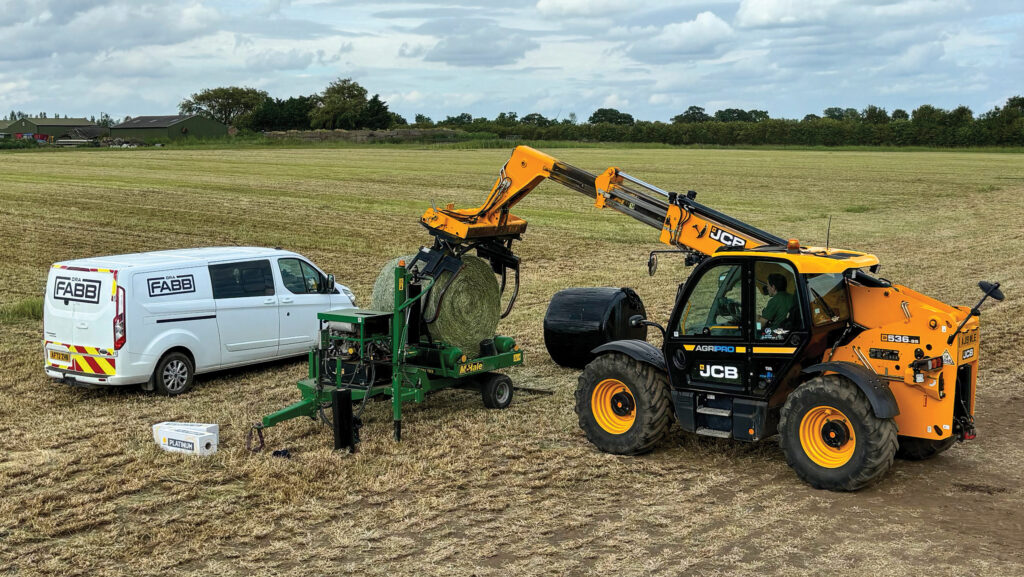
A new JCB 542-10 telehandler is on its way, taking our fleet to six. At £110,000, it was a big investment, but it’s properly designed for the straw job and the extra reach and lift should prove handy.
In fact, handlers are the only machines we buy new on the contracting side. They’re doing over 1,000 hours/year – some significantly more – and stay for a long time. One is currently on 14,000 hours.
© DRA Fabb
We’ve also just bought a fifth Heath Super Chaser. We’re slightly over-machined on the baling and chasing front – in low yield years we might only need four balers and three chasers – but we can’t afford to be under capacity when the weather is catchy.
This latest version is a 12-bale model, which we bought privately for £45,000. It’s newer than the rest – we’ve got models from 1999, 2002 and 2004 – but they tend to last well and hold their value. The old one will stay for now, as it’s nice to have a spare.
As crops currently seem to be in good shape, we’ll also look to get another baler before harvest. I’m hoping for a big straw year, and I feel reasonably confident we’ll get it.
Q: Recent major breakdowns?
Nothing major. We’ve had a pretty easy run of it.
The biggest headaches have been broken windows: seven of them last season. All but one were caused by mowers and balers, the other by the plough’s auto reset system that somehow pinged a stone straight at the glass.
Other than that, it has been run-of-the-mill stuff – a baler flywheel and a couple of boom pipes on the loaders.
But we’re happy to tackle any breakdown, which is why we’re not frightened about buying ex-demo and second-hand kit.
For more complicated repairs we work with a few independent, ex-main dealer mechanics. They tend to pinpoint the problem, then we fit the parts.
However, we’re currently looking at buying our own diagnostics kit to be fully self-sufficient.
We know most of our machines inside out, especially the John Deere 6155Rs. They’ve become a staple of the fleet because they’re bulletproof and easy to repair.
AdBlue pumps, turbo actuators and blocked DPFs are the most common issues, and we’ve got a decent grasp of the codes to look out for.
As a result, we’re confident about running them to decent hours. The current fleet ranges from 1,500 to 8,500.
We usually bring in another six R-series machines from MP Hire in Shropshire. Some stay over the winter on a clock hour payment and the odd one never leaves, as the purchase prices are competitive.
Q: Overwinter projects?
Our current priority is fine-tuning the bale sheeting system we developed 12 years ago, long before others were available on the market.
It gave us a real edge at the time, as we could keep straw in good enough condition to roll it over a season.
And though it still works well – one sheet can cover 250 bales – the tweaks should make it quicker, slicker and safer.
Other projects on the pre-harvest to-do list involve sheds. We’re planning to convert one of our current bale stores to grain, then put up another. It’ll be 11m to the eaves, so should accommodate 3,500t of straw.
We’ve also got a few refurbs on the go. One is a 1978 Caterpillar D4D crawler, which I’d always wanted but don’t exactly have a use for, and the second a Cat 953 track loader.
It is getting a new undercarriage and an engine rebuild, with a view to using it for loading muckspreaders.
Plus, there’s currently a 15.6m longer semi-trailer (LST) outside the workshop ready for an overhaul.
Q: Current contractor frustrations?
Other than politics, it’s the cost of new machinery.
I can’t see it coming down so, like most contractors, we’ve started to run kit for longer to offset the initial investment.
The diversity of the business means we can really stretch this out, dropping machines down to lesser duties as the clock hours rise.
Long warranties also help mitigate risk. The Loadalls are covered for five years/5,000 hours, which is expensive. But it gives us peace of mind, especially as we rely on them so heavily.
And we take the same approach on anything else we buy new. The sprayer is warrantied for three years, partly because there is so much technology on it, the drill for two, and even the second-hand Volvo truck has three years’ driveline cover.