Contractor Comment: New ploughs arrive, Lexion next
 © Stuart Wilson
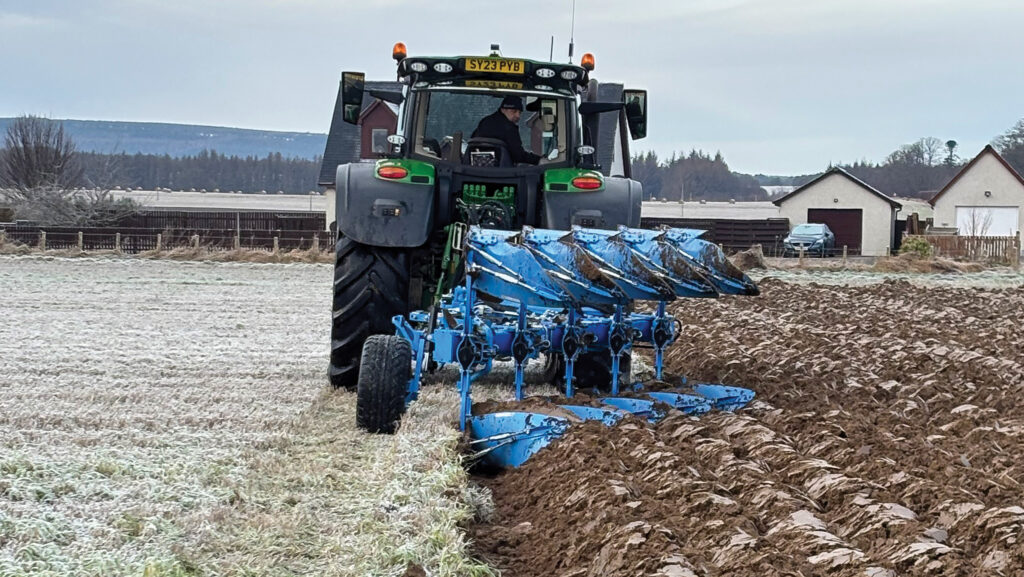
 A new Lexion combine had been top of Stuart Wilson’s shopping list this winter, but it’s sky-blue implements rather than a green-and-white leviathan currently taking pride of place in his yard.
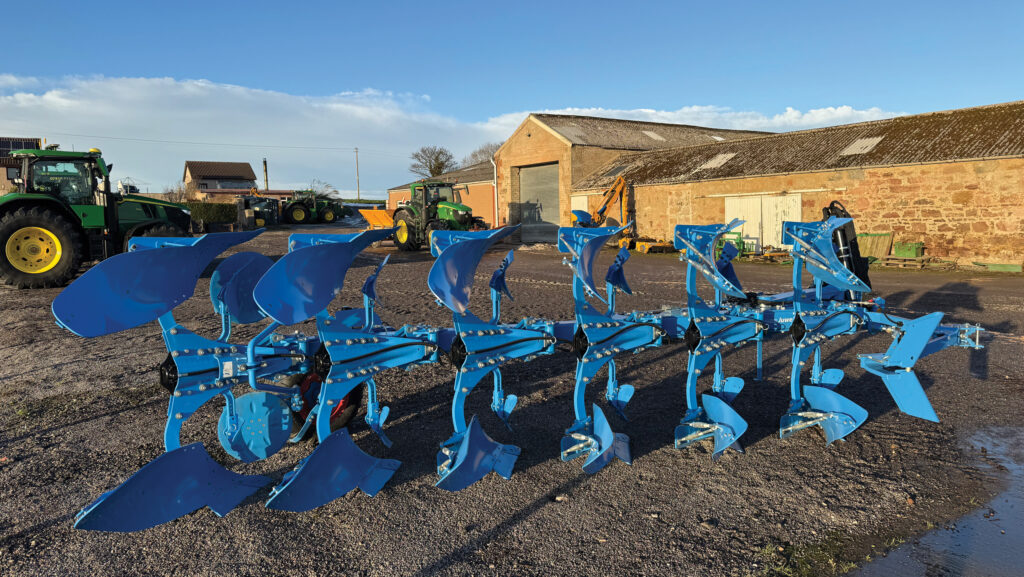
The two pristine Lemken Juwel 10 ploughs – one sporting five furrows, the other six – arrived in early winter, bringing to an end the firm’s 30-year run with Kverneland.
Price was the primary motivation for the change, says Stuart.
See also: Contractor Comment: Second Jaguar mops up late-season grass
“Duncan Duthie and Michael Cruickshank from Lemken Scotland came for a deal, pushed hard for it, and got it. I just couldn’t say no.”
“Plus, though we’ve always got on well with KVs, I was a little less convinced about the build quality of newer generations.”
The outgoing KVs made good money, having completed almost six seasons at a relatively modest cost of £2,000/year over 500ha, equating to an average of just £4/ha.
Both Juwels have been specced with simple hold-and-pin skimmer adjustment, with Stuart having started to loathe KV’s centralised system that allows both left and right sides to be altered simultaneously.
Stuart Wilson © Oliver Mark
“The quick-adjust system was good when it was new, but after a few years I found myself having to push the bottom skimmer up with by boot while lifting the top one.”
They’ve also got long mouldboards to give more reliable soil inversion, and 450hp-rated headstocks as opposed to the 330hp of the KVs.
“The Lemken is an excellent burying plough,” he says. “Time will tell if it can match the Kverneland for performance and running costs, but I’m certainly confident.”
Extra work
Though Stuart was beginning to question the wisdom of such a big investment in the face of dire cereal prices, a welcome increase in workload has helped allay any concerns.
He recently picked up another 280ha of ploughing at a nearby farm, for which he already does the drilling. His team has also been charged with driving its combine, and fertiliser application could be next.
These gains have proved a useful reminder of the merits in maintaining enough headroom in the fleet to take opportunities as they arise.
And, critically, without having to tool up first, given lead times for most new machines are at least three months.
© MAG/Oliver Mark
“Our aim is to do less firefighting and more planned work,” he says.
“We expect openings like this to come our way as farmers retire, farm policies change and businesses struggle to justify machinery replacements.”
This minor epiphany has also prompted a change of tack on the baling front. At the time of our last visit, Stuart had his mind set on shedding excess machinery to streamline in line with falling demand.
But, with cereals in the doldrums, grass harvesting could yet prove a crucial service, so he now plans to stick with what he’s got – even if it means some implements are underworked.
“The kit is older than I’d like but, bar a bit of maintenance, it’s not costing me,” he says.
“There’s no harm in holding what we have in case an opening comes our way, especially given the state of the spring barley sector.”
Combine pending
As mentioned, one high-priority item remains outstanding on the to-do list: procure a new combine.
The fire-inflicted hole in the harvesting fleet will almost certainly be filled by a 19-plate Lexion 760 Terra Trac.
But it won’t be sealed until the seller has taken delivery of its replacement, most likely in late spring.
“It is coming from a well-run business,” says Stuart. “I was impressed with the farm and the combine – first impressions count for a lot and give a good indication as to how it has been looked after.”
It won’t come cheap, though, with six- to seven-year-old machines holding their value better than ever.
“New ones are so dear and crop prices so poor that fewer harvesters are coming onto the market, and those in good condition are in demand,” he adds.
As for any temptation to switch brand?
“No. We pay a premium for a Lexion, but it does what we ask, we know them well, and the backup is second to none.”
The combine will probably be the last big investment of the winter, especially given the business is only two years off a major churn of tractors, with all five frontline Deeres having been bought as a batch in 2023.
“As ever, I’ll get the facts, figures and best prices, then make a decision.”
That judgement will be swayed by plans for an anaerobic digester plant in Easter Ross – confirmation of which Stuart was expecting early this year.
Plans on ice
However, the development has been frozen following the rejection of an application for a larger, sister biogas facility across the Moray Firth in Elgin.
Sadly for Stuart, that means shopping for the big boys’ toys required to harvest the feedstock and spread the waste has had to be put on hold.
“They’re not saying ‘no’, so there’s still hope. And it would give local farms a real boost,” he says.
“As it is, the spring barley job is on its knees – and cereals in general for that matter. If the downturn continues then people will have to look for alternatives, whether it’s fallow, cover crops or something else.”
© MAG/Oliver Mark
A slump in demand for Scotch whisky means distillers are struggling to nail contracts, and malting barley growers are feeling the inevitable knock-on effects.
The local distillery is now only running six months of the year, in part because of Donald Trump’s punitive on/off tariffs that add significant costs to the industry’s biggest export market.
“The digester would have solved this, as feedstock would have accounted for 30-40% of our customers’ ground, leaving the rest for cereals.”
“It will level itself out… but how long will that take?”
Winter work
The lack of autumn drilling in the schedule makes for a quiet quarter-year from October to January.
But the team was woken from its workshop slumber by heavy snowfall in early January.
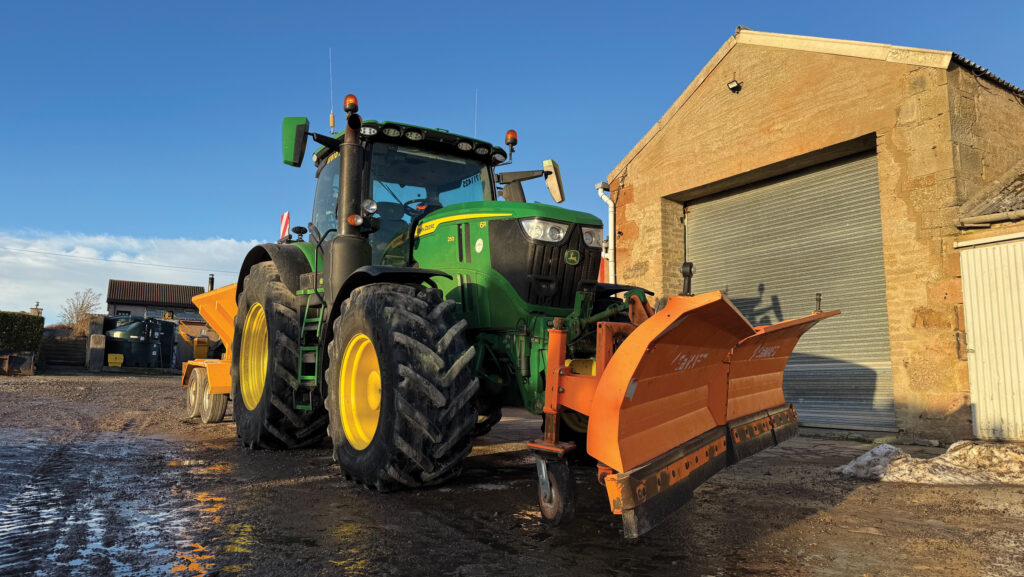
Gritters were out soon after Christmas, and the two snow ploughs thrust into action a week later.
“I was woken by a 3am call to help clear Tesco and Asda car parks in Tain, we kept a few roads open for the council, and cleared car parks, whisky warehouses and forestry tracks,” says Stuart.
“Plus, we did our bit to keep the community moving, pulling out the odd car and van, and making occasional runs to Co-op for milk.”
With the snow now gone, the team has returned to the warmth of the workshop, giving every machine involved in the 1,600ha spring sowing operation a thorough once-over.
A project to build a new front weight block to pair with the five-furrow Lemken is also well under way.
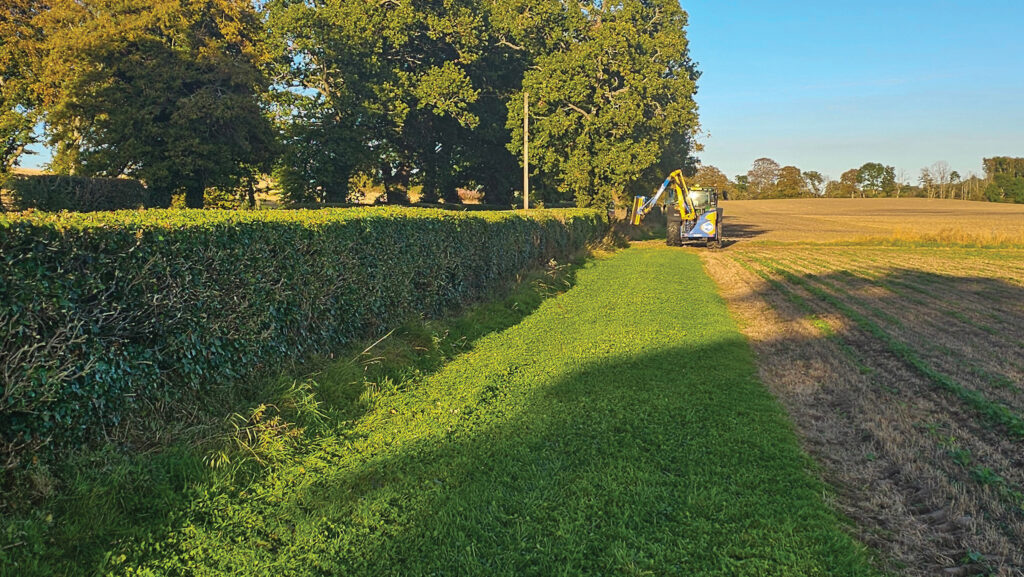
Meanwhile, the hedgecutters have almost finished their autumn/winter campaign. But they won’t be running through October and November again, following “ludicrous” government changes to the working window.
© Stuart Wilson
From this year, new greening rules in Scotland will push the start date to 1 December, before the window slams shut at the end of February.
“Rather than cutting field hedges when conditions are drier, we’ll instead be on wet ground or travelling on frosty roads, and having to deal with low sun – a decision that could only be made by people in offices.”
These restrictions will bring forward maintenance work. That means spending rather than earning, which will impact the firm’s cashflow.
“It’ll make for a very quiet end-of-year,” says Stuart.
“But at least it gives the lads a good break. We push when we need to push, but it’s important to have balance and give everyone a chance to recharge their batteries.”