Contractor Comment: Static Orkel baler arrives at R&L Anthony
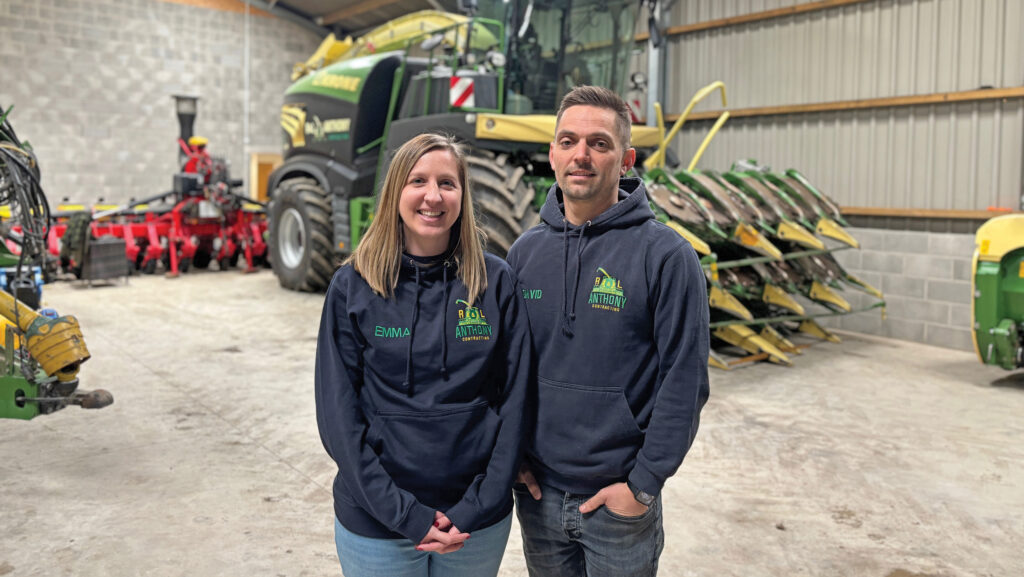 Emma and David Anthony © James Andrews
 Farmers Weekly heads to the Vale of Glamorgan to meet up withoutfit R&L Anthony Contracting, fronted by David Anthony and wife Emma.
We find out about the contractor’s main enterprises, kit and how business is faring.
See also: Contractor Comment: Diversification key for DRA Fabb
Business facts: R&L Anthony Contracting, Sealands Farm, Bridgend
- Main services Grass silage (1,200ha), maize silage (500ha), wholecrop silage (80ha), maize drilling (500ha), digestate and slurry spreading (50,000cu m), big square baling (12,000)
- Other Round bale maize and forage sales, holiday cottages, airport maintenance
- Staff Five full-time, plus three part-time and up to 17 at harvest
How did you get into contracting?
After I graduated from Harper Adams I came back to the family farming business, which is run by my dad, Richard, and mum, Lyn.
I spent a few years doing harvests at home as well as in Australia, which gave me some great experience.
But rather than just settling into the farm, my wife Emma and I wanted to have the independence and responsibility that comes from setting up our own venture, implementing new ideas and revenue channels while working alongside my parents.
We therefore hatched a plan to start a separate contracting outfit. This meant we could still do work for the farm, but develop it in our own way and take on other contracts.
It’s worked well so far, with about 60% of our time dedicated to in-house operations and 40% elsewhere.
We’re also able to cross-hire machinery and staff between the two enterprises, which helps with costs and reduces pressure during our busiest periods of the year.
Around the time we set up in 2013, a tenancy came up for a farm on the Dunraven Estate. We got it and it has proved to be the ideal base for us.
Main contracting enterprises?
Forage production is a big part of the business and we clamp both maize and grass which is sold to farms across South Wales.
Traditionally, this has gone out in bulk, but we’ve now started selling it in round bales, which are produced using a static baler/wrapper.
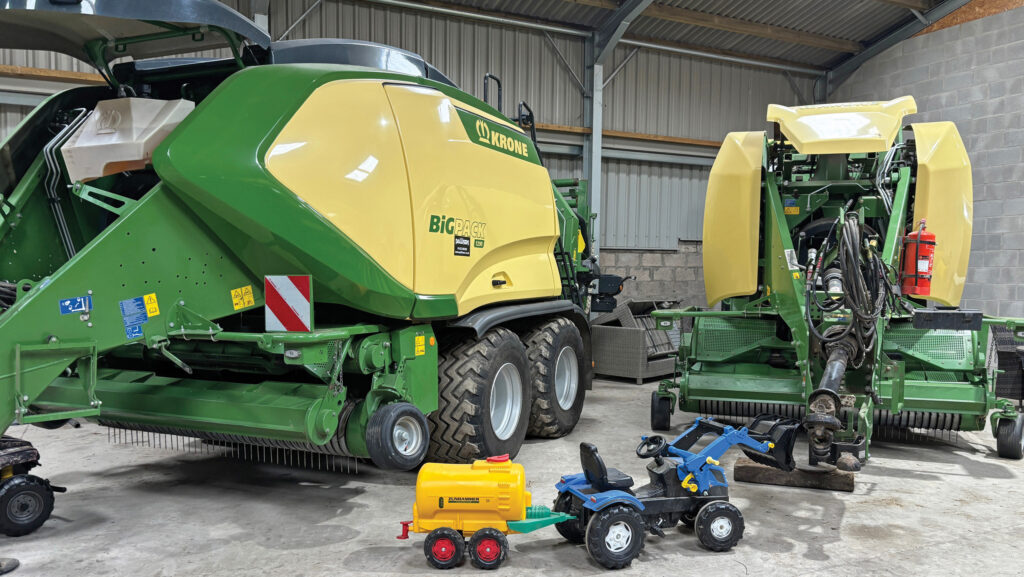
Krone balers © James Andrews
We also run a pair of big square balers – a Krone BigPack 1290 and 890 – which do the bulk of their work in straw, but are also used to make hay and haylage.
Maize keeps us busy in the spring too, with our 12-row Vaderstad Tempo establishing about 500ha a season.
Then there’s digestate, which we spread from a 3MW food waste anaerobic digester plant run by Severn Trent that borders one of the farms.
A pair of 19,500-litre Zunhammer tankers are used for this, fitted with 24m dribble bars and docking stations that we carry on front linkages.
This work continues in the off season as we ferry digestate to a series of lagoons and bags where it is stored until the application window opens.
We cover most other forms of agricultural contracting too, both on the home farm and for external customers.
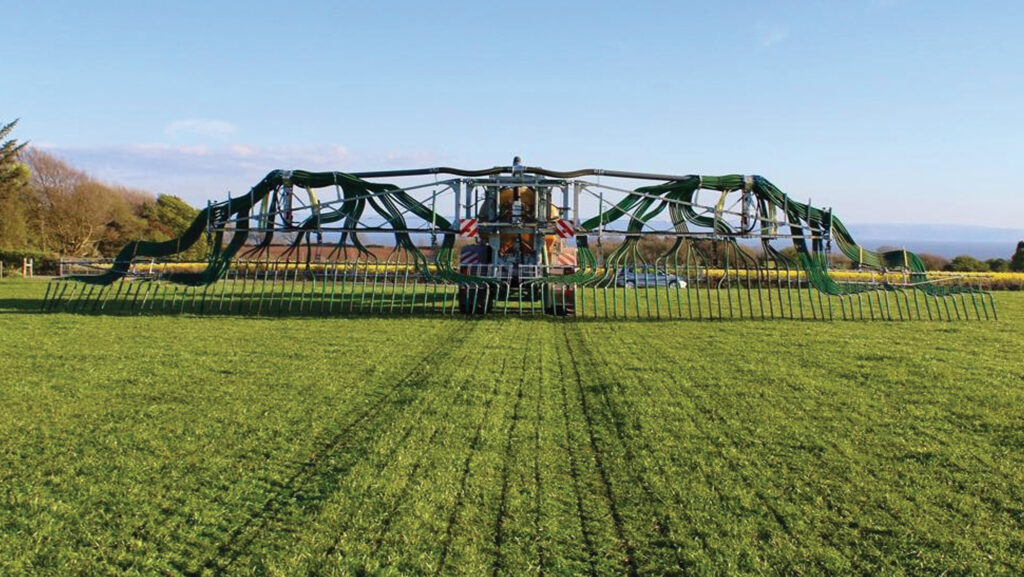
Zunhammer tanker © James Andrews
Any forms of diversification?
Our quest to find alternative ways of making money means quite a lot of our work is diversified from core farming.
The most distantly related is our holiday let business, which Emma heads up. There are three recently renovated cottages on this farm and another by the coast which bring in a steady income.
We are seeing a really high repeat customer rate, and have recently been awarded “best farm stay” for one of our cottages.
Operating costs are kept down by heating the cottages, the farm house and buildings with a twin biomass boiler and 10,000-litre accumulator.
This has an Etahack auger-fed woodchip unit running constantly to keep the water temperature up, and an EcoAngus batch burner to give big bursts of heat.
The combination generates sufficient output that we’re able to siphon some off for heating our buildings, which has been invaluable for keeping machinery in good condition.
As we’re by the coast, sea spray is a constant problem, so as soon as we’ve finished a job the kit gets washed off, oiled up and put inside.
Before we had the biomass setup, machinery would often be covered in condensation during storage, but now it stays bone dry year-round.
© James Andrews
Airport maintenance is another of our diversifications.
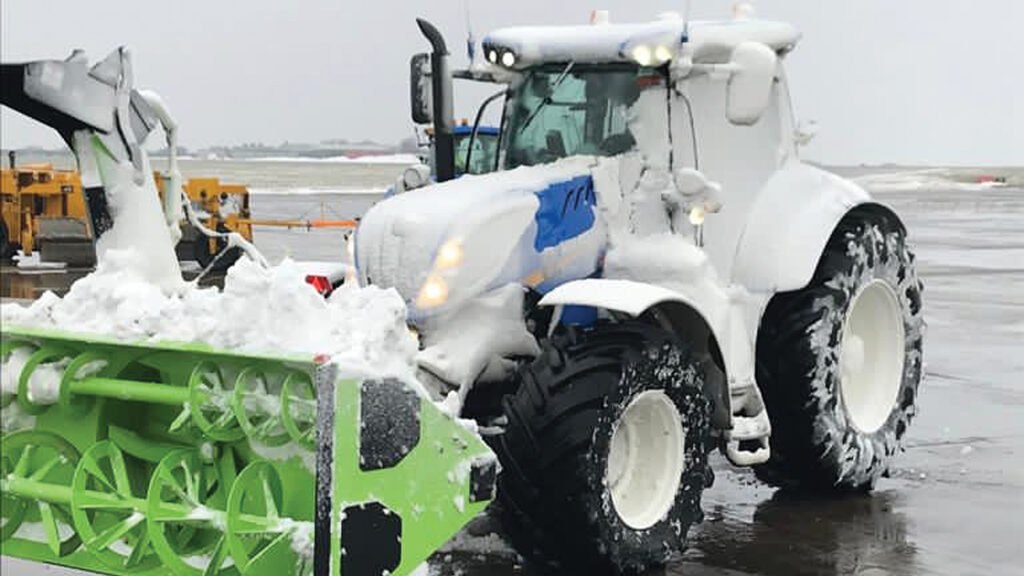
Several years ago we tendered for and won the contract for RAF St Athan, where we spray and grit runways, clear snow, mow grass and bale it once a year.
It’s good, regular work, which often fits in around farm jobs, rather than clashing badly with them.
As an added bonus, it’s allowed us to invest in a 24m mounted Amazone sprayer and front tank that we couldn’t have justified for the amount of agricultural work we gave it at first.
We also carry out snow clearance at Cardiff airport, though we only provide the tractor and manpower for this.
Any new services?
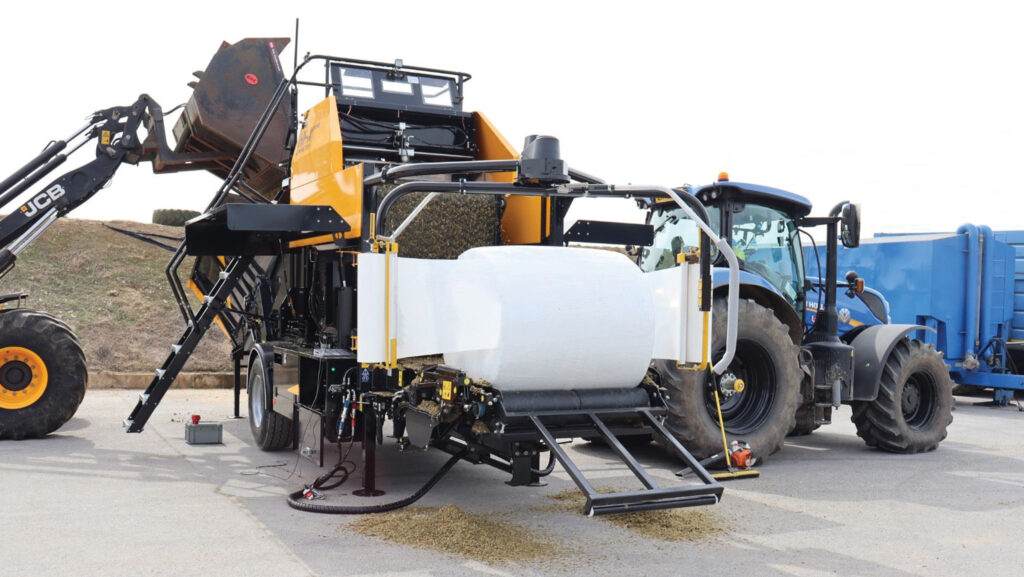
Last year we made a significant investment in an industrial grade Orkel static round baler/wrapper.
We’ve been using it to produce 1t bales of maize and grass silage that we can sell to farms that don’t want a full bulk load.
Orkel baler © James Andrews
When packaging maize only, we simply cut it out of the clamp with a shear grab and drop it straight into the baler.
But for the grass and maize mixes, we’re blending them first in a Trioliet twin-tub mixer wagon that we bought second-hand.
To make the forage baling enterprise pay, I calculated that we needed to be processing more than 55t a week and, thankfully, we’re already comfortably over that.
The plan is to keep increasing the workload until the machine is running almost flat out.
I’ve seen what these balers can do on recycling sites, which is far tougher work than silage, so we should be able to push it pretty hard.
Next, the hope is to begin including some concentrates in the maize and grass blends which will add yet more value.
This will require us to get UFAS [Universal Feed Assurance Scheme] accreditation as we’ll technically be operating as a feed merchant.
Most profitable contracting enterprise?
None of the straight contracting work is a massive money spinner, which is why we’ve tried to get creative and add value where we can.
The Orkel baler is a prime example of that and, though it’s still early days, I hope it will help make the forage harvesting job more lucrative.
We also religiously cost out every job to make sure there is at least some profit in it – if there isn’t, we try our best to avoid doing it.
It’s nice to have some non-agricultural work in the mix too, which helps spread risk and give us work that isn’t so time-sensitive.
And the least profitable?
I did say we try not to do any work that doesn’t make a profit, but there are some that are marginal at best.
These are either services that we feel we need to offer, or they keep staff and machinery ticking over during the quieter months.
Wholecrop silage is a prime example of the former. If we’re doing a customer’s grass and maize, we don’t want to be telling them to use another contractor.
But it’s sporadic work that varies considerably from year to year and the headers are too expensive for us to justify buying one.
Instead, we hire one in if we’ve got a decent amount to do and, for smaller areas, the X Collect maize header will do the job.
Like most contractors, we struggle to make a decent crust out of hedgecutting, but it does provide a bit of extra income over winter.
Biggest threats to your business?
In the contracting business you get hit from both sides: rising machinery prices on the one and declining farm incomes on the other.
We should really be charging more, considering how much the kit costs, but the money just isn’t there.
I’m also getting pretty tired of chasing bills, which only gets worse the more farmers are squeezed.
Difficulties with staff recruitment?
We’ve been really lucky with our staff and have a great team that we can rely on to do a good job, whether it be farm work or airport maintenance.
Most started with us young and have been on the books for years. But if we have needed more feet on the ground, we’ve put a post on social media and have always had a good selection of applicants.
Contracting is hard work, so we try and create a fun and relaxed culture, with enough social time to balance out the hard graft.
Our longest serving team member is Miles Davey, who has been with us since the start and is more than capable of stepping up to run operations if we’re away for any reason.
While we’re on the topic of staff, it’s worth mentioning AgDrive. It’s really helped us with the admin as the lads don’t have to carry notepads around with them and we don’t have to go hunting for them every week.
We’ve got every customer’s field mapped in it now, which makes it really easy to record jobs and then generate an invoice.
What excites you about the season ahead?
Some drier weather and the opportunity to get stuck into proper work.
It is nice that things settle down over winter and it does give us a bit of time to regroup, but we’re ready for some action now.
Recent new machines?
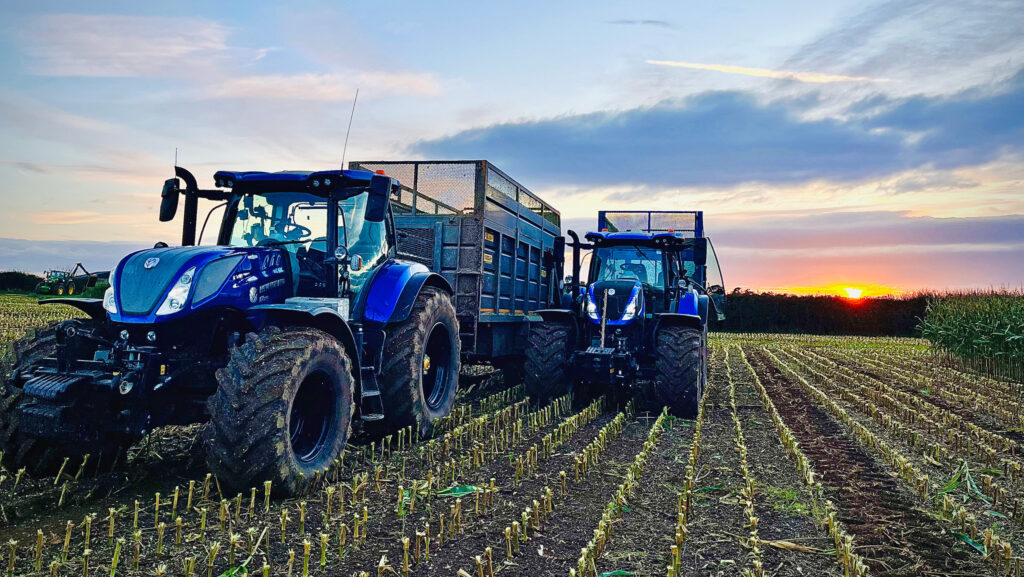
Our two T7.270s and the T7.260 are going soon and will replaced by a new PLM T7.270, T7.300 and a JCB Fastrac 4220 iCON.
We’ve always had New Holland tractors and fix our costs by making sure each has a five-year/6,000-hour warranty.
The ones we’re selling are on a 73-plate and have only done about 3,000 hours each, which has helped to keep the value up and made the cost to change a little less painful.
Two of the New Hollands © James Andrews
As for the reasoning behind the JCB – we’ve got a lot of road haulage to do these days and no tractor handles that as well as a Fastrac. Plus it’s the only one that can legally travel at 60kph.
We also replaced our forager for the 2025 season, moving from a V8 Krone Big X 780 to a V12 980.
This has allowed us to bump up to a 12-row X Collect maize header so we can cover the ground much faster and leave a better stubble finish.
Recent major repairs/breakdowns?
As most machinery is under warranty we haven’t had to foot too many big repair bills.
That said, we did have a conditioner gearbox failure last year on a set of triple mowers hired off the farm business.
As it happened while we were using it, we footed the £5,000 repair bill.
Kit list
- Tractors New Holland T7.300, T7.270 x2 and T7.260
- Forager Krone Big X 980
- Loaders JCB 419S and TM420S
- Balers Krone BigPack 1290 and 890
- Sprayer Amazone UF 24m mounted
- Grass McHale 998 wrapper, two- and four-rotor Krone Swadro rakes
- Maize drill 12-row Vaderstad Tempo and S&K Sprayers Nitrobar system
- Slurry and digestate Zunhammer SKE 19,500-litre tankers x2 with 24m dribble bars
- Other Orkel Hi-X Evo compactor baler/wrapper, McConnel PA6565 hedgecutter (shared with farm), additional tractors and machinery hired from R&L Anthony farm business when required.
Overwinter projects?
We do some of the maintenance and repair work ourselves but, for bigger jobs, we get self-employed fabricator Rhys Jury of Celtic Mobile Welding to come in and help.
The most recent project was to refurb our 40cu m Fraser nurse tank, adding jacks and a sight glass, as well as twin up-and-over pipes at the front and rear.
This will make it far quicker and safer to fill and we can approach with tankers from either side depending on where they’re parked.
We’ve also fitted a new set of LED work and road lights on the Orkel baler and modified the steps to make it easier and safer to get up to the feed conveyor.
Current contractor frustrations?
The cost of equipment is the most frustrating as it’s so difficult to justify every purchase.
But farming and machinery are our passion and we try to be as inventive as we can to come up with ways of making it pay.