Thatching straw growers to get free vintage machinery guides
 © Packham Thatchers
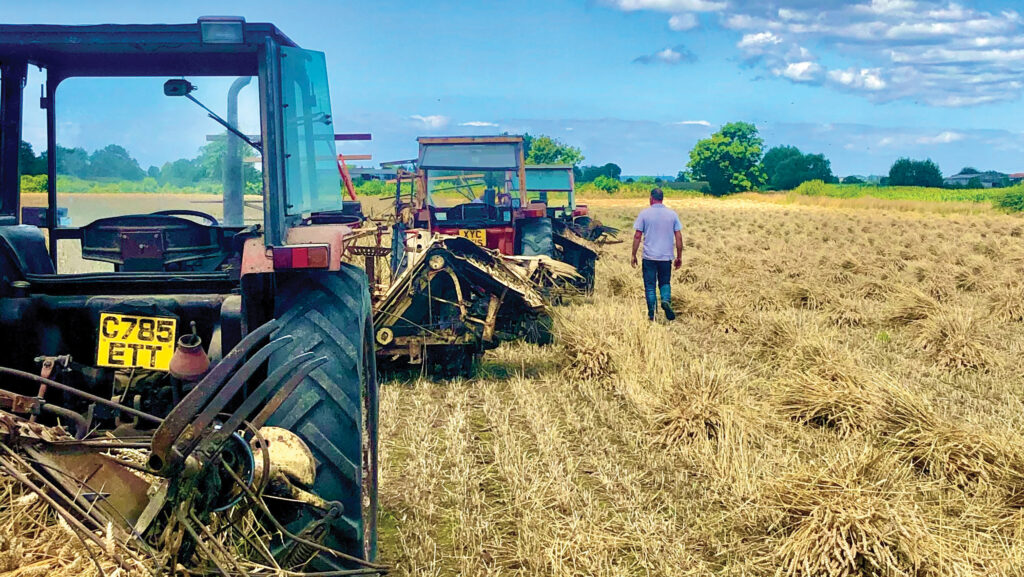
 Historic England has commissioned a series of technical guides designed to help thatching straw growers maintain and modify the vintage machinery they rely on.
The government body has major concerns over the availability and sustainability of long straw and combed wheat reed, and the impact shortages will have on the preservation of listed buildings.
See also: On test: We rate the latest battery-powered grease guns
Four years ago, it enlisted the services of agricultural engineering consultant Dr Andy Scarlett to compile a report on common harvesting practices.
The aim was to identify opportunities to modernise the equipment used and, in doing so, attract a fresh cohort of growers.
However, the hunt for mechanical advancements has fallen flat, partly because it is such a niche sector.
Instead, the focus has turned to helping them make the best of the equipment they have by supplying four free-to-download handbooks.
The first three cover binders, knotters and trussers, including guidance on machine set-up, maintenance, fault finding and safe operation.
They also contain whys and wherefores of potential modifications, primarily to replace old components with newer and more widely available alternatives.
The fourth is on Howard Bigbalers – a low-density, three-string square baler that remains a popular means of packaging sheaves in the field.
Only 80 of the 1,800-odd models produced are still in service, which makes sourcing spare parts particularly challenging.
Straw shortages
Straw has been in short supply for several years, not helped by the two consecutive poor growing seasons that have also afflicted conventional arable growers.
The situation is so dire that homeowners in some counties have been granted permission to switch straw for tiles to alleviate the eyesore of tarpaulined roofs.
There are myriad factors at play, including the ageing demographic of growers and a lack of seasonal workers for the labour-intensive harvesting process – estimated at 54 hours/ha.
Suitably tall wheat varieties, such as N59 introduced in the 1950s, Maris Widgeon from the 1960s and Huntsman of the 1970s, are also hard to come by, with the licences for many long-since expired and growers therefore prohibited from selling seed to one another.
Then there is the dependence on unreliable and inefficient machinery, much of which was built in the mid-20th century – issues with which Historic England hopes its guides will alleviate, if not eliminate.