Oddball and under-the-radar kit launches at Agritechnica 2025
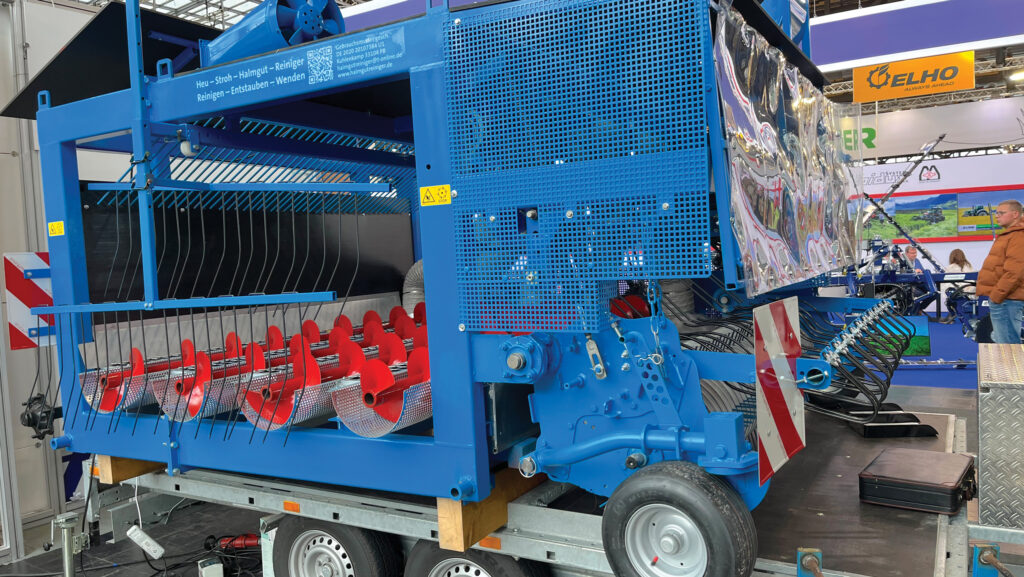 Kuhlenkamp hay cleaner © Nick Fone
 While the big players steal the limelight at shows, there are always plenty of novelties hidden in hall corners. Nick Fone sniffed a few out at Agritechnica 2025.
See also: Pottinger rake skid increases forage quality for Gloucestershire farmer
Kuhlenkamp hay cleaner
Extracting dust, chaff and weed seeds from hay and straw has multiple benefits according to farmer and inventor August Kuhlenkamp.
Based close to Paderborn in central Germany, his region is rich with equine enterprises that require nothing but the best when it comes to their horsey incumbents.
While there are static plants that will remove small particles from dry forage and bedding, Herr Kuhlenkamp felt he could see a better way – by doing the job in the field.
He developed a trailed machine that picks up a swath, ruffles it, sucks out the unwanted fines and deposits the clean material in a neat, fluffy row alongside.
Run in an offset position, a 2.5m wide cam-less Krone pick-up lifts the hay or straw off the deck and up on to the cleaning table.
Four belt-driven horizontal augers interspersed with vented ducts shift the material sideways while air is blown through it by a turbine fan at a blistering 5cu m/sec.
Nestling in perforated screens, the screw conveyors send heavier particles of soil and stone back to the ground while lighter bits are blasted up and out of the rear of the machine.
In effect it works much like a merger and wuffler combined, with the added benefit that what you end up baling is free from dust, soil, seeds and chaff.
Herr Kuhlenkamp also points out that any insect life is removed from the forage, reducing the risk of contamination and benefiting the ecosystem as most bugs apparently emerge unscathed.
It requires a minimum of 40hp at the shaft but, with a pto gearbox rated to 150hp, the unit is claimed to be capable of operating of speeds up to 9kph.
The final phase of field testing is taking place this year, and it’s expected to cost in the region of €40,000 (£35,235).
Ozkan pumpkin harvester
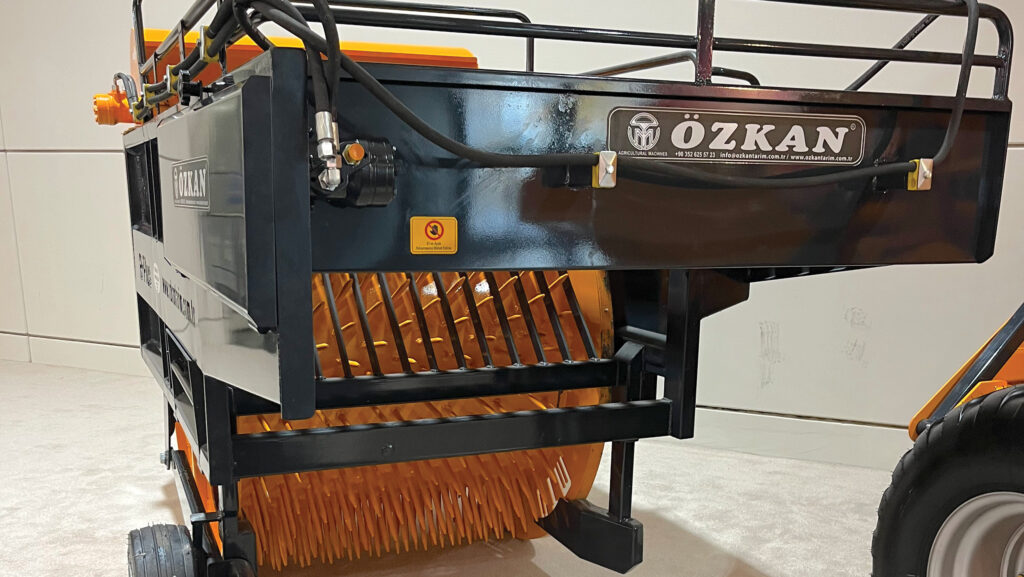
Ozkan pumpkin harvester © Nick Fone
Ever wondered how pumpkin seeds are harvested?
Tucked away in the shady corner of a Hanover exhibition hall was Turkish company Ozkan displaying one of its best-sellers – the KHM-B2H trailed pumpkin seed harvester.
Separated for the purposes of the show, a large spiked drums acts as the pick-up, spearing the mature pumpkins and elevating them to the pulveriser.
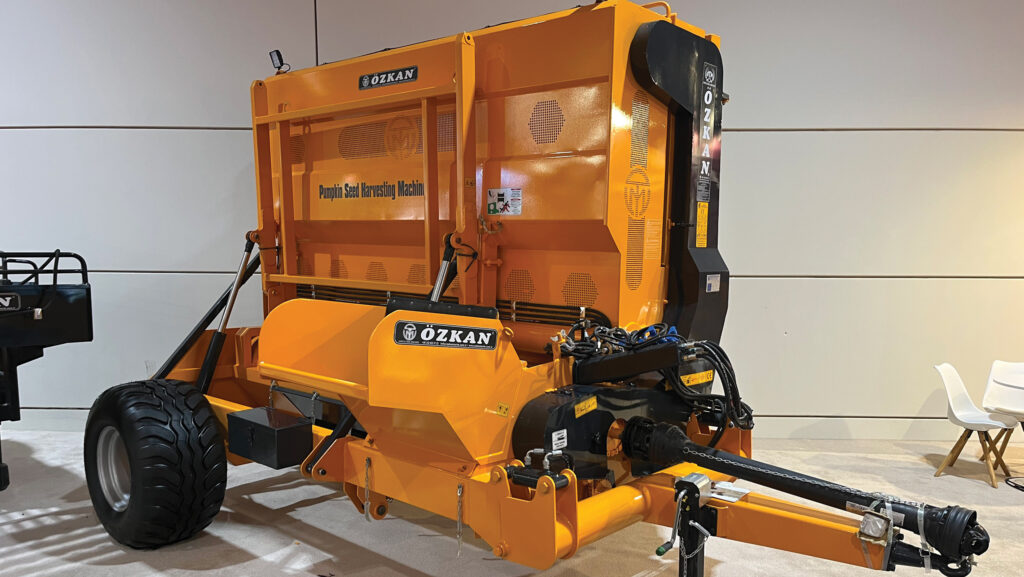
Ozkan is cagey about exactly how it extracts the seed from the flesh, but an auger-type screw turns the vegetable matter to pulp and separates the valuable grain element through a screen.
The seed is then transferred to a 1,100kg capacity side-tip hopper while the pulverised material is either spread across the field surface or transferred to a trailer by auger.
It’s apparently possible to clear 3ha/hour, based on a working speed of up to 4kph.
Ozkan builds a whole range of unusual machines for less mainstream crops from water melons to cucumbers.
Onox electric tractor
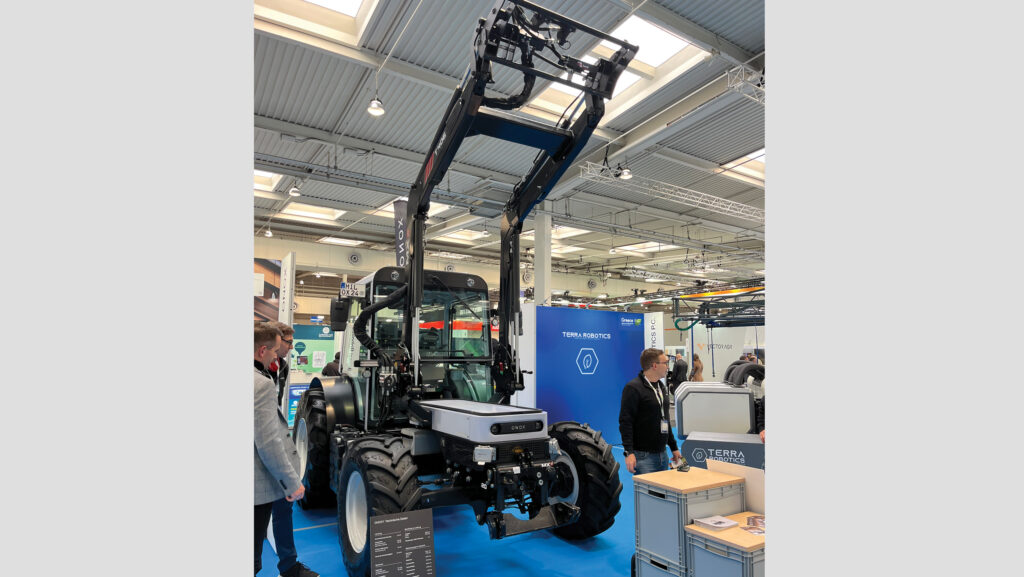
Onox electric tractor © Nick Fone
A small team of engineers from southern Germany has been busily beavering away to develop a battery-powered tractor suitable for farms with a source of renewable electricity on site.
Though rated to pump out a maximum of 94hp tractive power, it’s the Onox’s capacity to generate torque that’s most impressive.
It’s got between 2,400Nm and 5,500Nm on tap, theoretically making for some awesome load-lugging capabilities.
There’s only a modest 20kW internal battery for running around, so the Onox relies on swappable external batteries to give it up to four hours of runtime.
When one battery discharged, it’s dropped down from its mounting position between the axles and another fully-loaded version is wheeled into place.
Additional batteries can be hitched up on either front or rear link arms.
With livestock farmers in mind, one of the key design briefs was for loader compatibility; at the show it was displayed with a 1,350kg capacity, 2.95m lift MX attachment.
In addition to materials handling duties, the Onox’s flat-topped bonnet area has been ear-marked as a load-deck or a position to mount equipment such as sprayer tanks.
A stretched chassis variant is also under development and capable of carrying much larger under-slung implements and toolbars.
The standard version is slated for production in 2027 and is expected to be close to double the cost of an equivalent diesel-powered tractor.
However, the company insists the benefits will be reaped in energy savings resulting in a five-year payback period.
Colombo bean harvester
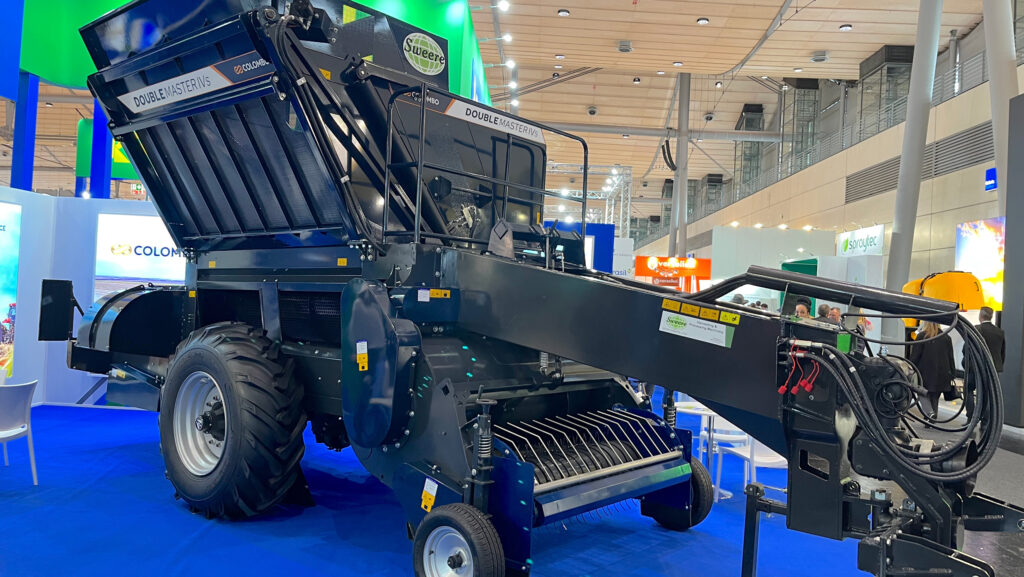
Colombo Double Master IV © Nick Fone
High-value beans and pulses destined for human consumption need gentle handling, according to Brazilian manufacturer Colombo.
It has made its name in both North and South America building specialist harvesters for exactly that application, and now it’s keen to conquer Europe.
The trailed Double Master IV it had on show uses a single longitudinally-mounted rotor with interchangeable screens to separate legume grains from the haulm.
Once on the shaker shoe, a fan blows additional debris out the back and the crop is elevated to the 3t tank.
It’s an uncomplicated setup that is claimed to be far gentler than a conventional combine harvester.
Designed to work in previously swathed crops, the Double Master can be equipped with a swing-over centre-pivot drawbar that enables it to run offset out to either side of the tractor.
It requires a minimum of 120hp up front and costs in the region of €60,000 (£52,850).
Caeb mini brash baler
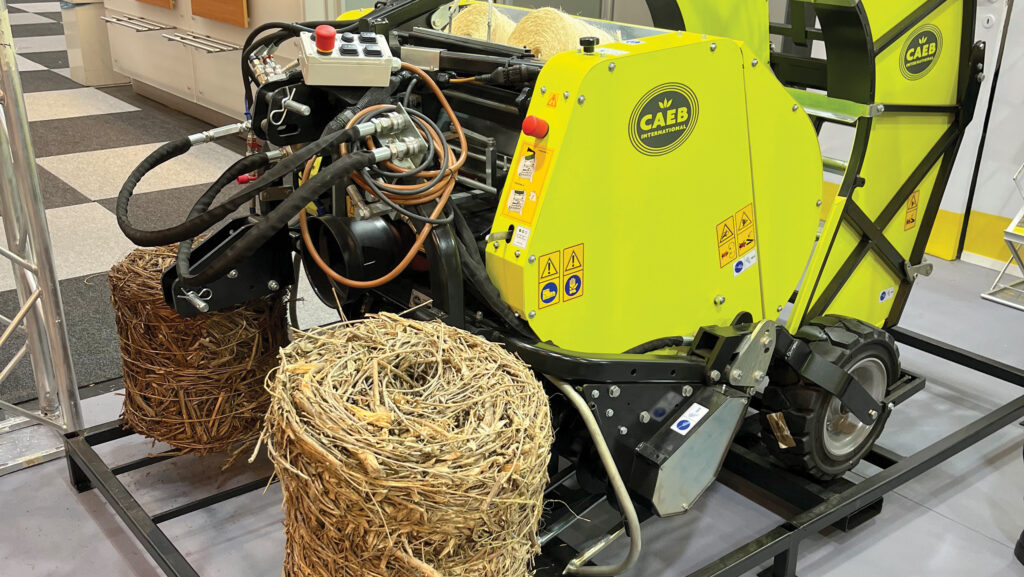
Caeb QuickPower © Nick Fone
Italian company Caeb has been building mini round balers for the past 40 years.
While many of its machines are mounted on pedestrian walk-behind tractors or dragged behind ATVs, this pto powered unit is designed for packaging up vineyard prunings and other woody brash.
There are a choice of models capable of producing bales either 40cm or 60cm wide and up to 40cm in diameter, making them a suitable size for feeding biomass boilers.
As an option, there’s a clever up-and-over chain-and-slat bale accumulator which stores up to eight mini bales and then unloads them at the end of each run.
Capable of handling either standard net wrap or sisal twine for the more eco-minded, prices for the QuickPower biomass baler start from around £15,000 and rise to a staggering £30,000 when fully-loaded with all the options.
Better 175 reverse-drive tractor
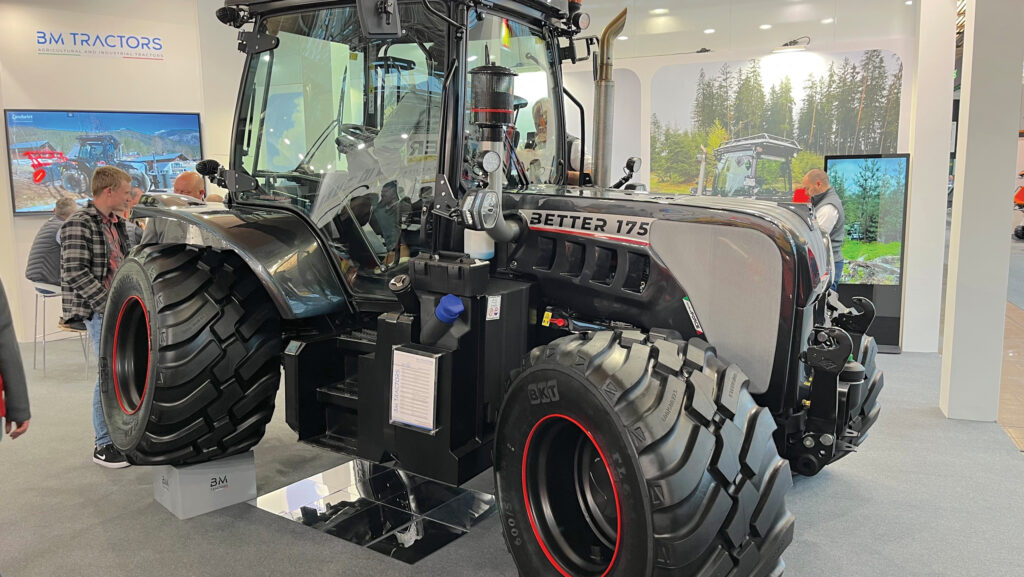
Better 175 © Nick Fone
The latest Alpine-style model to emanate from the BM Tractors works – the Better 175 – is the Italian firm’s most powerful to date.
It comes with a 170hp FPT four-pot under the hood and has a number of features that set it apart: four-wheel steering, a two-range hydrostatic transmission and the ability to spin the seat 180deg to operate it in reverse-drive mode.
To keep things sensible on steep slopes, the company also opts for a pivoting rear axle rather than an oscillating front beam – a feature that is claimed to significantly aid stability, including on materials handling work.
BM builds its own Higher Plus fore-end loaders which have a clever high-tip arrangement.
The angled elbow of the jib’s twin beams has an in-built pivot that allows them to straighten when at full reach, giving the loader up to 40cm of additional skywards stretch.
Predominantly used for municipal applications in mountainous regions, the Better 175 has an appropriately steep price-tag – €195,000 (£172,000) will secure you the base spec model.
BB-Umwelttechnik fingerbar mower
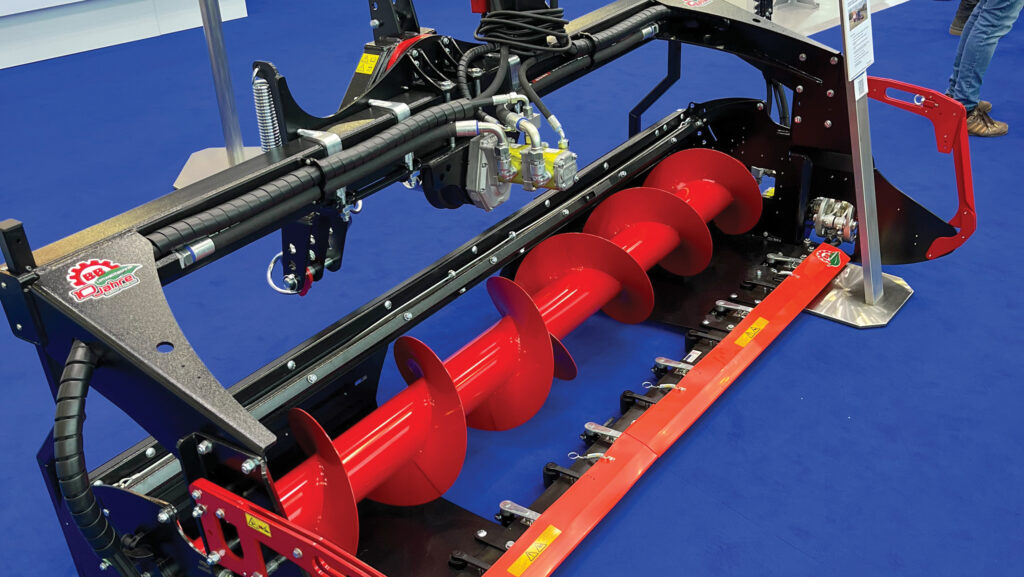
© Nick Fone
The world of farm equipment is undeniably cyclical – certain trends come and go, before returning decades later.
But who would have thought that of finger-bar mowers?
Tongue-tyingly-titled BB-Umwelttechnik reports increasing numbers of farmers in southern Europe returning to these early scythe substitutes as the prime means of knocking down grass.
This is mainly due to two factors – they generally weigh 30% less than a plain disc mower of equivalent width, and power requirement is just 2hp per metre.
Consequently the Bavarian firm’s best-selling 2.75-3.1m front-mounted cutterbars need just 5.5hp to 6.2hp, equating to about 30-litres/min oil flow.
With power demand so low, the company has developed wider butterfly format mowers with a wingspan of up to 9m that can be run on the smallest of tractors.
A basic 3m version comes in at about €13,000 (£11,450) and an auger-equipped swathing variant climbs to €18,000 (£15,860).
EviCountry battery-powered 4×4
© Nick Fone
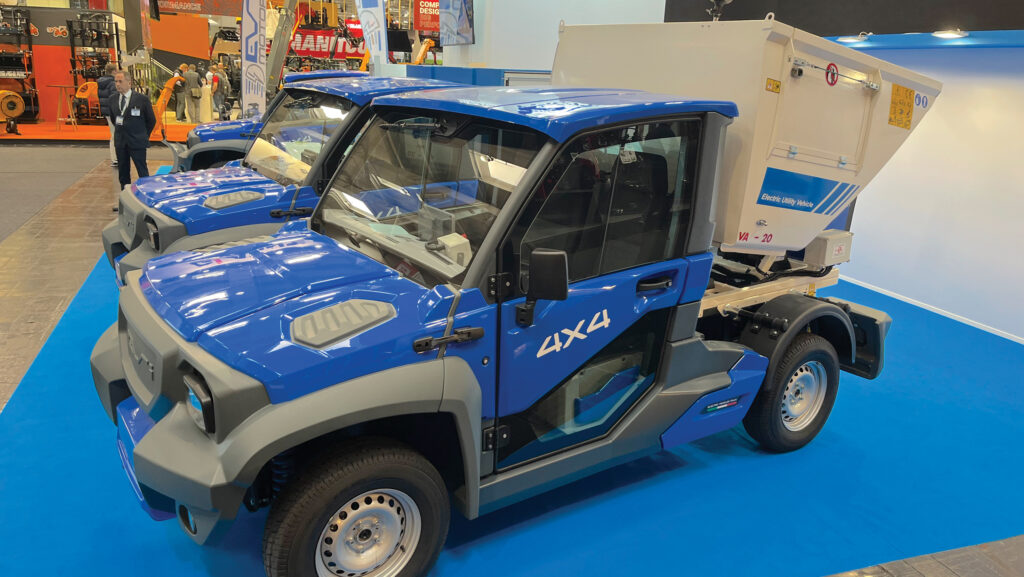
Battery-powered commercial vehicles have come a long way from the humble milk-float, as evidenced by EviMotors’ latest EviCountry 4x4s.
They boast some pretty impressive stats, including a 1,450kg payload, 80kph top speed and a 160km range on just one charge.
Such performance is down to the vehicles’ twin front and rear motors that can generate up to 200hp between them.
Charge time to 80% capacity for the 36V 140kVA lithium batteries is said to take just one hour with a fast charger but up to 20 hours to 100% with a standard 13amp supply.
They can be kitted with all manner of rear bodies – high-tip dumpers, standard drop-sides or roller-shutter-sided box bodies that would make for very handy mobile workshops.
Double-wishbone suspension with coil-over shocks gives the EviCountry its formidable load carrying capacity and the 2,050kg vehicle is rated to tow 3t – although the legality of that on UK roads is yet to be confirmed.
Prices come in at about €50,000 (£44,000).
Duck Foot reel paddles
© Nick Fone
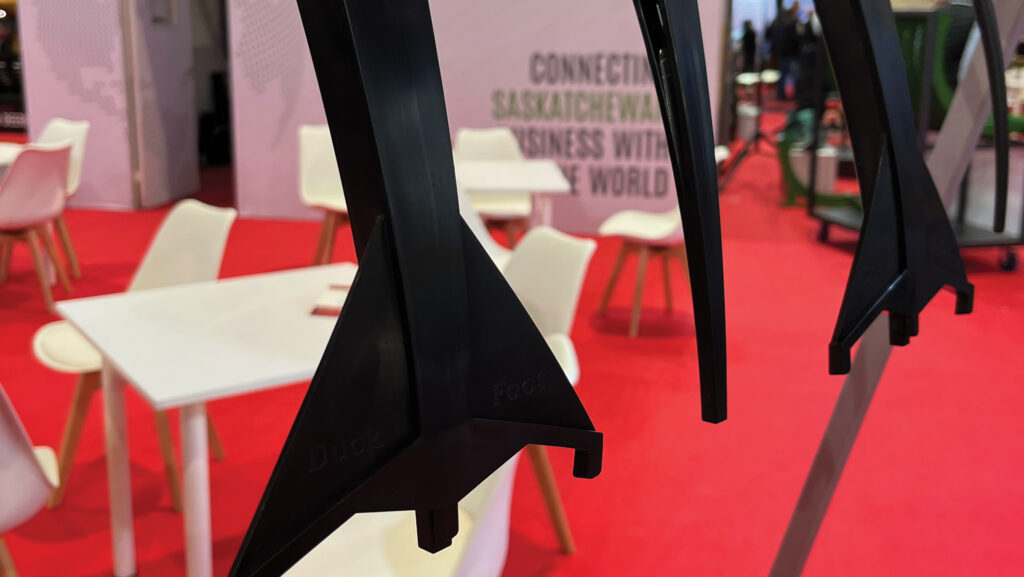
Frustrated by the aggro of harvesting short-stemmed crops such as lentils, Canadian farmer Steve Kastning came up with the idea of fitting paddles over his combine’s existing reel tines to aid in propelling material across the cutterbar and up into the machine.
He quickly found that they weren’t only of benefit in lower-lying crops – the paddles also help in standing cereals and pulses.
Because they gather material in bands rather than pulling through the crop, it’s possible to run the reel slower and lower, helping to avoid ear and pod losses.
In addition, with the tines set at a less aggressive angle, the plastic paddles can reach right out to the tip of the knife fingers, even with the reel pulled in close.
The clip-on Duck Foot paddles are currently only suitable for fitting over plastic reel fingers but we’re told there’s a version on the way to suit steel spring tines.
A complete set for a 10.8m (35ft) header comes in at around €2,500 (£2,200).