

Red clover potential puts silage crop back in vogue
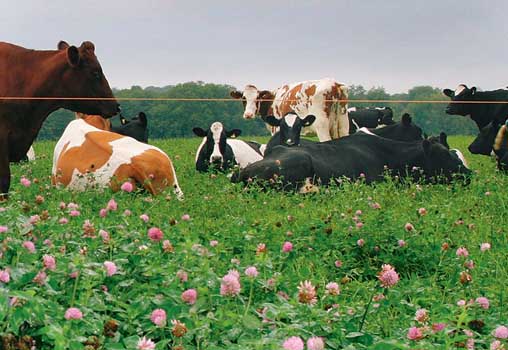
Red clover may not have been the crop of choice over the last decade. But with the ability to fix 300kg/ha of N and a deep tap root allowing it to sustain dry conditions, this could be the “in vogue” crop this year.
And because of its ability to fix nitrogen and reduce costs, independent grassland expert Charlie Morgan says farmers should have been engaged with it along time ago.
“It’s an absolute winner because it’s fixing nitrogen and reducing costs, while increasing feed value in the silage and maintaining the yield – it can supply all the nitrogen needs for the following crop,” he adds.
He says it offers producers good growth rates as a result of higher protein quality in the crop. For example, lambs grazing on permanent pasture autumn grass will grow at a rate of 100-150g a day, but those grazed on a re-seeded pasture with red clover will grow at a rate of about 300g a day resulting in an increased killing out percentage.
“Red clover is a bit of a specialist crop; it fits every enterprise but it may not fit every agricultural system because it’s limited to how long it’s going to last. But new varieties mean it will become more widely used because the costs can be spread over five years,” adds Mr Morgan.
Two new longer lasting varieties of red clover – Aberclaret and Aberchianti – have recently been unveiled by IBERS (Institute of Biological, Environmental and Rural Sciences) Aberystwyth University following a 15-year red clover breeding programme.
Programme leader Dr Athole Marshall says results from long-term trial plots show the varieties still producing approximately 14t/ha of DM annually in the fourth year.
“Red clover is growing in popularity as a source of high quality forage and particularly home-grown protein, but its relatively short persistence is currently a limitation,” he adds. “However, we have now got two red clover varieties which are persistent into the fourth year, which fits well into many grassland rotations.”
Mr Morgan says red clover is suitable for both conventional and organic farming systems, and recommends its use in a silage system in combination with hybrid ryegrasses with autumn aftermath grazing.
“Re-seeding the whole field is the best option and depending on the field moisture content it can be done anytime between April and August, but you have to be quite careful in terms of weed burden because some sprays used to control docks will kill red clover,” he adds.
“In a silage system you should be aiming for as little machinery movement as you can – and in the same way, if you overgraze the cow, you will kill the crop.”
One potential problem associated with red clover is reduced ovulation rates and lambing percentage in breeding ewes, but this can be avoided by not grazing them on red clover six weeks before and after tupping.
In addition, producers should be aware or potential problems with bloat. However this can be easily avoided by limiting access to swards when stock are first introduced, avoiding turnout of hungry stock to pastures rich in clover, feeding anti-bloat feed additives and providing fibrous forage, such as hay or straw, prior to turnout.
Case study – dairy
Standhill Farm, Hawick, Borders
Jimmy Shanks started using red clover on his 81ha (200-acre) dairy farm four years ago, to mitigate rising fertiliser costs. He currently grows 24ha (60 acres) of red clover mixed with hybrid ryegrasses for silage, being fed at a rate of 25kg a cow to his 200-cow herd.
“We have been using red clover for four years now, and started because of the high cost of fertilisers,” says Mr Shanks. “The sums just add up better than they would with conventional grass seeds and the response to slurry has been better. It puts nitrogen in the soil, so it’s putting something back, but really it has saved on costs.”
He says it is difficult to quantify any gains in milk yield because the red clover silage is mixed with the regular silage at feeding, but praises its speedy re-establishment rate.
“It’s slow at the start of the year and it does need dry weather because it’s a wetter crop, but we manage to get some grazing out of it in the back end of the year because it’s quick to re-establish itself after silaging,” adds Mr Shanks.
Case study – sheep
Norton Barn Farm, Crown Estate, Twycross
Martin Greenfield has been autumn grazing lambs on red clover at a neighbouring organic farm for the past two years. He says he is able to finish lambs quicker than ever before, although he is unable to graze breeding ewes on the crop.
“I am finishing lambs quicker than on anything else I have ever used, but to begin with I was so worried about them bloating on it,” he says. “I have been giving them access to hay so they have plenty to feed on with the clover, and I’ve had no problems.”
He adds: “It’s natural and it just goes really well with everything else we are doing, and by using the clover we have saved the turnips which worked well last.”