Probcast weather app gives growers insights into rain risk
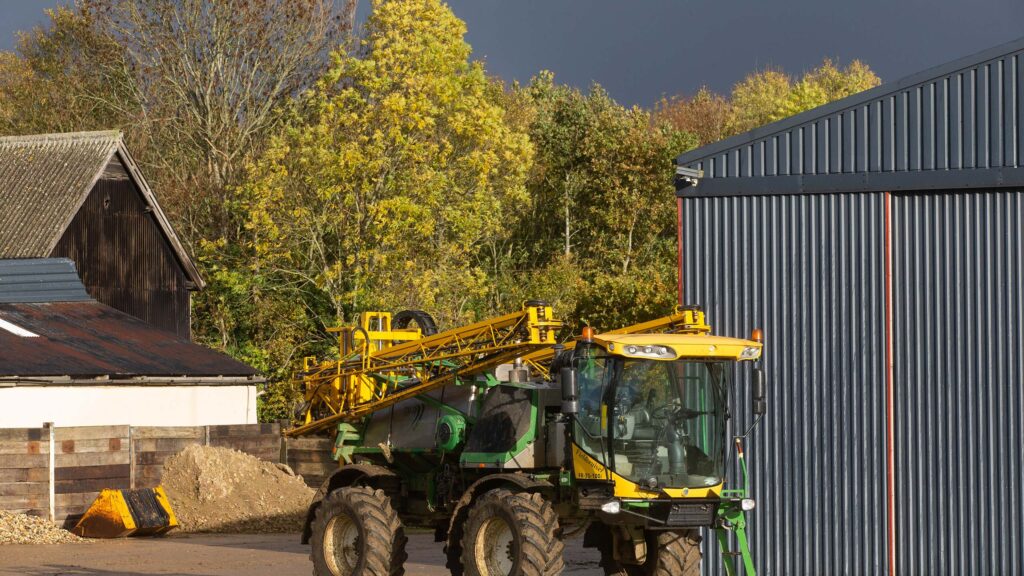 © Tim Scrivener
 Technology start-up Catchment AI has developed a weather forecasting app that gives farmers more insight into the likelihood of heavy rain showers.
Like other providers of this type, Probcast analyses data from meteorological services such as the Met Office to predict potential atmospheric conditions.
See also: Borders farmer takes drainage in-house with DIY tile plough
However, rather than condensing this information into a simplified hourly outlook, it gives users a range of possible outcomes and the probabilities of them occurring.
As precipitation is most pertinent to farmers, the app is focused on flagging credible rainfall of 10mm or more over a 24-hour period – the sort that can scupper spraying, drilling or combining.
Allied to this are wind, humidity and temperature predictions, which are mashed together to highlight favourable upcoming application windows.
This allows growers to assess the risk of conducting expensive, rain-sensitive operations, get their timing right, and manage staff workloads accordingly.
Extra information
Catchment AI was formed by a youthful gang of three academics: researcher Dr Will Veness, technology specialist Jack Dunning and data scientist George Fry.
They initially set out to improve the accuracy of weather forecasting specifically for farmers but, as it turned out, their research showed that the models – the Met Office’s in particular – were actually very good.
Instead, the problem is the way it is presented.
Most apps distil multiple detailed forecasting models into a comparatively crude best-guess average, which fails to include critical information – not least the risk of unlikely but potentially damaging rain events.
Aggregating the data in this way to form a single “deterministic” hourly summary of impending rainfall, wind speed and temperature makes them easy to use for Joe Public.
However, in failing to declare the certainty of these prognoses, nor other conditions that could transpire, any extremes – a 10% chance of a deluge, for instance – rarely show up.
“It makes little difference whether you use one weather app or 10,” says Jack.
“Coming up with your own predictions based on several of these simply means making an average of averages, so many showers slip through the net or are heavier than forecast. These errors are irritating setbacks in isolation but, over a season, can accumulate into five-figure costs through lost inputs, reduced yields and wasted time.”
The team cites a recent example on an arable farm, where £15,000-worth of herbicide was washed off in one afternoon after a forecast 2mm of rain turned into 15mm.
Further investigation revealed this soaker had been detected in multiple forecasting simulations but hadn’t been considered meaningful enough to warrant exposure.
According to Catchment AI’s analysis, this is a common occurrence, with more than 75% of unexpected downpours (10mm-plus in 24 hours) missed by most apps. Yet it reckons Probcast can flag 70% of these.
The system is based on the “probability forecasting” risk assessments used in energy markets and financial trading.
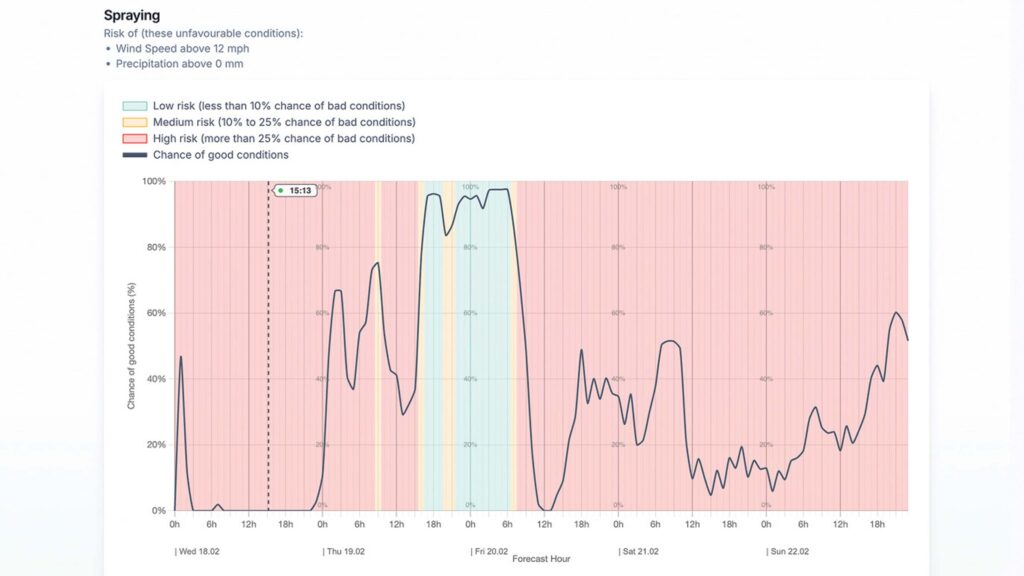
Graph indicates the likelihood of rain © Catchment AI
While it crunches the same data as established rivals, sourced from multiple publicly available forecasting models, it will show the probability of every possible weather outcome – however likely – over a five-day period.
With so much information available, the resulting graphs, perhaps unsurprisingly, take a bit of interpreting.
“Rather than try to make perfect predictions, the aim is to show farmers all the possibilities, what is most likely and how much of a risk it poses to spraying,” says Will.
“Changing the timing of a spray application is usually feasible; getting it wrong is expensive.”
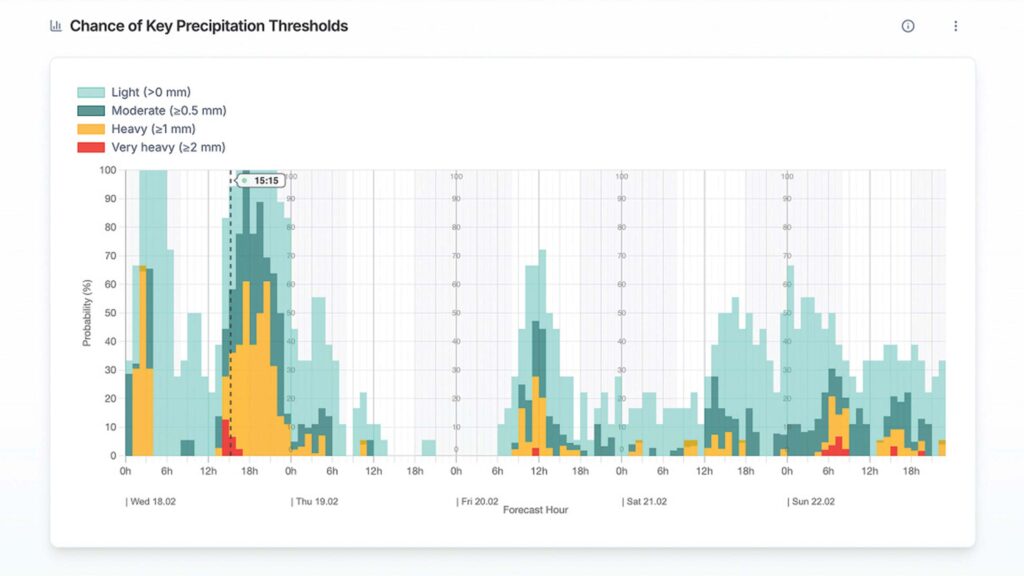
Rain and wind forecasts can be paired to highlight favourable spraying windows © Catchment AI
Five-day outlook
As well as indicating the likelihood of rain, the firm’s software can analyse wind and gust speed – both the range and probability – to establish potential spreading or spraying windows.
This appears in a traffic light-style format from green (go spraying) to red (definitely don’t), with users able to customise the thresholds to suit the work at hand.
It also shows temperatures to help forecast frosts – something that is notoriously difficult to ascertain on most weather apps.
Further insights are in the works, including satellite-based soil temperature and moisture predictions.
And there are plans to incorporate a rain radar, something already offered by several free-to-use apps and one of the most reliable means of monitoring looming showers by the hour.
Longer-term predictions – typically those beyond 30 days – remain more difficult, says Will.
“We could give an indication as to the likelihood of different seasonal scenarios, such as it being drier or wetter than a normal year, but the science is a long way off providing accurate predictions and, without careful communication, these risk unhelpfully skewing farmers’ decisions.”
Rain mitigation at Rockscape
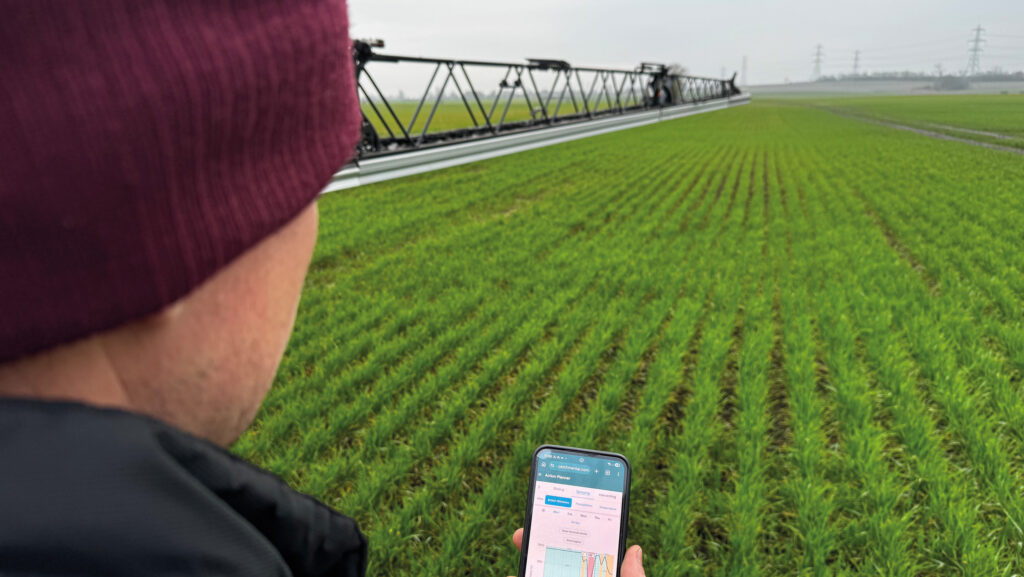
Lincs outfit Rockscape has subscribed to the app to improve field work timings © Catchment AI
Accessing the app means committing to a monthly Probcast subscription linked to the size of the farm. This starts at about £1/ha a year, with pricing for agronomists and contractors available on request.
One of the first to sign up was Lincolnshire outfit Rockscape, which sprawls across 2,500ha of arable ground near Scunthorpe.
Having once ritually scoured up to nine different forecasting apps daily to plan field operations and manage staff accordingly, manager Aaron Kew has now uninstalled the lot in favour of Probcast.
“Everything that happens on the farm is decided by the rain and wind, so the more accurate the information we have, the better our decision-making,” he says.
“I see it as a management tool rather than a forecasting app, as it allows me to organise all the business operations – including staff workloads – according to the weather.”
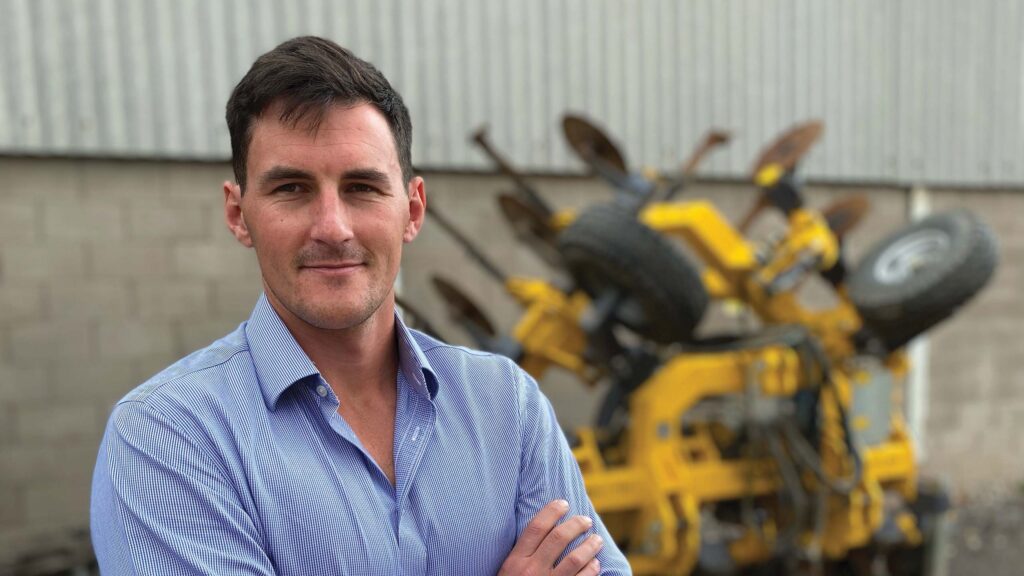
Aaron Kew © Catchment AI
He has since been heavily involved in the Catchment AI project, with the farm’s operations data and Sencrop station readings used to benchmark its potential benefits.
According to the firm’s analysis, savings on avoidable spraying losses through improved application timings – though difficult to quantify – hit £30/ha a year.
When expanded to include all field work this figure rose to £88/ha a year.
Easier staff management is another benefit, says Aaron, as the team can push on to exploit favourable conditions and not waste time waiting around when the omens look iffy.
“With the traffic light system we know exactly where we’re at. And if the accuracy in predicting bad weather is 70% better, I’m 70% less likely to make costly rain-related mistakes.”
Alternative weather apps
There are dozens of smartphone-friendly weather apps available, most of which provide a simple, clear summary of the likely intentions of Mother Nature.
Research by academics at the University of Reading, who compared forecast data against actual results, showed the Met Office to be the most accurate at predicting temperature, and BBC Weather the best for rain.
Another two popular options are Apple and AccuWeather, both of which provide generally trustworthy free-to-view forecasts.
These include live rain radars, with precipitation intensity and movement – and, in some cases, wind – displayed on an interactive map.