Driver’s view: Lee Henzell’s Fendt 728 Vario
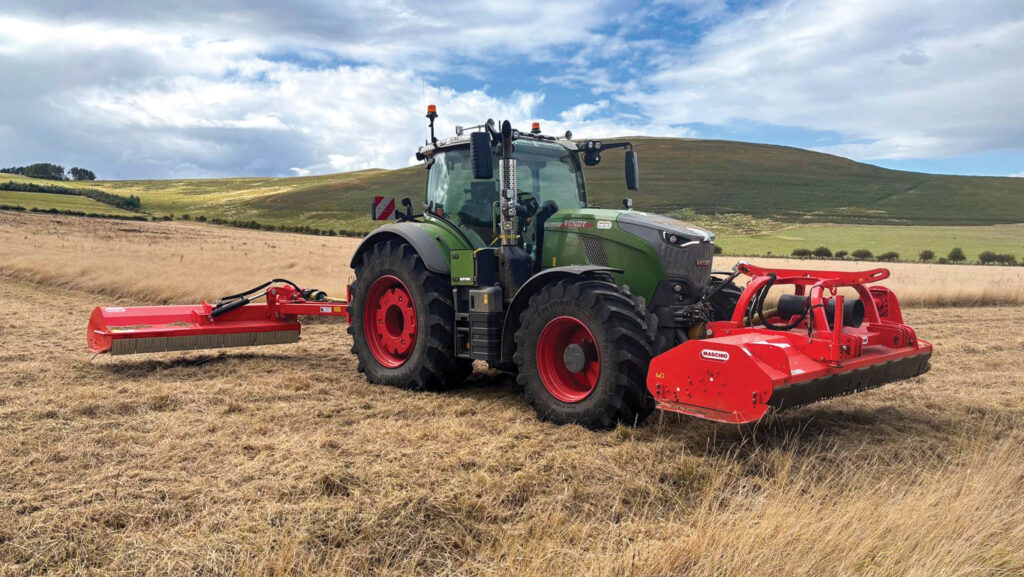 © Lee Henzell
 Fendt’s 700-series overhaul was big news in the summer of 2022, with the ever-popular 724 downgraded to mid-range status and a new 728 thrust to the apex.
It strayed well into territory occupied by the troubled 800-series, giving contractor Lee Henzell, and many other beleaguered 828 owners, a more reliable alternative from the same stable.
See also: On test: Fendt’s four-cylinder, 224hp 620 – small engine, big power
His Henzell Enterprises business now runs three 728s, which help spread 30,000t/year of lime, fertiliser and gypsum, 100,000t of muck and biosolids, and deal with 1,000ha of stubble-to-stubble contracting, and step in on forestry jobs when needed.
Lee Henzell’s Fendt 728
- Year 2024
- Hours 3,500
- Engine 7.5-litre, six-cylinder Agco Power
- Max power 283hp (boosts to 303hp)
- Transmission Vario CVT
- Hydraulics 165 litres/min
- Lift capacity 11,050kg
- Price paid £240,000
Why a Fendt 728?
Like many 728 owners, we previously ran 828s. Our first came in 2016 and, for a while, we had five of them.
They were perfect for our mix of operations – huge all-rounders with a 65kph transmission and central tyre inflation system that were great on the road, and the power and weight for heavy draft work.
The downside was reliability. We went through 12 engines in total, with the last 828 accounting for four of those.
It missed 90% of one summer, though between Ancroft Tractors and Fendt we were never really without a backup tractor.
We replaced a couple of them with JCB Fastrac 8330s to pull the lime spreaders and bought a pair of 728s last summer.
They ended up being more expensive that the third, which arrived in November.
The main attraction is their versatility and, in particular, the combination of road speed – we travel as far north as Edinburgh and south to Whitby – and general in-field performance.
For comparison, we demoed a Deere 6R 250, but it just wasn’t up to the task.
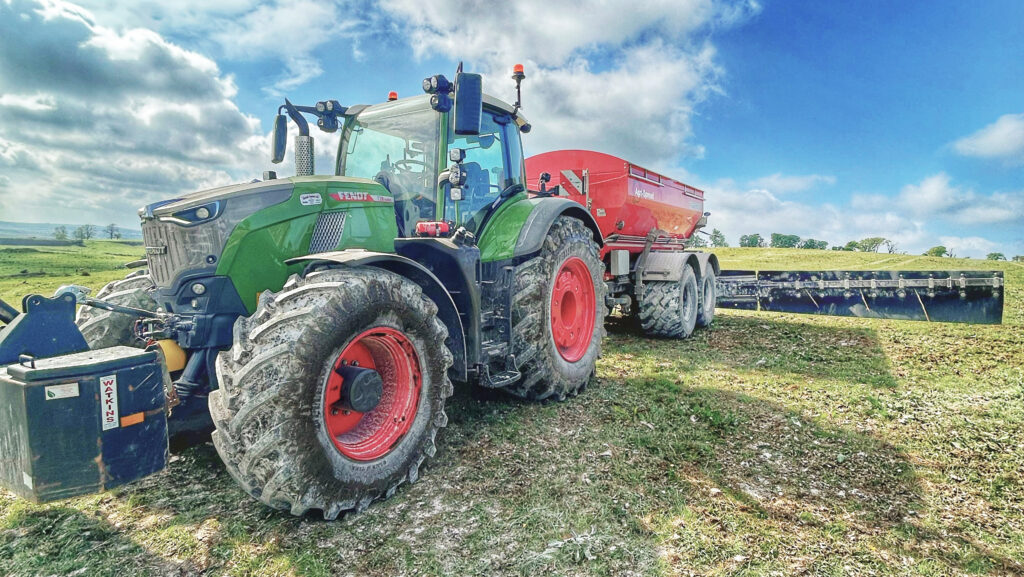
© Lee Henzell
What extras did you opt for?
They’re top spec, so the only real extra was an 8,000-hour warranty. Whether we take them that far is another question.
We’re always crunching the numbers to try and work out the best time to swap but, with so many variables in play, there’s no proven formula.
One thing we might change next time is the tyres.
The current fleet is on Trelleborg TM1000s but we’ve been impressed by the BKT VFs on the Fastracs and wouldn’t be averse to going down that route.
How has it performed?
The first two have clocked between 3,000 and 3,500 hours, thankfully with no major mechanical issues.
In fact, the only problem has been with the central tyre inflation system on the oldest model; Fendt and Ancroft are busy trying to cure it.
We’ve been particularly impressed with their field performance.
The auto four-wheel drive system puts the power where it’s needed, so they outperform the old 828s – whether they’re pulling the Bunning spreaders or hooked to six-furrow on-land ploughs.
Fuel consumption is also far better – by about 10% – and the new Agco power engine is a massive improvement, if only for its reliability.
That said, it’s no match for the MAN in the 936 that we have for primary cultivations and drilling. It just purrs, and, in three years and 6,000 hours, has suffered only one oil leak.
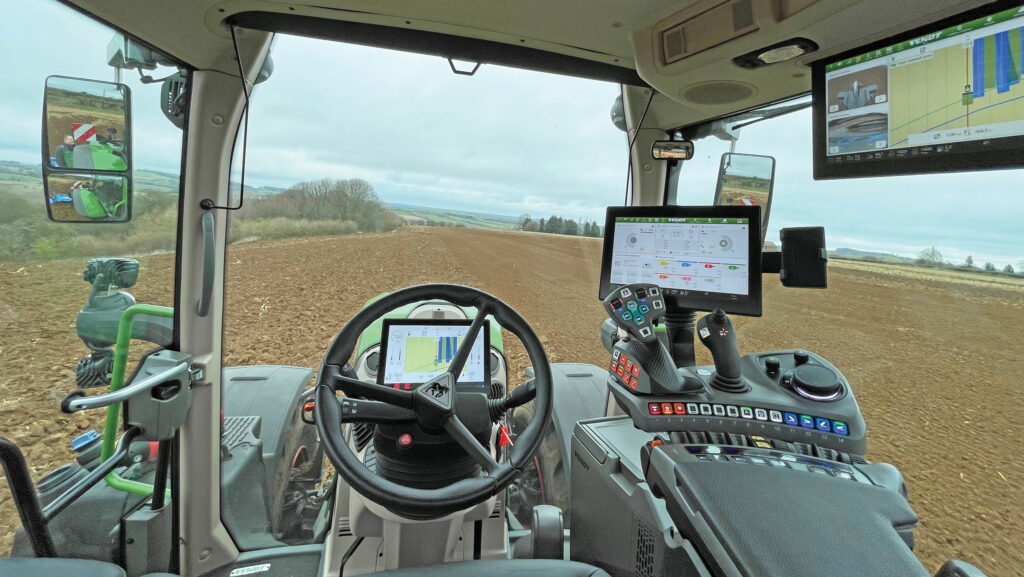
© Lee Henzell
What could be improved?
My biggest gripe is the size of the fuel tank. It’s about 100 litres shy of where it needs to be [450 litres total]. On a big day, that might be the difference between making it home or not.
If I’m being picky, I’d also say the cab is a bit small. But it certainly doesn’t warrant us stepping back up to the new 800-series.
We had an 832 on demo and were quoted about £304,000. That doesn’t stack up against a 728 and is way too close to a 936, at £318,000.
So, when we come to replace the two Fastrac 8330s next year we’ll probably go with JCB’s new 6000-series.
A 6300 is £40,000 cheaper than an 832, which goes a long way towards paying for a third AgriSpread spreader.
The other downside of the 728s, and all Fendts, is the management software.
The John Deere system is far superior – especially in its ability to chuck out a pdf job report to send with an invoice.
As a result, we have to use a mix of different systems: Fendt telematics for most of the fleet and Deere’s Operation Center for the Fastracs running on Greenstar.
I keep being told that Fendt has something coming next year, but it has got a long way to go to catch up.
Likes and gripes
Likes
- 65kph top speed
- Puts the power down well
- Easy on fuel
- Comfortable
Gripes
- Management software miles behind JD
- Small fuel tank
- Cab is a bit small
- Not cheap