Driver’s view: Robin Ward’s Massey Ferguson 8S.305
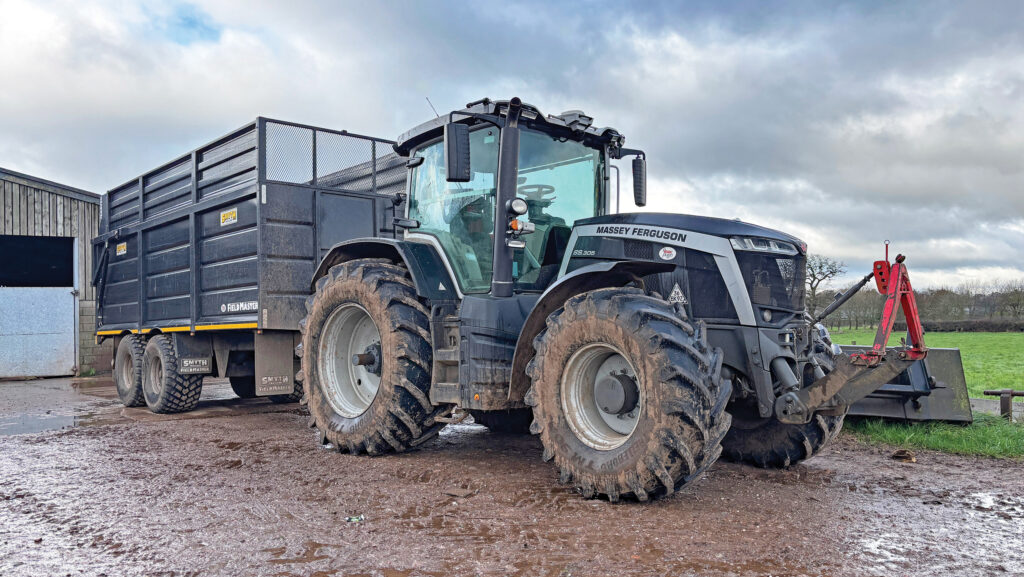 © James Andrews
 For the Massey Ferguson buyer seeking 300 horses, both the 8S and 9S can deliver the goods.
But the former’s blend of power and manoeuvrability made it the sensible choice for Robin Ward.
See also: Massey Ferguson tractors: Common problems and how to fix them
His range-topping 8S.305 arrived late last year on his 530ha Staffordshire farm, where he milks 900 cows across two sites and grows about 120ha of cereals.
Massey Ferguson 8S.305
- Year 2024
- Hours 1,500
- Engine 7.4-litre, six-cylinder Agco Power
- Power 305hp
- Transmission Dyna-VT CVT
- Hydraulics 205 litres/min
- Lift capacity 10,000kg
- Price paid £200,000
Why a Massey Ferguson 8S.305?
We’ve had all sorts of tractors over the years, but we like Masseys at the moment as they go well, have largely been reliable, and are more sensibly priced than some.
Our local dealer, RVW Pugh, is also great to deal with and our sales rep, Howard Sherren, always looks after us.
Until recently, a 7S.210 was the biggest tractor we’d got. But we were keen to get a set of triple mowers and it wasn’t up to the job, particularly on some of our steeper fields.
So we tried a few models around the 300hp mark and liked the 8S.305 best. It was the gutsiest of the bunch and we were won over by the cab, which is big, comfortable and really quiet.
As for transmissions, we’d heard the Dyna E-Power was trouble and didn’t really want a semi-powershift Dyna-7, so it was an easy choice to go for the stepless Dyna-VT.
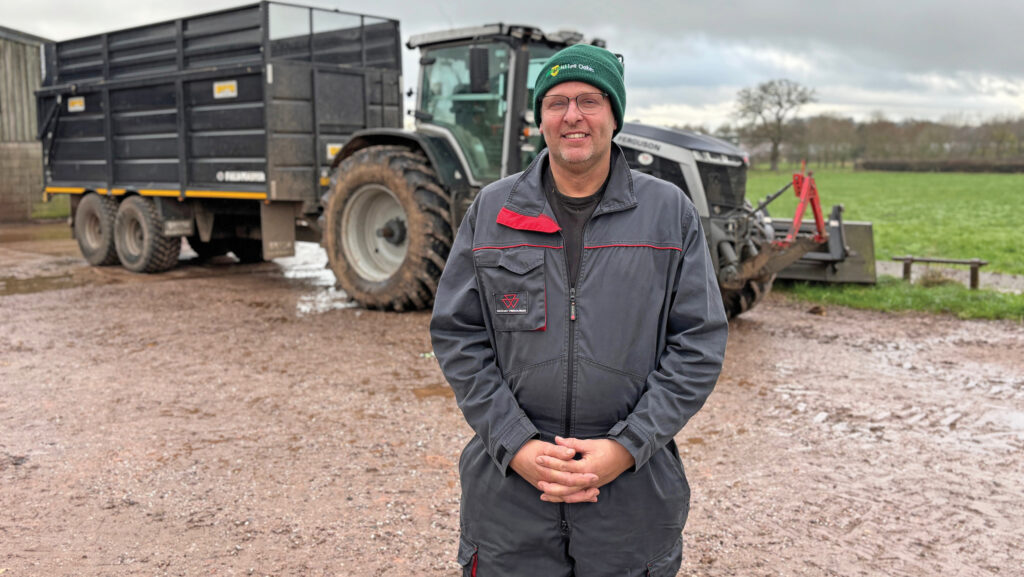
Robin Ward © James Andrews
What extras did you opt for?
It’s an “exclusive” spec, so came with all the extras we could possibly want, including four electric spools, climate control and a posh seat.
While it’s nice to have the bells and whistles, the higher resale value was our primary reason for getting it.
These tractors usually come with a three-year/3,000-hour warranty and we trade them in before this is up so that we don’t have to worry about scary repair bills.
The policy has worked well for the past few years, as our cost per hour has worked out pretty reasonable.
One thing that we did choose for our own benefit was having the red body panels vinyl wrapped.
My son, Oliver, the main driver, was keen to have a black tractor and this was the most cost-effective way of doing it. Plus, it has the added benefit of protecting the paintwork.
How has it performed?
It’s clocked about 1,500 hours this year and hasn’t put a foot wrong, which is a refreshing change from the 7S.190 we had before – that tractor was forever laid up with electrical problems.
It flies along with our 9.5m Kuhn triple mowers and because it puts out 305hp all the time, rather than getting there with boost, it plays with our 3m Sumo Trio.
In fact, we’re considering getting some bigger implements to make the most of it, one of which could be a 6m power harrow.
We’ve also been impressed by how versatile it is for a big, heavy tractor.
Normally we pull the umbilical dribble bar with the 7S, but the 8S has had to step in on a few occasions and it’s amazing how light it is on its feet.
The steering lock is good too, so it’s surprisingly manoeuvrable around the yard.
Low fuel use is another perk, which might be something to do with the fact it’s well on top of the jobs we give it. That said, it does have quite a thirst for AdBlue.
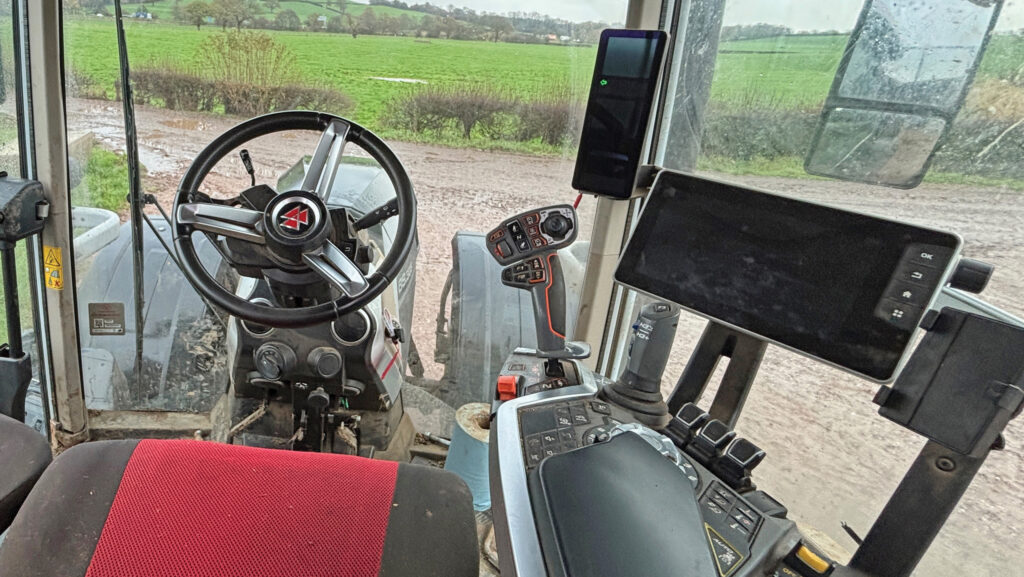
© James Andrews
What could be improved?
The biggest headache for us is that the pick-up hitch is positioned well inside the rear wheels.
When we’re pulling trailers, or the slurry tanker in particular, there’s a real danger of hitting the tractor’s mudguards. You need to pay attention as a result and make sure you don’t turn too tight.
Another consequence is that it’s quite hard to see the hook when backing up to the drawbar, even when the hitch is pushed right out.
Other than that, it’s just minor stuff: it would be nice if the rear window opened wider and, like some other Dyna-VTs we’ve had, it can be a little bit jumpy in pedal mode.
For that reason, Oliver usually drives it on the joystick in the field, which is far smoother.
The big, electric mirrors are also quite vulnerable to getting knocked by branches on narrow lanes and they’re expensive to replace.
Likes and gripes
Likes
- Very quiet and comfortable cab
- Loads of power
- Tight turning circle
- Fuel efficient
Gripes
- Forward hitch position
- Rear window doesn’t open far enough
- Heavy AdBlue user
- Slightly jumpy in pedal mode