On test: Four-cylinder Claas Arion 570 proves punchy and nimble
 © MAG/Oliver Mark
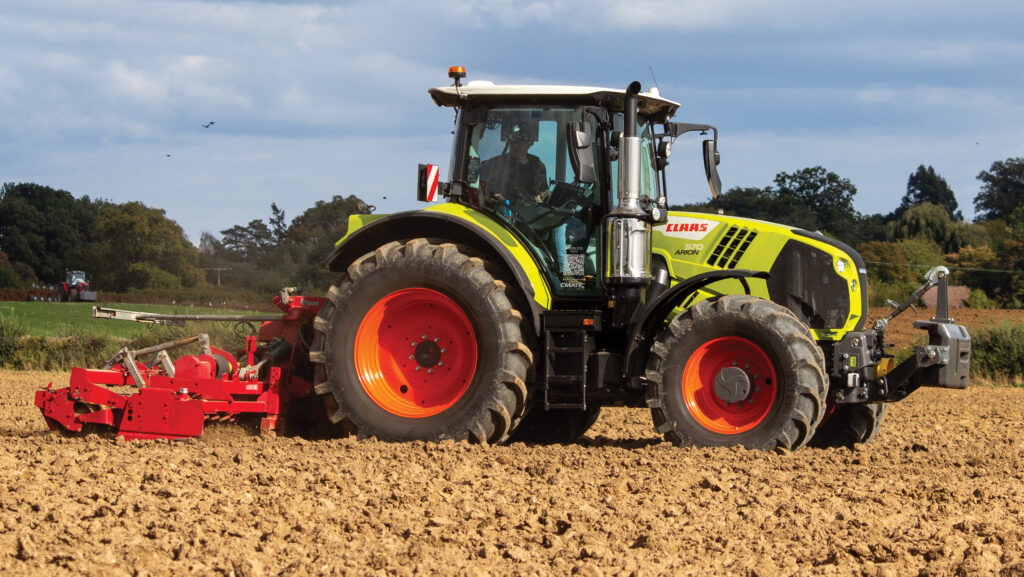
 The high-horsepower four-cylinder tractor fraternity gained a new member this year as Claas gingered up its compact Arion to deliver a mighty 180hp and 730Nm of torque.
Better still, it has done so without the help of any boost trickery.
That means the new 570 is able to harness this power at any time, whether it’s spinning a power harrow, hauling a trailer load of spuds or pulling a plough.
See also: Kioti bids to undercut rivals with 140hp HX tractor
Such brawn would have been chart-topping a few years ago.
But with Fendt’s 2023-launched 620 Vario blasting well past the 200hp mark – and others getting there with the help of power management – the Arion barely gets on the podium.
That said, engineers at Le Mans have wrung considerably more out of the 4.5-litre four-cylinder than the company that built it.
John Deere’s most powerful tractor to feature this particular power plant is the 6R 150. And that settles for a max of 165hp, ratcheting up to 177hp when boost kicks in.
As ever, tractors of this type continue to divide opinion.
On the one hand, they’re the ultimate all-rounder: compact enough to shunt around a yard with a loader on the front, while packing enough power to carry out serious fieldwork.
But with fewer pistons, a shorter wheelbase and less weight than their six-cylinder cousins, they’re combatting the laws of physics when it comes to heavy cultivations.
Claas Arion 570 specs
- Engine John Deere 4.5-litre, four-cylinder
- Max power/torque 180hp/730Nm
- Transmission Cmatic stepless 50kph
- Hydraulic output 150 litres/min
- Lift capacity 8,000kg
- Weight 6,500-7,200kg
- Retail price £179,210
What’s new?
Many, including us, would assume that the 570 is simply a 550 running some titivated software.
However, Claas has put a little more effort into the task. This begins under the bonnet, where new injectors and a bigger fuel pump have been added along with an upgraded cooling pack.
Though far from radical, they avoid any bottlenecks when getting extra diesel to the cylinders and help dissipate the additional heat that’s generated.
More obvious is the move from an eight- to 10-stud Dana Spicer/Claas front axle, as used on the six-pot 660.
This is better able to handle bulky front implements or hefty weight blocks to counterbalance heavy rear-mounted gear.
And it benefits from automatic self-levelling hydraulic suspension.
This can be manually adjusted on the screen, which comes in handy if a bit of extra front link-arm drop is required when hooking up.
Does it go well?
Having an extra 15hp and 33Nm of torque in the same compact package as the 550 makes the 570 a lively customer.
Acceleration is rapid, so it’s a riot for road work, and gutsy enough to run implements that would more typically be teamed with a six-cylinder tractor.
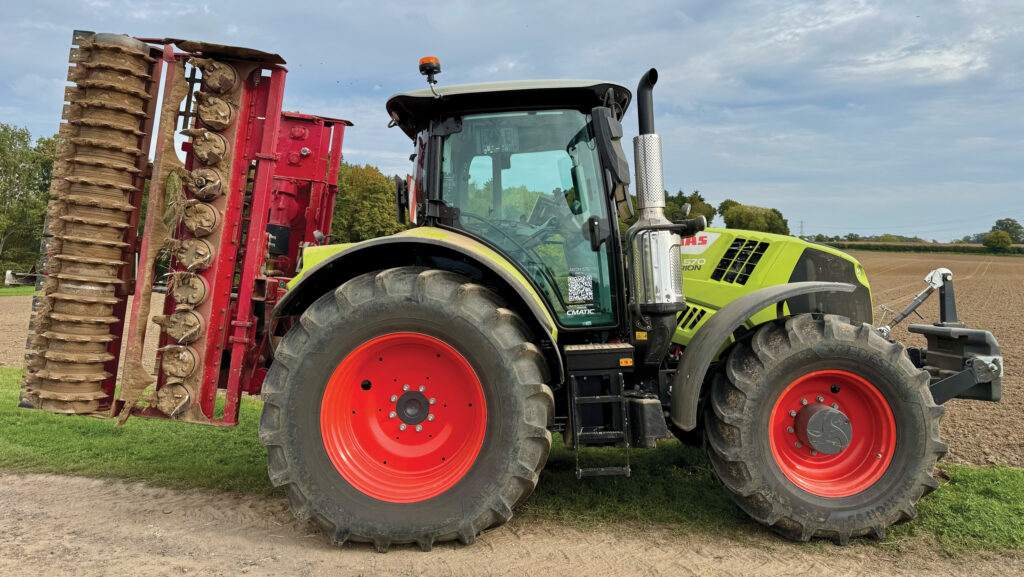
During our test, it spent much of its time hooked to a 5m power harrow, which caused it very little bother.
© MAG/Oliver Mark
Light- to mid-strength ground had it running at about 70-80% engine load, with the occasional patch of heavy clay pushing it beyond 90%.
The task of pulling a bulky five-furrow Pottinger Servo plough was also well within its capabilities. And, despite the added weight of full vari-width bodies with auto-reset, it had no trouble lifting it.
That shouldn’t really come as a surprise. After all, the 570 has the same 8,000kg lift capacity as Claas’ most powerful six-cylinder Arion 660.
But proper ballasting is essential. That short wheelbase and light front end mean plenty of extra weight is required to keep the front tyres on the ground and help them maintain grip.
© MAG/Oliver Mark
Another consequence of the compact proportions is a petite 242-litre fuel tank – a full 125 litres less than the one fitted on six-cylinder models.
This meant it rarely put in a full day of hard graft without having to pause for a top-up.
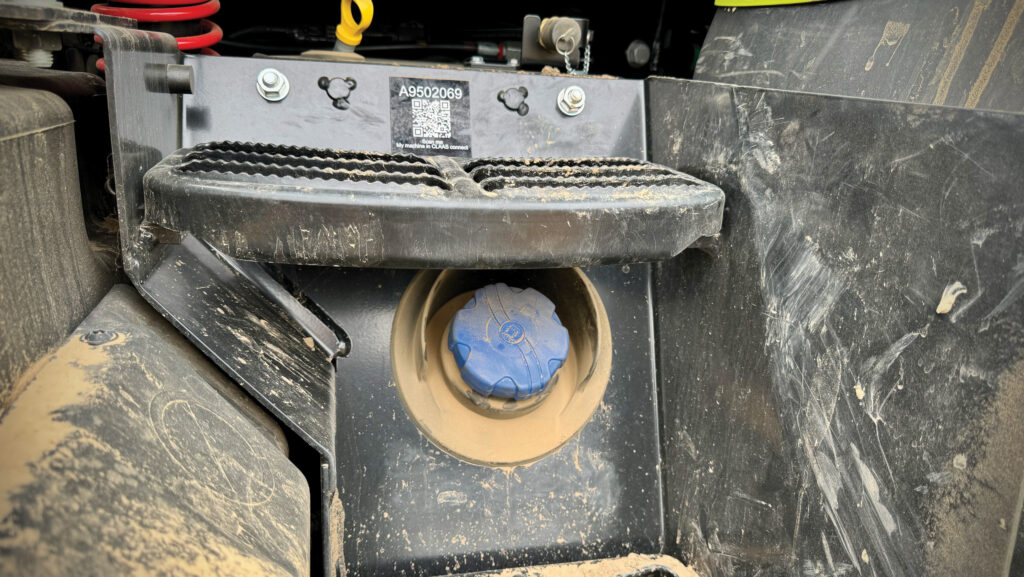
Mercifully, it has far less of a thirst for AdBlue, which is a good job as the positioning of the filler cap behind the nearside steps is less than ideal.
Not only is it awkward to get to, but there’s an omnipresent threat of crud dropping off the steps and into the tank during filling.
Is the transmission any good?
While smaller Arions can be fitted with a semi-powershift or stepless transmission, the latter is the only option on the 570.
This is built by Claas at its Paderborn facility and it’s a slick operator.
Inside, there are two mechanical ranges, but these shift automatically and with such aplomb that it’s virtually impossible to detect when it’s doing so.
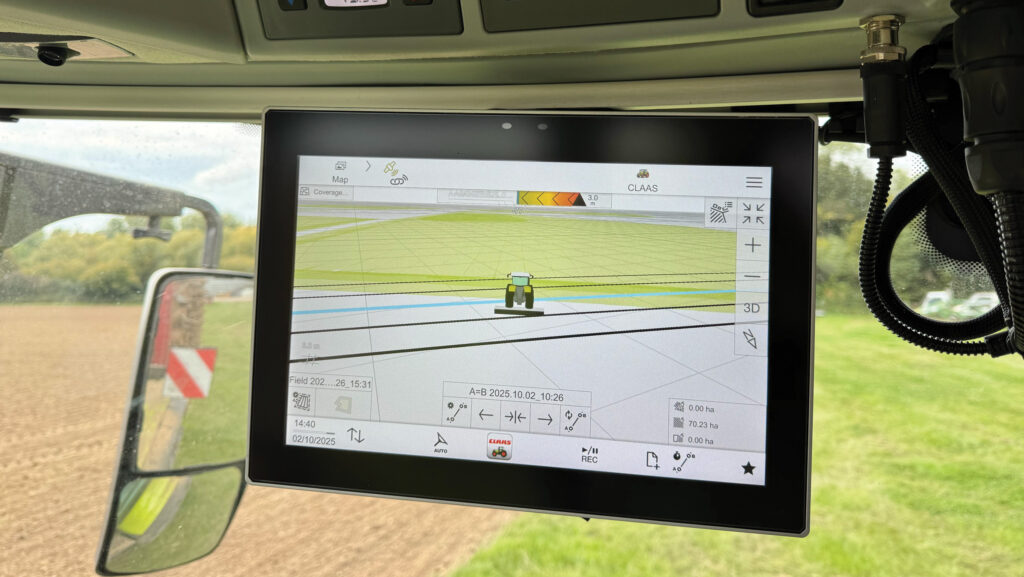
As a result, drivers are best off ignoring the fact that these exist. Because it only leads to confusion when it comes to setting up the three “virtual” ranges in the screen.
© MAG/Oliver Mark
These have nothing to do with the mechanics, but allow minimum and maximum operating speeds to be set for different tasks, such as running on the road, carrying out fieldwork or hooking up implements.
Selecting a sensible speed for the latter removes the risk of any errant button presses sending it rocketing up to its top speed while trying to manoeuvre carefully around the yard.
© MAG/Oliver Mark
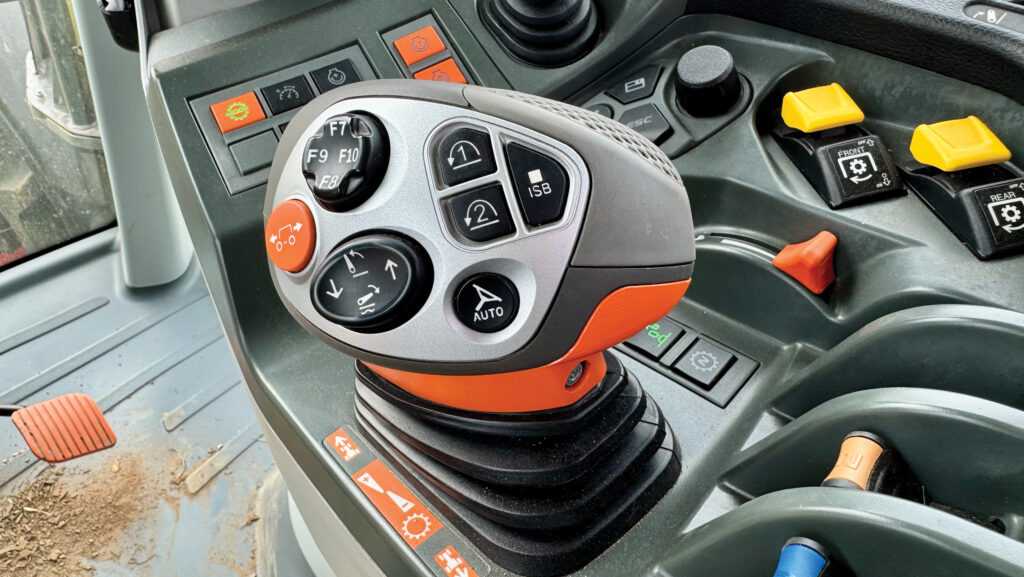
In typical German fashion, there are multiple driving modes – joystick, pedal and loader mode – as well as different cruise control settings and engine speed memories.
A peppering of customisable F keys dotted around the armrest and joystick provide even more opportunity for customisation.
We’d wager that few operators go to the trouble of assigning specific functions to many of these. And if they did, they’d need an eidetic memory to remember what they’d set them to do.
What’s the cab like?
Claas has been wheeling out the same cab for more than a decade now and it is showing its age.
Most rivals have something newer, bigger and better finished, yet it’s perfectly adequate when viewed in isolation.
We can forgive the cheap looking dash plastics and chunky pillars that can hamper visibility, but the lack of storage is a pain, particularly when putting in a long shift miles from home.

© MAG/Oliver Mark
Plus, the blizzard of buttons makes it more difficult to operate than slicker setups with carefully grouped banks of controls.
More impressive is the ride quality, which has long been one of Claas’ strong suits.
Thunder up a rough stone track and the front axle and four-point cab suspension do a remarkable job of ironing out the bumps.
It isn’t Fastrac smooth, but it delivers decent performance for a regular tractor.
Of course, all the shortcomings mentioned earlier could well be short lived. With the launch of the new Axion 9 at the Agritechnica event in Germany came a new and far superior cab.
Features from this will no doubt filter down to the Arion range in the next few years, bringing it in line with top-selling competitors.
Likes and gripes
Likes
- Bags of power
- Compact and agile
- Comfortable ride
- No manual range change
Gripes
- Cab could do with a refresh…
- … And lacks storage
- Awkward AdBlue filler location
- Small fuel tank
Farmers Weekly verdict
Adding an extra 15hp and a heavier-duty front axle has no doubt improved the four-cylinder Arion’s ability to carry out tough work, without hampering its usefulness.
It genuinely can handle tasks that would typically fall to a six-cylinder model. The problem is – like most tractors of this type – it can’t do it quite as well.
For starters, the fuel tank is too small to carry out a long day of heavy grafting without a top-up, and it needs a healthy amount of weight on the front when lifting heavy implements.
The flipside is that it can also be hooked to a loader for feeding and mucking out, without being unbearably clumsy.
So, it’s a jack of all trades, a master of some, and a contender worth serious consideration – particularly when that new cab comes its way…
Other high-horsepower four-cylinder contenders
- Fendt 620 Vario – 209hp max power, boosts to 224hp
- Massey Ferguson 6S.180 – 180hp max power, boosts to 200hp
- Valtra N175 – 165hp max power, boosts to 201hp