What’s in Your Shed? visits a Cornish family farm
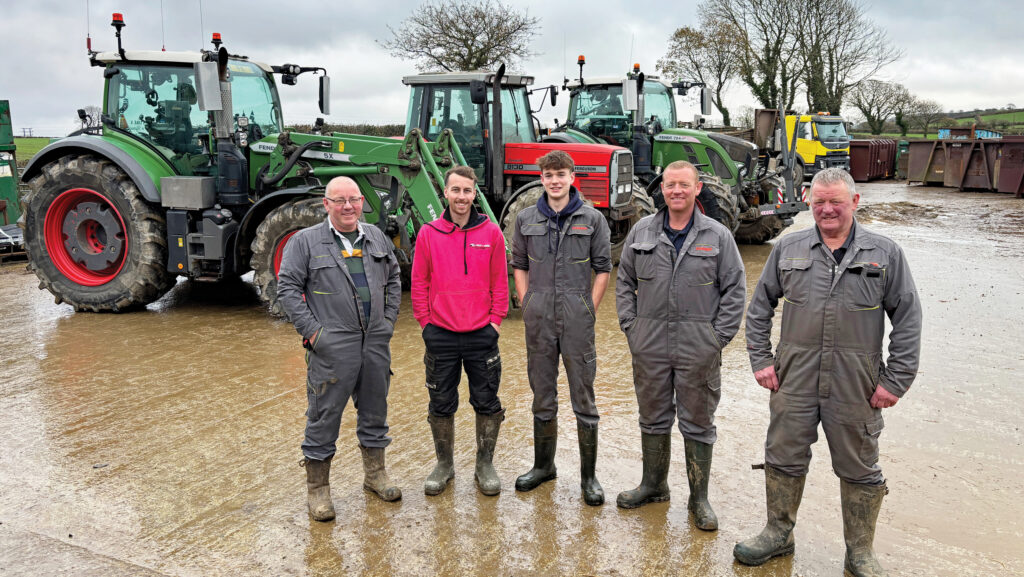 From left: Alan, Patrick, Mitchell, Dan and Lester Keat © James Andrews
 Five generations of the Keat family have worked the land at Tremayle Farm near Bodmin, Cornwall and three are still actively involved.
Alan Keat gives Farmers Weekly the fleet lowdown.
See also: Fendt unveils long-awaited Gen5 800-series Vario tractors
Farm facts: DJ Keat & Sons, Bodmin, Cornwall
- Farm size 130ha owned, 70ha rented
- Cropping 40ha winter wheat, 30ha winter barley, 40ha maize
- Milking 170 Holstein Friesians
- Contracting Silaging, baling, combining, cultivation work and drilling, muck and slurry spreading, biosolids haulage, spraying, hedgecutting, digger work
- Staff Alan, Patrick, Lester, Dan and Mitchell Keats, plus five full-time operators and one part-time.
How did you get started?
Grandad moved to Tremayle Farm in 1947, after he and his brother decided to farm separately.
He was renting to start with, but by milking 20 cows and rearing beef he was eventually able to buy it.
Extra bits of land were added over the years and we now own 130ha, with a further 70ha rented.
Cow numbers have risen to 170 (about 155 are currently going through the parlour) and we’re growing cereals and maize, all of which stays on the farm.
As for the contracting side of the business, this didn’t kick off until my dad, David, got involved.
He was much keener on machinery than milking cows, so bought a small square baler and branched out.
By the late 1960s, he had a new BM Volvo combine and it wasn’t long after that a Tarrup direct-cut forager came along.
Now, we’re running two Lexion combines – a 410 and 630 Montana – and a Jaguar 950 forager.
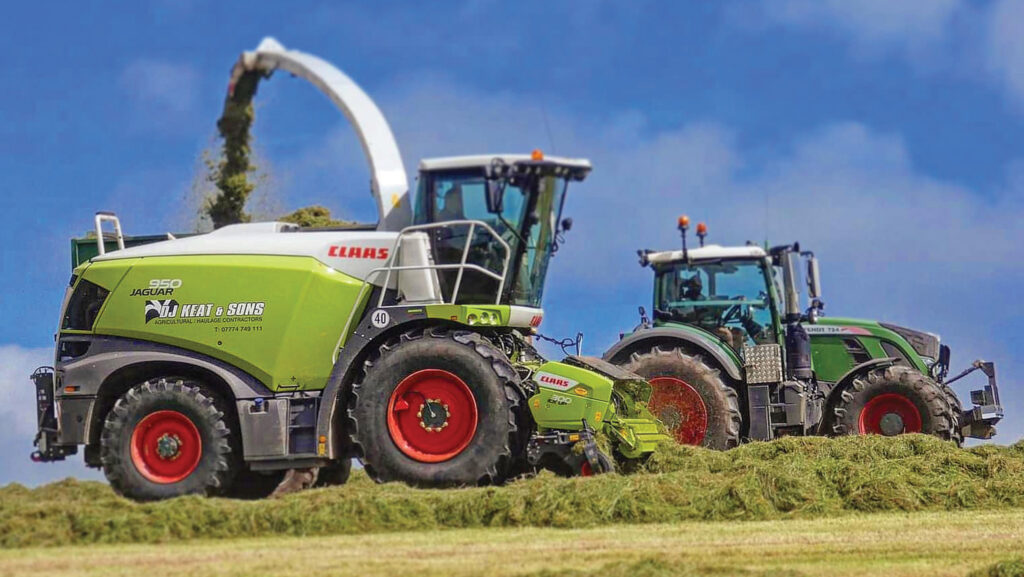
Claas Jaguar 950 forager © James Andrews
How many generations are actively farming?
Three. Alongside me there’s my son, Patrick, my brother, Lester, his son, Dan and his grandson, Mitchell.
There’s a 48-year age gap between youngest and oldest, but we all work together, mucking in to get the jobs done, whatever they may be.
How brand loyal are you?
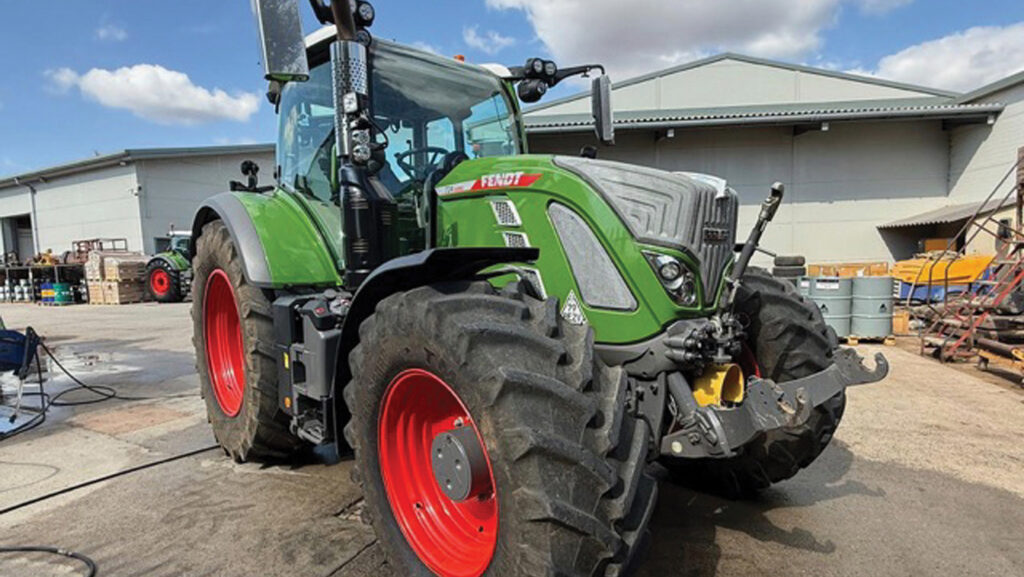
The latest acquisition, a Fendt 724 © James Andrews
Ever since an 818 Vario came here on demo in 2004 we’ve been loyal to Fendt tractors.
They’re nice to drive, generally reliable and, most importantly, still worth £30,000 when we’ve put the best part of 20,000 hours on the clock.
We tend to buy them when they’re a couple of years old and run them until they’re getting tired. This way we can get the cost of ownership down to about £6/hour.
It’s the same story with Claas – we wouldn’t have a combine or forager from any other brand.
Favourite dealer?
It’s got to be Alan Snow. He’s a bloody good bloke, for starters, and because he trained as an engineer, he knows the machinery he sells inside out.
We’ve also had good dealings with Compass Tractors, and Hamblys give us fantastic backup on the Claas kit.
Favourite piece of kit?
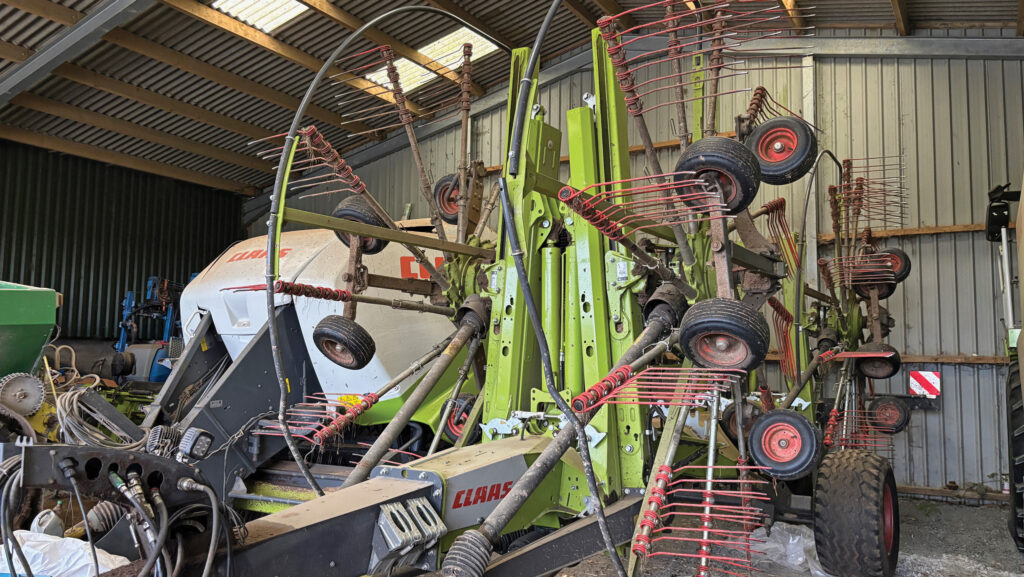
The Claas Liner 4800 © James Andrews
The Claas Liner 4800 four-star rake has given a massive boost to our silage operation as we now have a fighting chance of staying ahead of the forager.
It’ll put five rows into one so we can seriously cover the ground, particularly in light crops, and it’ll close up to 9m if we need it to.
We’ve still got a two-star rake for really heavy crops, but the 4800 handles most of the work.
Our Lemken Azurit eight-row maize drills are also worth a mention.
They’re incredibly accurate and customers have been pleased with the yields and quality they’ve been getting from the twin-row seeding.
Tramlining is great on them, too, and the auto shutoff is spot-on.
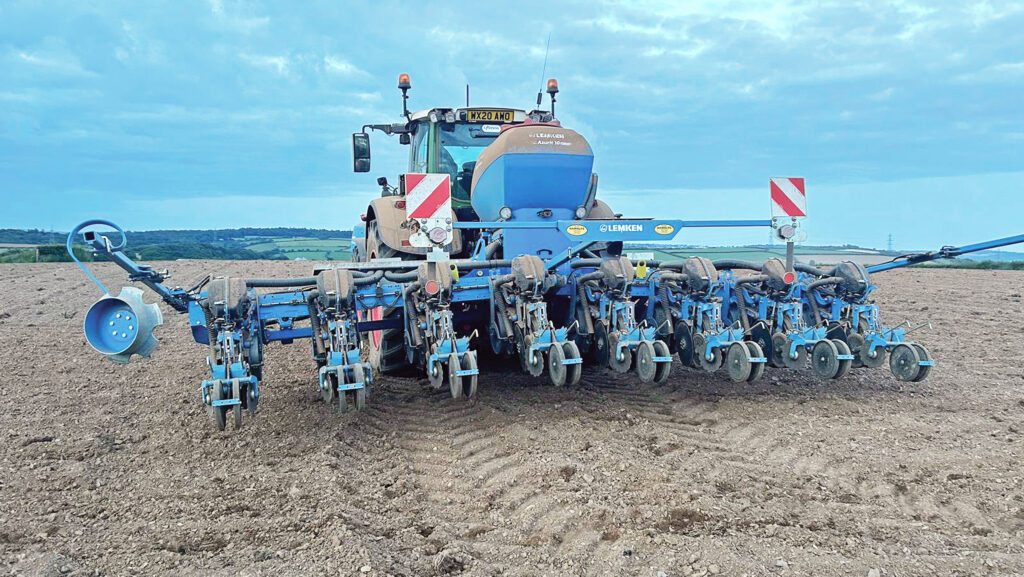
Lemken Azurit maize drill © James Andrews
And your least favourite?
The Kuhn Merge Maxx that we had before the 4800 rake. It did a decent job when it was working, but it was forever snapping tines, blocking up and breaking down.
Everyone dreaded using it, so it had to go. We heard that Kuhn has now improved the design, but I don’t think we’ll be tempted to go back.
Even worse was the Welger RP12 round baler we had in the early 2000s. It would block so tight that it could take two or three hours to clear.
Latest purchase?
It’s another Fendt 724 that takes our total of 700-series machines to seven.
This one is a 22-plate that came from Compass Tractors with 2,000 hours on the clock and it cost us £130,000.
Hopefully it’ll perform as well as the 722 it replaced, which got to 17,200 hours before it started to get tired.
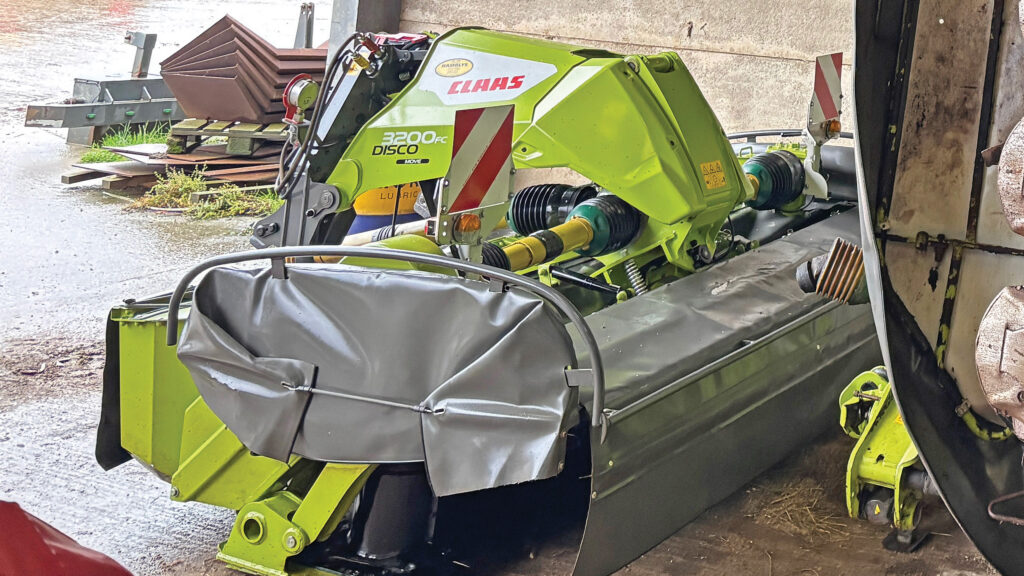
Claas Disco 3200 Move front mower © James Andrews
Another recent addition is a Claas Move front mower – it follows the ground so much better than the FC model it’s superseding.
Oldest machine still at work?
That’s our Fiat 885, which came to the farm brand new in 1983. Back then it ran the forager, but it’s now almost permanently hooked to the bedding machine.
It’s got more than 10,000 hours on the clock, yet it’s still mechanically sound, particularly since we fitted new piston rings.
However, the cab has virtually dissolved. We’re keeping an eye out for a replacement as it needs a lot of metal and welding, but they’re like hen’s teeth.
One day, it would be nice to do the whole tractor up properly.
How long do you keep your machines?
For as long as we can. To us, the best way of making machinery pay is to work it hard and hang onto it. Only when the breakdowns get too frequent do we think about moving it on.
The tractor we kept the longest was a Fendt 718 Vario that we pushed up to 21,000 hours. It did have a replacement Vario transmission, but only when it had done about 17,000 hours.
In general, we’ve had very few problems with that gearbox. Maybe three or four have been replaced in all the years we’ve been running them, mostly at around the same hours as the 718.
That being said, it depends what sort of person you’ve got on the seat – we had one rough driver that managed to knacker one in 8,000 hours.
Next on your wish list?
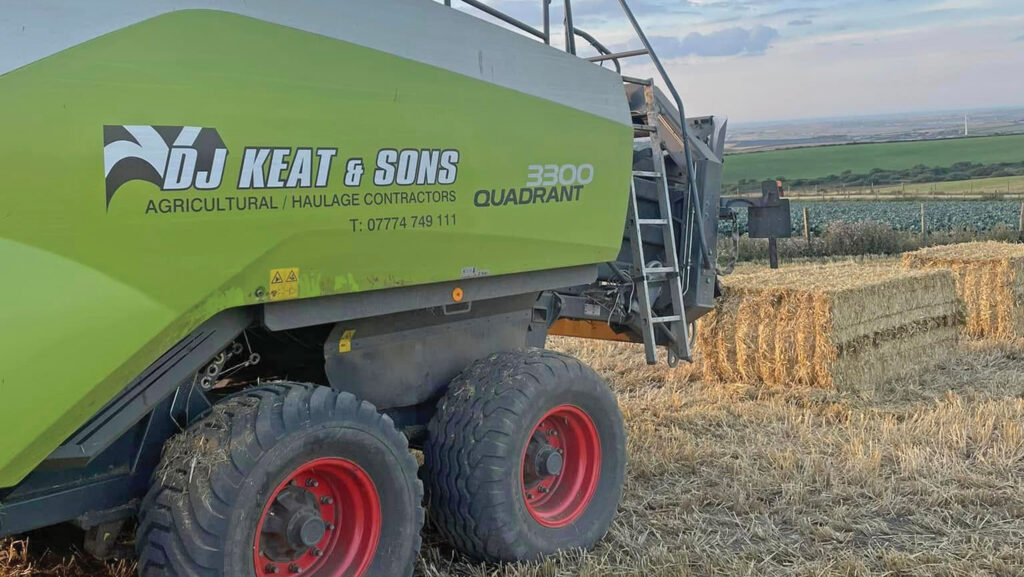
Claas 3300 baler © James Andrews
It would be nice to upgrade the Claas 3300 baler to a 5300, as it’s now done 10 seasons and 88,000 bales.
But the big one would be a JCB 419S loading shovel. We hired one a while ago to run alongside our 724 on the clamp and we were amazed by how manoeuvrable it was.
It’s the perfect size for the yards we have down here and has plenty of power for the job – a 435S would be far too big and clumsy.
Most embarrassing mistake?
There was a farcical day a few years ago when the Claas 860 we were running at the time was hell-bent on destroying itself.
We were cutting maize and set off early to get to the first job, but less than halfway through a 12-mile drive the windscreen spontaneously shattered.
With no time to get a replacement fitted, I was committed to a day of chilly open-air chopping.
Not long after, I got a whiff of smoke (easy to detect without a windscreen) and the engine went into limp mode.
The culprit was the corn cracker belt which, while gradually coming off, had started a small fire on the top of the front axle.
We put it out, patched up the wiring and were able to continue chopping, albeit uncomfortably, for the rest of the day.
However, on the journey home, just before midnight – wearing my motorbike helmet and goggles by this point – the handbrake jammed on and the joystick stopped working.
Turns out there was still some fire smouldering away and it had melted the cables. So I freed off the handbrake with a hammer and got pushed home by our Massey 6180.
Helpfully, the brakes failed too, causing me to hit 70kph down a hill just outside Bodmin, before I eventually made it back to the yard, where it set alight… again.
A blast with the power washer put it out for good and, after few days in the workshop, it was up and running. We hung onto it for a couple more years and, thankfully, had no further problems.
Most expensive repair bill?
Thankfully this is rare, but we did have to rebuild an engine on one of our 724s.
For some reason, the injectors had been over-fuelling the cylinders which, after 12,000 hours, had taken its toll on the liners.
Even though our in-house mechanics, Ed Thomas and Sam Spars, did the work – fitting new pistons, liners and re-conditioned injectors – the bill ran to about £6,500.
Priciest spare part?
The one that stung the most recently was a tiny £700 gearbox speed sensor for the Lexion 630 Montana combine.
We hunted high and low for a cheaper alternative, but could only get one through Claas, so had to stomach it.
What couldn’t you live without in the workshop?
The 3/8in Snap-on and 1/2in Milwaukee cordless impact wrenches have been in constant use since we got them.
And the Metabo cut-off saw deserves a mention as it’s so much better than an angle grinder for chopping up steel.
Best invention?
Most of our workshop time is dedicated to maintenance and repairs.
That said, we’ve made a couple of our own bale spikes and a handy loader-mounted calf carrying crate out of an old IBC.
What’s your everyday transport?
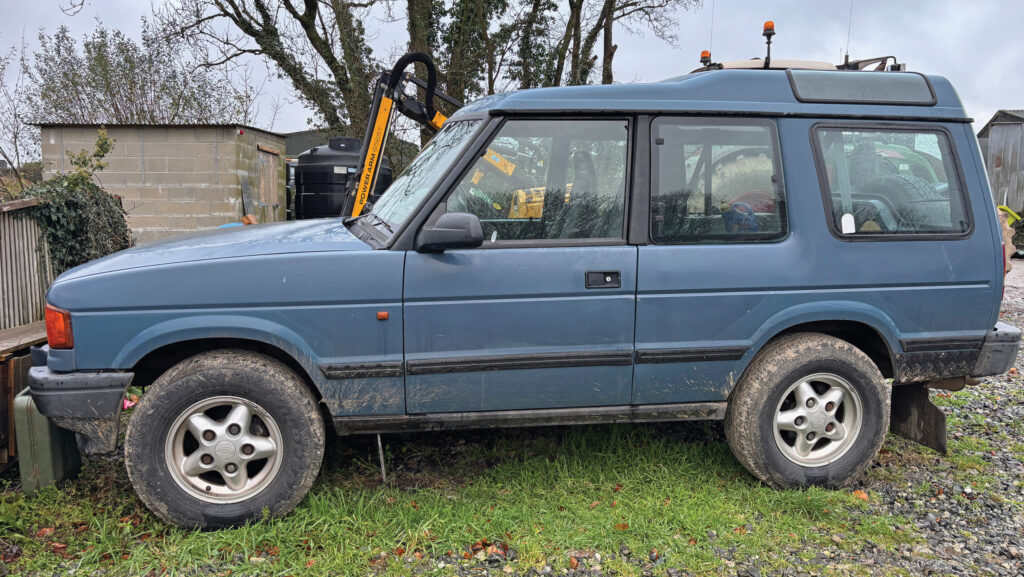
Dan’s three-door Discovery © James Andrews
Nothing fancy. We like vehicles that we can fix easily and cheaply ourselves so we’ve all got old Land Rovers of one sort or another.
Lester has got a Defender 90 TD5, I’ve got a TD5 Discovery with a coil-spring conversion, and both Dan and Patrick are running 300 TDI Discoverys.
Dan’s is a rare three-door in near-original condition, while Patrick’s has a 4in lift and huge 285/75 R16 mud terrains – that thing will go anywhere.
To keep us in spares, we’ve also got a couple of old donors lying around.
Mechanically, they give us very few problems, but you do have to be fairly handy with the welder to get them through their MOTs.
Biggest machinery bargain?
That has to be the 2005 Kuhn Venta 3m combi drill. It’s in great condition and only cost us £5,900.
It’s a Suffolk coulter model and, because these are staggered over three rows, there’s plenty of clearance for trash when sowing herbal leys.
Most of the soils around here are light and easy working, so we rarely have any trouble burying the seed.
Best tractor you’ve ever had?
Of all the 700-series Fendts we’ve had, one stands out as being particularly reliable.
This was a 2014 SCR version, and the only things that played up in 17,000 hours were the brake actuators.
And the worst?
Years ago, we had a Case IH MX 135 that we traded in for a McCormick MTX 140.
What a mistake that was. The Case had been a hell of a tractor, but the McCormick was gutless in comparison and we never liked it.
Most surprisingly useful piece of technology?
GPS contour segments have definitely made our drilling more efficient and reduced overlaps.
When we start a field, we tend to drill the two outer headland runs first, recording the shape on the second.
We then drill the body of the field, turning inside the already planted runs, before using the autosteer to guide us perfectly around the last two headland bouts.
Biggest machinery bugbear?
Most of the tractor problems we have these days are emissions related – usually DPFs and AdBlue.
Unfortunately, we’re stuck with this stuff, so we either have to stomach big bills for repairs, which don’t always work, or take the decision to remove it.
In the shed
- Tractors Fendt 724 x4, 720, 718 and 716 with 4X/90 loaders x3; Massey Ferguson 7618 and 8130, John Deere 3050, Fiat 885
Forager Claas Jaguar 950 - Silage kit Claas Disco triple mowers, Liner 4800 and 2900 rakes
- Combines Claas Lexion 630 Montana (with 20ft header) and 410 (18ft header)
- Balers and wrappers Claas Quadrant 3200 and 3300, Rollant round and small square balers; McHale 998 and HS200 bale wrappers
- Cultivators Kuhn six-furrow and Lemken five-furrow ploughs
- Drills 3m Kuhn Venta, 4m folding Kuhn toolbar with Lemken front tank, eight-row Lemken Azurit x2
- Sprayer Vicon 24m mounted
- Muck and slurry Redrock 3,000gal and HiSpec 2,600gal tankers with trailing shoe and injector, Rolland 16t rear-discharge muckspreaders x2, Shelbourne Reynolds side-discharge spreaders x2
- Lorries All either Volvo or DAF – 8×4 hook loaders x2 and 8×4 tippers x5
- Other New Holland LB110 digger, 13t and 8t excavators, McConnel PA6565T and 6570T hedgecutters