

Bird flu and bluetongue spread despite cold snap
 © Tim Scrivener
 Avian influenza and bluetongue disease have continued to spread over the festive period, despite the existence of mandatory housing orders for poultry and the sharp drop in temperatures minimising midge activity.
Data from the Animal and Plant Health Agency (Apha) show there were another 22 cases of bird flu across the UK in December.
This brought the total number of outbreaks since the start of October to 81 – on a par with the 2024-25 “season”, but still considerably behind 2022-23.
See also: Worst year for avian influenza expected
More than 50% of wild birds found dead in December tested positive for highly pathogenic H5N1 avian influenza.
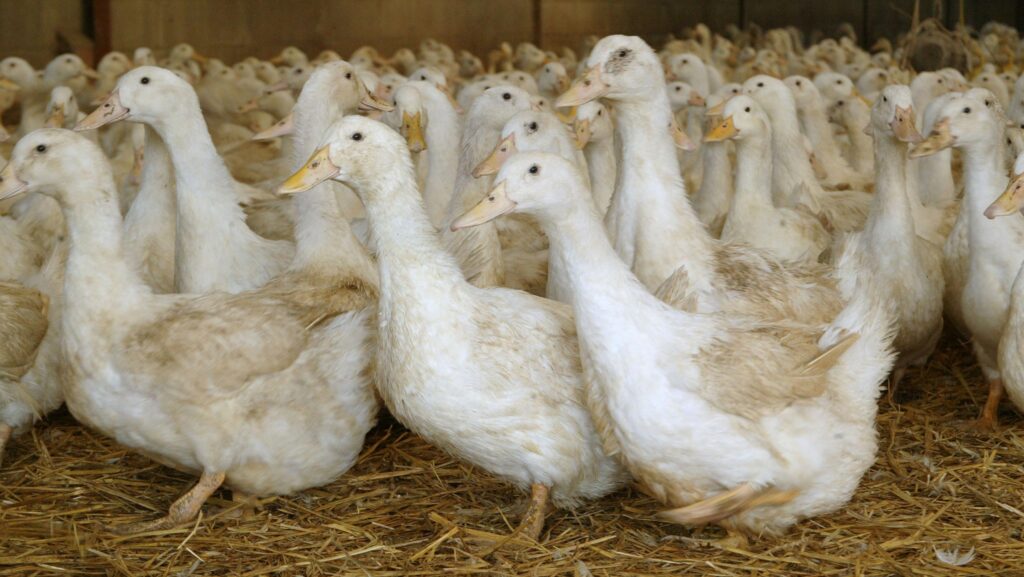
The most recent commercial case involved a flock of 40,000 ducks near Newark in Nottinghamshire, struck by the disease on 31 December.
A 3km protection zone and a 10km surveillance zone have been put in place around the premises, and surviving birds will be culled.
Prior to that, the virus took out a flock of 6,500 ducks and quail in Worcestershire on 27 December, 7,800 turkeys on a farm in Nottinghamshire on 26 December, and 26,000 broiler breeders in North Yorkshire on 24 December.
A flock of 20,000 organic layers in the Scottish Borders became the fourth case this season in Scotland on Christmas Eve.
However, the country remains the one part of the UK where there is no mandatory housing order in place.
The continuing number of cases affecting turkeys has raised some eyebrows, given that most traditional flocks will have been culled in late November/early December for the Christmas market.
However, breeding flocks and non-seasonal production units remain vulnerable.
Gary Ford, head of strategy at the British Free Range Egg Producers Association, notes that in the 2024-25 season, a total of 18 turkey flocks succumbed to the disease, of which 12 were hit between January and mid-April.
Bluetongue
With respect to bluetongue, official data show there have been 270 cases since July 2025 – 245 in England, 21 in Wales and four in Northern Ireland.
There have as yet been no cases in Scotland.
Despite the recent drop in temperatures, Apha says there is still a risk that animals can get infected from already infected midges or from infected germinal products.
On 23 December, for example, two new cases of BTV-3 were confirmed on farms in Kent and Sussex – with seven cows testing positive.
A few days before that (on 19 December), six further cases were detected in Cumbria (in a new-born calf), Greater Manchester, Buckinghamshire, Kent, Somerset and Hampshire – with one further case in Wales, near Wrexham.
Bluetongue is a non-contagious, viral disease affecting ruminants.
Clinical signs include lameness, lethargy, ulcers/sores around nose and mouth, fever, not eating and milk drop.
If you suspect it you must report it immediately by calling the Defra Rural Services Helpline on 03000 200 301.
In Wales, contact 0300 303 8268, and in Scotland, contact your local Field Services Office.
Failure to do so is an offence.