

GB glyphosate licence renewal set to enter critical phase
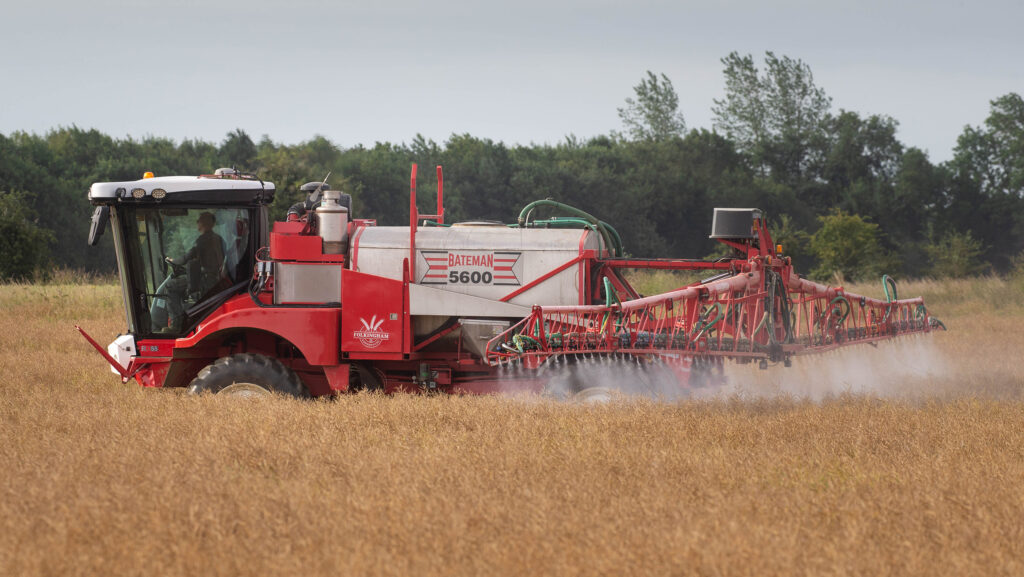 © Tim Scrivener
 The renewal of glyphosate’s licence in Great Britain is entering a critical stage, with the Health and Safety Executive (HSE) set to launch a major public consultation early next year, ahead of a final approval decision in the fourth quarter of 2026.
The consultation will allow farmers, industry, and farming organisations to comment on the extensive scientific dossier submitted by the Glyphosate Renewal Group (GRG), a coalition including Bayer, Syngenta, Nufarm and five other companies seeking renewal of the active ingredient.
Glyphosate remains approved for use in GB until 15 December 2026, after ministers extended its authorisation to give regulators time to review new data.
See also: How two farmers integrate strategic glyphosate in rotations
Farming organisations are preparing to argue for continued access to glyphosate-based weedkillers – including as a pre-harvest desiccant in cereals and oilseed rape – which they say is essential for food security, climate goals, and farm viability.
British dossier
The GRG has made 11 submissions to the HSE’s Chemicals Regulation Division, including 122 technical documents, raw data, toxicology reports, efficacy evidence, and more than 1,100 independently published papers identified from an 8,600-study literature review.
The GB dossier builds on the 181,000-page EU submission underpinning the EU’s 10-year renewal in 2023. The GRG also plans a UK-specific website, building on the platform used for the EU renewal process.
Industry leaders point out that regulators in the US, Canada, Australia, Japan, and Brazil continue to consider glyphosate safe when used according to guidelines.
Pre-harvest desiccant
A key difference between the EU and GB is pre-harvest glyphosate use. While the EU banned it in 2023, GRG data supports its continued use in northern, wetter regions such as GB to protect grain quality, manage unpredictable weather, and reduce losses.
Without it, Scotland’s harvest in particular would be harder, riskier, and costlier, as glyphosate aids ripening, drying, weed control, and timely harvesting.
Complicating the renewal is the UK-EU negotiation on a sanitary and phytosanitary (SPS) agreement – set to be in place by June 2027 – which could require GB to follow future EU pesticide decisions, even if the HSE deems them scientifically unjustified.
The GRG will argue for exceptions to be made in any agreement to allow the continued use of glyphosate as a pre-harvest desiccant in GB.
‘Essential tool’
Industry modelling indicates that losing glyphosate in Great Britain would disrupt crop rotations and low-tillage systems, reduce domestic production, increase tillage, harm biodiversity, and significantly raise fuel use and carbon emissions.
“Glyphosate is an essential tool for farmers – losing it would be like taking away combine harvesters at harvest,” said a GRG spokesman. “It’s a cornerstone of the arable system, backed by robust science and a strong safety record.”
Opposition
However, the Pesticide Action Network (PAN UK) says it is working to ensure that the conditions around any licence renewal “lead to a major reduction of glyphosate harms to human health and environment”.
“Glyphosate is a dangerous chemical which has proven links with leukaemia and other cancers,” said Josie Cohen from PAN UK.
“The evidence base supporting it has been weakened further during 2025. It should not be reapproved and farmers must be supported to find safe and sustainable alternatives.
“If it is approved, it should be for maximum five years, sales to the general public and use in towns and cities should be banned, and the EU ban on pre-harvest desiccation should be matched.”