

Getting ‘collaboration’ working for the farmer

Reducing costs, improving efficiencies and adding value can be achieved in your business by working together with neighbouring farmers and others in the industry. That’s the objective of Share to Farm.
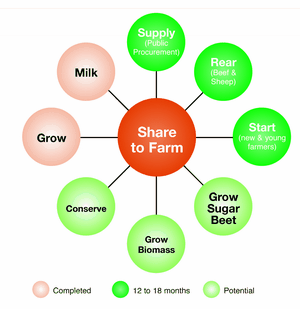
There are dozens of examples where collaboration has created financial and lifestyle benefits for farmers.
Knowing what the opportunities are for you – and what you need to know about making collaboration work for you – is what Share to Farm is all about. It is a means of providing information and advice, using real life case study examples.
“Share to Grow Combinable Crops” and “Share to Milk” feature a range of case study examples which demonstrate significant improvements in farm profitability and output achieved through collaboration. One example is AWT, a farming partnership in East Anglia, which brought together a group of farms across a 30 mile radius. Rationalisation and investment in new, larger farm machinery and block cropping of farms in the partnership has brought savings to the group of about £70/ha.
Other potential benefits such as sharing knowledge and ideas, sharing risk and capital outlay and the increased satisfaction and fun of working with others are also important. Two neighbouring farmers at Harper Brooks in Leicestershire have halved production costs by rationalising farm machinery. The new partnership has put pleasure back into farming and together they have been able to overcome some of the current challenges.
The Share to Farm case studies cover a range of collaborative arrangements from simple machinery/stock sharing, formal contractual farming arrangements, sharing of management and labour, through to full farm operations and multiple farm joint ventures. The case studies have been captured on a DVD and screened at Share to Farm events across the country to raise awareness of the opportunities.
The key to successfully developing a new collaborative partnership rests on combining the right ingredients. Careful selection of compatible partners and the appropriate type of collaborative model are vital. So too is a clear identification of the business objectives of all partners and consideration of the set up costs involved.
EFFP and other professionals provide practical advice and expertise at Share to Farm events on these legal, financial and practical aspects for those interested in taking the next steps.

Looking forward
Following the success of “Share to Grow Combinable Crops” and “Share to Milk”, EFFP will be expanding the concept into other sectors over the next two to three years. “Share to Rear”, “Share to Supply” and “Share to Start” are being launched early this year. It is also intended for Share to Farm to be expanded into the sugar beet sector, biomass, and in tackling environmental challenges in the farming sector.
Share to Rear will focus on collaboration in the red meat sector. Some of the collaborative options introduced above, such as machinery sharing, will be explored in case studies. In addition there will be examples of collaboration between different sectors such as between dairy farmers and beef producers, enabling the production of replacement breeding stock, or examples of collaboration between rearers and finishers of beef cattle.
Share to Supply considers the opportunities for supplying the public sector through collaboration. It will raise awareness of the opportunities for farmers to satisfy the increasing demand for fresher, healthier, better quality food in schools, hospitals and other public institutions. It will also provide examples of how farmers could work more closely with one another, and with food processors, manufacturers and caterers in their region, to better supply this demand.
Share to Start focuses on how new entrants and those who want to expand their farm businesses have come together with others who wish to take a less involved role in the running of their farm. Lowbrook Farm in Dorset is one such example. It provides the setting for a collaborative agreement between three dairy farmers who came together with very different, but well-matched reasons for wanting to collaborate.
Share to Farm Information Centre
EFFP is currently developing an exciting, new web-based Share to Farm Information Centre. The website will provide online information, advice and support to those farmers thinking about how collaboration could help to reduce production costs and add value to their farm businesses.
It will also feature case study examples, information on the legal, financial and practical considerations for setting up new collaborative ventures and where to go for more help.
DISCUSSION |
There will be an opportunity to discuss how collaboration can help your business at the NFU agm on 26 February, with Sir Don Curry and those with first hand experience of collaboration. Come along to the discussion breakout group at 5.10pm, where the Share to Farm Information Centre will be launched. For further information please contact EFFP on 020 7213 0437 or email clee-woolf@effp.com |
Back to Fresh Start and Share to Farm: creating opportunities from change