

Editor’s View: Pleasing end to thorny dairy succession issue
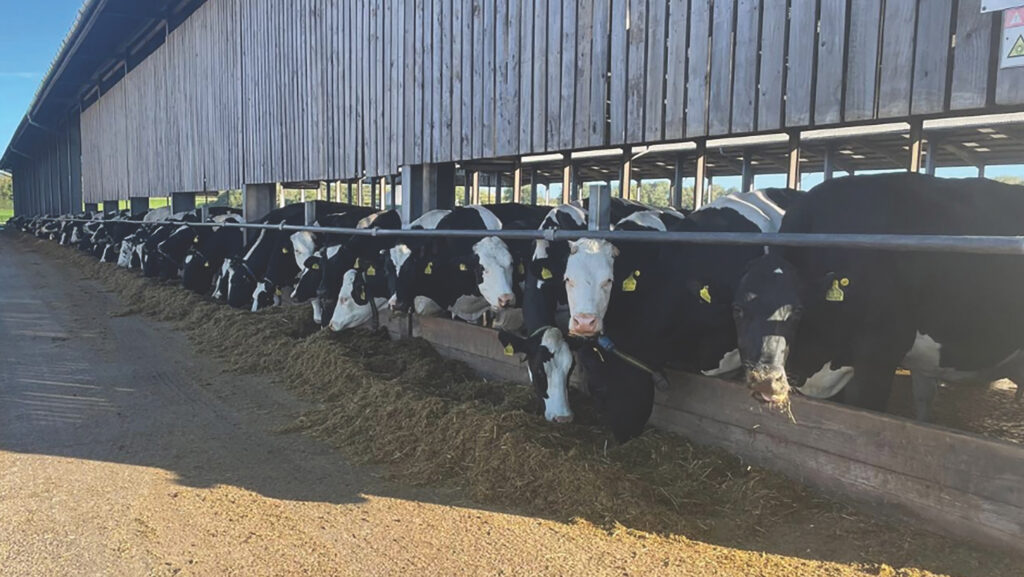 Manor Farm's dairy herd © John Cartledge
 If you have been to a few farming conferences in your time, you may well have seen the cartoon of two business owners talking about their staff.
“What if we train them and they leave?” one frets.
“What if we don’t… and they stay?” retorts the other.
I thought of this again after reading the excellent succession story in this week’s Dairy Update about the Cartledge family.
See also: How difficult succession talks led to dairy expansion
About the author

The intergenerational problem was that son John’s ambition had outgrown the holding he had been brought up on by his parents, Winston and Anne.
Yet this was an inversion of the stereotypical tale of a frustrated heir advancing into middle age without being given any business responsibility.
John had been given plenty of that from an early age and it had contributed to his desire to keep going.
Like the example in the cartoon, John had been trained and, had it been an employed position rather than his own family business, probably would have left.
You may draw other conclusions, but to me it was another illustration of how family farming sometimes presents additional barriers to progress, as well as opportunities, that people in other walks of life don’t have to endure.
How pleasing, therefore, that they were able to find a way through the issues to everyone’s mutual benefit.
At farm level and at national level there are two ways out of most problems: those that can be resolved to everyone’s satisfaction and those that culminate in a winner and a loser.
The proposed agreement for dynamic alignment on standards with the EU will certainly give rise to those.
Occasionally there is a third route – a problem where everyone loses.
Into this final category we can place the spiking price of red diesel (unless there is a fast buck being made at some point in the supply chain).
I’d like to thank all those who have been in touch in recent weeks to ask us to investigate whether refiners or fuel merchants are profiteering from the Iran crisis at the expense of farmers.
Concerns have mostly focused on the fact that “cherry” has gone up in price more swiftly than forecourt diesel.
But, as markets editor Charlie Reeve reports this week, there are some credible explanations for at least some of that.
This includes the fact that the lower tax rate means the value of crude oil makes up a bigger percentage of the final price of the former than the latter, meaning an increase in the price of crude has a larger impact on the final price.
A rush among some farmers and contractors to get filled up after the Iran war started will also have spiked demand, leading to a battle among merchants for supplies that are scarcer than the larger market for white.
However, we are continuing to keep an open mind about whether there are other factors at play, particularly given the big spread of quoted prices.
As with all topics, I welcome any further information or ideas you have to the email address above, whether you want to share them privately with me or publicly on our Letters pages in the magazine.