

Opinion: All my organic preconceptions have been overturned
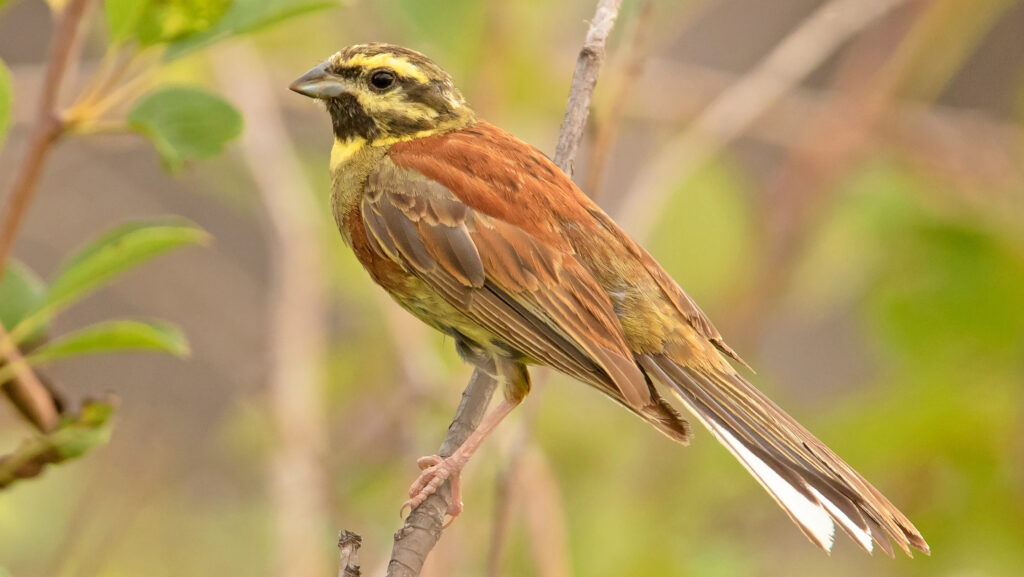 Cirl bunting © Adobe Stock
 It’s been four years since I first inflicted my opinions on the august readership of Farmers Weekly.
Until now, I have resisted the urge to bang on about organic farming – but with the exponential cost rises from the situation in the Middle East, I thought it might be time to make the case.
See also: Opinion – my YouTube debut will just have to wait
About the author

I started as a complete cynic. My prejudices encompassed visions of hippies, lentils and sandals.
The sort of people I had in mind doing organic farming didn’t seem to worry too much about paying the rent or running a profitable business.
It seemed like a waste not to push good farmland.
I’d done Basis, Facts, NRoSO – you name it.
I spent endless days spraying, convinced that if the wheat didn’t get pre-ems, post-ems, sulfonylureas and at least three hefty doses of fungicide it would amount to little more than a diseased, weed-stricken mess.
However, eight years ago we took on the tenancy of a farm in an organic stewardship scheme with three years left to run, so I thought we’d better give it a go.
After all, it is a stunning farm and a brilliant opportunity, and if it meant dabbling in organic for a bit, so be it.
In those three years, just about all of my preconceptions were turned on their head. I am now a believer – and we have stayed in organic ever since.
The technical challenge and the commercial realities are compelling, to say the least.
Forsaking fertiliser is massively beneficial to cashflow and really helps keep the weeds in check.
After all, they like N, P and K as much as your crop.
Plants are sturdier and more resilient. They have to put their roots down and work hard for their nutrients and, as a consequence, seem to weather droughts slightly better.
Maybe I’m a heretic, refusing to spend a fortune to achieve the aspirational 10t/ha of cheap feed wheat and instead producing 4-5t of organic milling oats.
But even before you start adding on the various stewardship or SFI incentives, the gross margins are consistently higher.
The fixed costs are more controllable – harvesting smaller quantities of more valuable commodities means less time spent combining and drying, and lower storage costs compared with growing myriad tonnes of undervalued cereals.
It’s not all roses, though, and you may get the odd disaster.
I don’t mean a thin, weedy crop you can jolly on with a bit of Nitram and some PGR, but utter failure – which I’ve learned from, and vowed not to repeat.
It is also massively beneficial to the farm wildlife. There isn’t room to detail everything here, but our red-listed cirl bunting numbers have increased tenfold; skylarks, linnets and rare butterflies abound; soil biology gets better every year – and I can really claim no credit for it.
I’ve just got on with running an organic beef and arable rotation while tolerating a controllable amount of weeds and volunteer crops.
If you’re a conformist, worried about what the neighbours might think, then organic may be faintly terrifying.
But if you relish a challenge, and the chance to improve your farm and make a reasonable living without recourse to endless credit to keep the inputs coming and the show on the road, then I would invite you to investigate further.
As General Slim once said of leadership, organic farming is “just plain you”.