

Opinion: ‘Baler twine sustainability’ shows farmer ingenuity
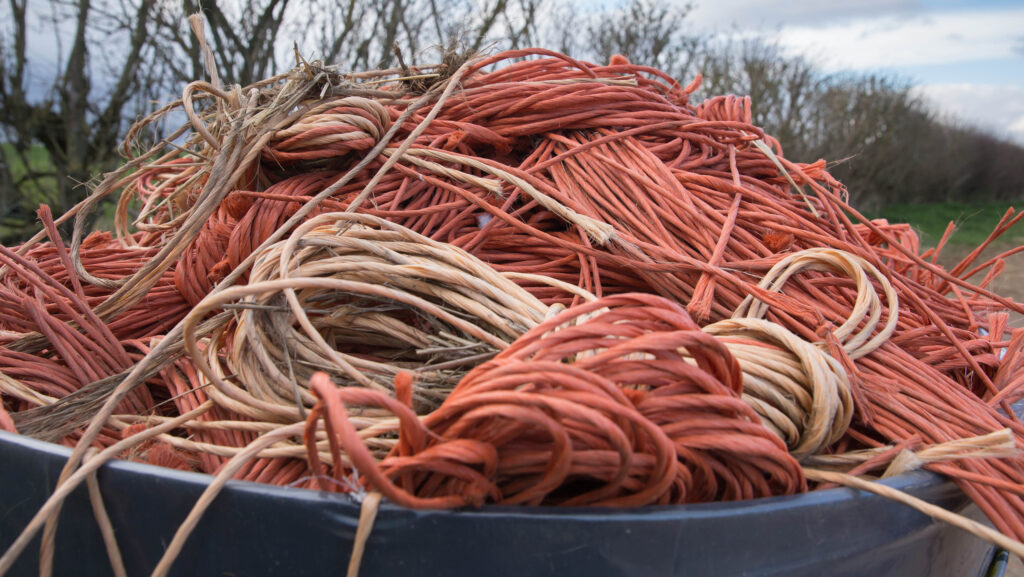 © Tim Scrivener
 Before sustainability targets, audits and carbon scores, farms were already running low-waste systems. Making do, fixing and reusing were not trends.
They were skills learned out of necessity and they’re still quietly holding the industry together today. Farming has practised sustainability for generations – not because it was fashionable, but because it was necessary.
When something broke, you didn’t replace it. You adapted. You made do. You fixed it with what you had and carried on.
See also: Opinion – IHT change is welcome, but it’s still a terrible policy
About the author

Every farm has its unofficial toolkit. Baler twine, for example, has held together gates, exhausts and fences, and occasionally the pride of the person using it.
Nothing is thrown away until it has had at least three useful lives and a decent go at a fourth. Some items quietly disappear under a pile of hay for a year or two only to resurface just when they are needed.
This way of working was not laziness or corner cutting. It required judgement, mechanical knowledge and the ability to solve problems in real time.
There is also a quiet confidence that comes with it. The satisfaction of looking at a problem, rummaging in the shed and thinking that will do – not because it’s perfect but because it’s practical.
There is pride in keeping something going rather than replacing it at the first sign of inconvenience. Sustainability, after all, is not just about what you buy. It’s about how long you make things last.
The irony is that while farming is now being told to be more sustainable than ever, the very behaviours that embody sustainability are often discouraged.
Auditors want disposal receipts from approved contractors, yet raise eyebrows when something has been reused instead.
Adapted equipment does not fit neatly into audit boxes. We talk enthusiastically about circular economies while quietly frowning at a farmer who practises one without a spreadsheet.
Modern machinery
Modern machinery has not helped. Much of it is designed to be replaced rather than repaired and locked behind diagnostics, subscriptions and authorised dealers.
Old shed skills are becoming redundant not because they lack value, but because the system no longer allows them. Ingenuity is praised in theory and penalised in practice.
Sometimes it feels like the only innovation permitted is pressing the Buy Now button.
There is also a cultural contradiction. The public loves the image of the resourceful farmer, endlessly resilient and practical. But resilience today seems acceptable only if it comes with a warranty, a finance plan and an approved supplier.
The baler twine fix, a long-standing joke among farmers for its versatility, is now something best kept out of sight during inspections.
Of course, not everything can or should be bodged. Safety matters. Standards matter. No one is arguing that a length of twine can replace proper engineering where it counts.
Reckless corner cutting deserves criticism. Thoughtful reuse deserves recognition.
Under increasing pressure from rising costs, tighter margins and heavier regulation, farmers are not becoming less resourceful. If anything, they are becoming more so.
The baler twine is not being abandoned. It is being pulled tighter than ever.
Sustainability does not always come with a warranty or a compliance tick. Sometimes it’s already hanging in the shed, tied together with baler twine.