

Opinion: Big, integrated beef units have a role in the UK
 © dhughes9/iStockphoto
 We’re roughly a year on from record-high beef prices in the UK, but has anything really changed?
The fat price has softened marginally, and stores are still hellishly expensive.
Meanwhile, the taste profile continues to shift as consumers look for quality protein rather than carbs.
See also: Opinion – we need more ‘bums on seats’, not more robots
About the author

So how do we get more cows on the ground to keep up with this insatiable demand for beef?
As mentioned in a recent meeting I attended, if every suckler cow producer in the UK put two more cows on a herd it would go a long way to helping.
While economic forces are likely to make this happen, I doubt it’ll be in the next three years, as that’s how long it takes to get a breeding heifer to a steak on a plate.
This is with the backdrop of the dairy herd contracting because of lower milk prices, and every dairy producer cutting cow numbers and weighing cows in as fat.
Meanwhile, stockmen are ageing out, and new blood is hard to find, as looking after cattle is a 24/7 commitment.
So if we can’t get the numbers up in the medium term, how do we mitigate the situation?
A good start would be a healthy price for both the cattle supply chain and the consumer where everyone wins. Nobody can plan unless both are in equilibrium.
Processors can’t keep running at 70% capacity and nobody wants to see a rationalisation in abattoirs, leading to less choice and less competition in the industry.
As it is, we are already down to a handful of major operators.
A quick fix would be to improve genetics and take beef animals to heavier weights, although this is where it gets controversial in terms of the grass verses grain debate.
More than 90% of the cattle that go through my system have had at least two-thirds of their life growing at grass, but they then need to be finished, with proper marbling to obtain a certain eating quality.
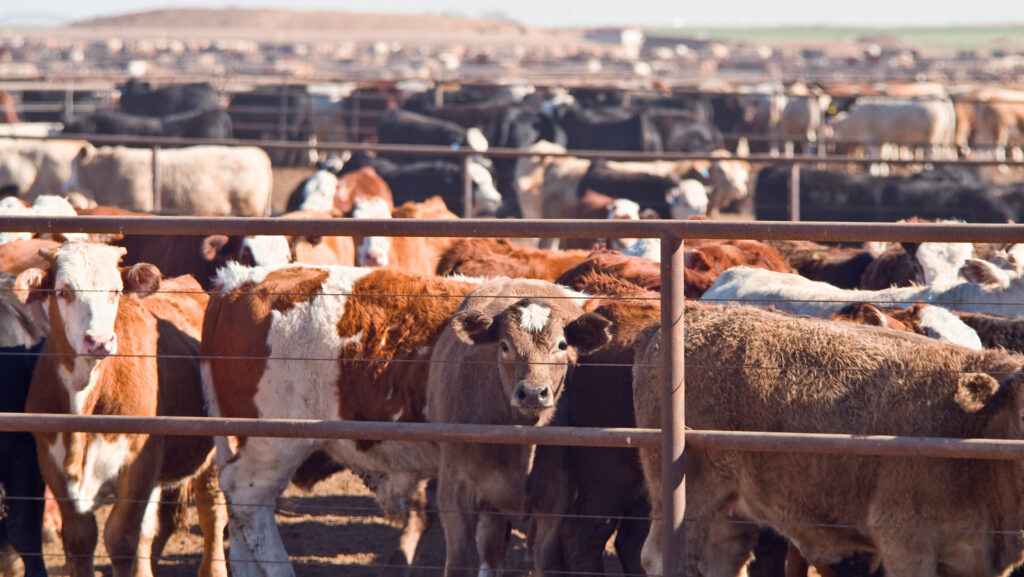
What the European mind can’t comprehend is feed-lotting cattle.
I’m not talking about the scale of the average American feedlot, which have capacity for 60,000 animals in one place.
But it would be easily achievable to run them in the UK at 6,000 head, with vertical integration, using like-minded cow/calf producers, growers and then the final stage finishing all linked together, all focusing on their speciality, rather than a one-size-fits-all operation.
If that wasn’t feasible, a co-operation between processor and feeder would work.
On site could be a dedicated vet and a feed mill drawing from surrounding arable farmers for feedstocks, benefiting both parties.
Straw for muck deals reducing the reliance on artificial fertilisers, especially in the oil-starved climate we are in now.
The trouble is people see big as bad, but the efficiencies brought to the table in just data collection alone linked with AI are enormous.
We could analyse which genetics and breed give the best growth rates and marbling and, armed with this information pick up the conversion rate to a respectable 6:1.
Every extra 100g of output per kilo fed across 1,000s of animals is a positive for the feeder and the environment.
Do I see the fundamentals in the beef industry changing? Not in the next three years, but should we and do we have to implement change? Yes, watch this space.