

Opinion: Fight against ‘cruel’ IHT policy isn’t finished yet
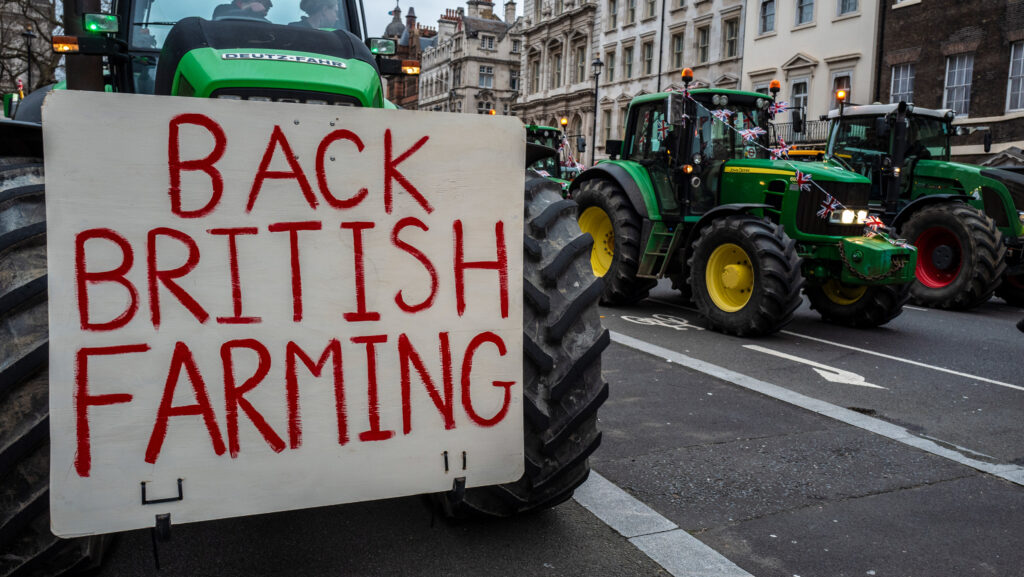 Westminster farmer protest back in December © Phil Weedon
 On 17 October 2018, I found myself in London listening to Dr Liam Fox, a minister with the breezy confidence that comes with knowing that consequences would always be borne by others.
He announced – proudly, in a way that only a man who hasn’t thought something through can be proud – that Britain would, for the first time since the Second World War, abandon food self‑sufficiency as a target.
See also: Opinion – farming on edge of city has more ups than downs
About the author

Post‑Brexit Britain, he said, would specialise – grow only what we’re best at, flog it to the world.
And import the balance from a global supply chain he seemed to believe was both unquestioning and eager, like a golden retriever but with shipping containers instead of sticks.
Eighteen months and five days later, the first Covid lockdown hit, and the shelves emptied faster than ministers’ memories at a select committee.
Two years after that, Russia invaded Ukraine and the shelves repeated the trick.
One might imagine these back‑to‑back reminders of global fragility would prompt a government to reconsider the wisdom of outsourcing its food supply.
But no. Ignorance is one heck of a drug and the Dunning-Kruger effect can be viewed in real-time in government.
Fast‑forward to the same date but six years later – 17 October 2024. Sir Keir Starmer welcomes Bill Gates and BlackRock’s Larry Fink to Downing Street.
With the new Labour government’s first budget two weeks away, two of the world’s most enthusiastic buyers of farmland stroll into No 10.
A mere 12 days on, chancellor Rachel Reeves drops the APR bombshell and Starmer announces that voters must choose between funding the NHS and maintaining tax relief for farmers.
Let’s not pretend this was ever about revenue.
This was about reviving the spirit of the Clearances – the historical policies that swept Scottish and Irish farmers off their land in the 18th and 19th centuries.
Now updated for the modern era, complete with corporate investors and private jets.
The NBA, NFU and other organisations produced revenue‑neutral alternatives that didn’t involve handing farmland to tax-manipulating multinationals.
But the Treasury, if Michael Gove is to be believed, has long regarded farmers as “underproductive subsidy junkies” and had been trying to push this policy on previous chancellors.
They simply hadn’t found anyone sufficiently naive or ideologically rancid to run with it.
It takes elite‑level callousness to target children at a moment of personal tragedy with a tax this specific.
But this government – never one to leave cruelty half‑done – managed to refine it further.
If one parent is already gone, tough luck – the surviving parent can’t share the liability, so there will be tax on an extra £2.5m of assets.
And don’t forget kids: if you don’t make your first payment to HMRC within six months – long before probate can realistically be granted – you lose the right to pay over 10 years.
This from a government that promised not to tax working people (31% of farmers earn less than minimum wage).
But apparently taxing their children is perfectly acceptable.
A loophole, perhaps, in the definition of “working people”.
The front bench may have imagined that their partial climbdown on APR – announced once Parliament had safely scattered for Christmas – would keep the tractors out of Whitehall and keep their own MPs from rebelling when the Treasury Bill returns for the next reading.
I’m here to inform them that this fight is far from finished.
In fact, we’re only just lacing up our boots.