

Opinion: Food and farming need ‘executive council’ of leaders
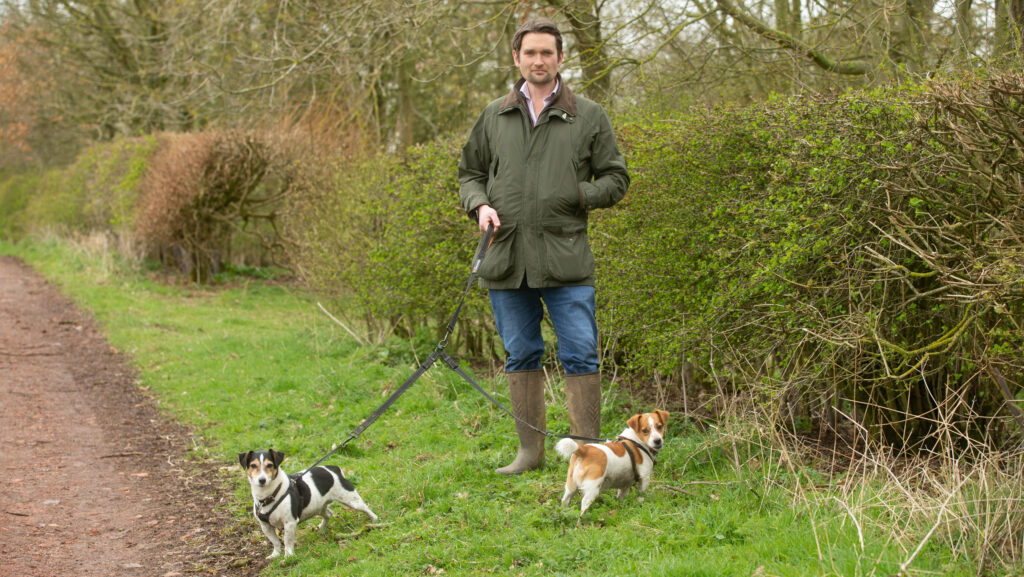 Joe Stanley © Tim Scrivener
 Anyone who has dabbled with boats will know a tiller and daggerboard are essential parts of a vessel.
Without the former, the helmsman is unable to dictate a direction of travel, while without the latter they are liable to drift sideways on the gentlest of breezes.
All of us sailing on the UK (and especially English) ship of state since 2016 might be forgiven for thinking we left harbour with neither tiller nor daggerboard, despite the claims of the Brexity politicians cutting the EU mooring lines that there was an oven-ready plan for farming and the countryside in a post-CAP world which would leave us all better off.
Opinion: Drainage is an ‘invisible crisis’ which must be addressed
About the author

In reality, policy drift has been chronic and the lack of forward momentum stultifying as we’ve been buffeted by events and a terminal lack of knowledge, ambition and drive from the centre.
Nearly a decade on, England’s farmers are left beached in the absence of the long-promised comprehensive Environmental Land Management scheme.
We currently await details of the latest iteration of the Sustainable Farming Incentive, with application windows promised for June and September, while ministers continue to move the goalposts on natural capital and green finance.
Government has abdicated its natural position of leadership in the great issues which face our food system and our farmed environment.
Yet food security, our natural capital and the rural economy are too important to allow to go to the wall due to political intransigence and faithlessness.
The food and farming sector – our largest manufacturing industry, representing 6% of the economy, 15% of employment and 70% of land use – should set its own direction and convene an executive council of leaders (independent of day-to-day politics) from all aspects of the supply chain: primary producers, processors, manufacturers, retailers, logistics, finance and consumers.
This would not be another talking shop but a forum with enough credibility and representation to set long-term principles: how we balance domestic production with imports, what resilience means in practical terms, how risk and reward are shared, and what investment is needed to future-proof the system.
This would be about taking responsibility, saying that those who produce, process and move food and steward our natural environment are best placed to define what a sustainable, resilient system looks like in the real world. Government should be an enabler of that vision, not a constant source of disruption.
This body would present comprehensive solutions to ministers and, in some cases, act independently for the wider good.
It would have the moral and economic authority to challenge the government-led drift and short-term backsliding.
There would be disagreements, of course. Interests don’t always align neatly.
But doing nothing and continuing to cede the field to a hopeless political class guarantees more of the same: uncertainty, underinvestment and the slow erosion of our production base and natural capital.
Farmers are already adapting, innovating and collaborating despite the policy chaos.
Imagine what could be achieved with a shared framework and a common purpose. Imagine what it would feel like to have a firm hand on the tiller and a strong, following wind.