

Opinion: New CS payment could be lifeline for native breeds
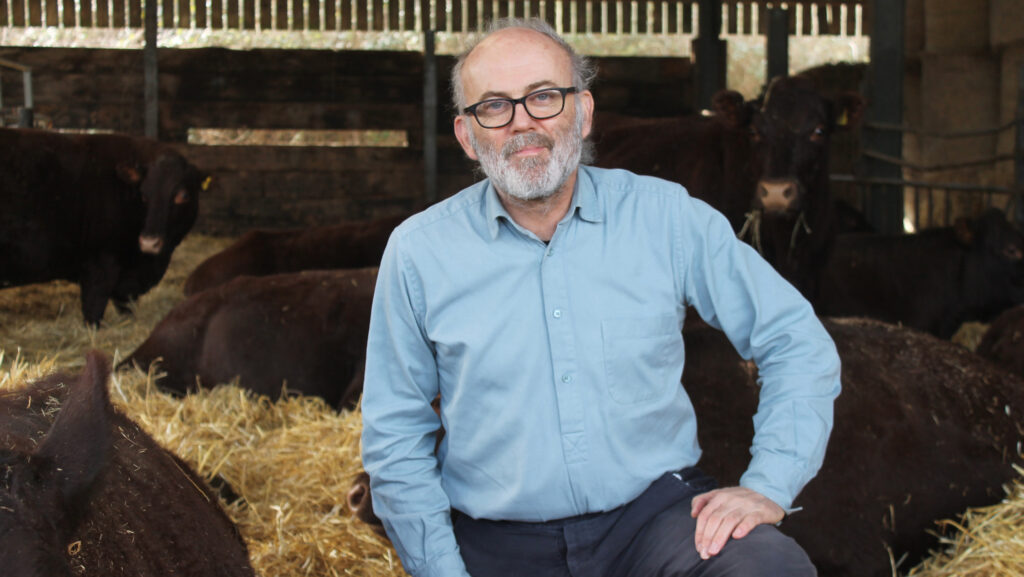 Stephen Carr © MAG/Philip Clarke
 I own a herd of rare pedigree Sussex cows that are the main joy of my farming life.
Indeed, it’s the greatest regret of my farming career that I didn’t acquire them earlier.
So it was with great pleasure that I learned of the announcement of the Keep Native Breeds on Grazing Habitats payment, which will form part of the latest incarnation of Countryside Stewardship.
See also: Opinion – combinable cropping area set to drastically shrink
About the author

Only registered pedigree cattle of breeds that Defra considers “at risk” will qualify for payments of roughly £100-£150/ha a year.
At risk
“At risk” means in danger of becoming extinct, and the long list of qualifying beef breeds includes Galloway, Vaynol, White Park, Chillingham and – most importantly of course – Sussex.
Such help cannot come quickly enough for these breeds as they are suffering terrible economic pressure due to the difficulty in making any herd of suckler cows pay.
The GB beef breeding herd has declined by 250,000 head to just 1.25m over the past decade, and the AHDB forecasts that this could fall below 1m head by 2030.
Given this gloomy picture, the future of Britain’s rare breeds of beef cattle is extremely precarious.
This is very unfortunate as our native breeds contain an invaluable reservoir of gene diversity that it would be crazy to squander.
Given that climate change is likely to require changes to cattle husbandry techniques in the future, who knows what traits we will be looking for in our cows by then?
I’ve been farming Sussex cattle since 2015 when I purchased a herd of 20 registered pedigree cows.
The rest, as they say, is history as they have simply been a revelation to me.
Our 95 cows maintain good condition through the winter on little more than ad-lib organic hay, and they give birth to healthy calves in the spring.
Weaned calves grow well on a diet of just hay with mineral lick blocks.
The heifers we produce we either sell to other pedigree breeders or retain for breeding ourselves.
Of the steers, we fatten between two years and 30 months of age, about a dozen go to our pub to rave reviews, while the rest end up in top-end restaurants and butchers.
Prizes
Without wishing to sound boastful (heaven forbid), last summer our herd won the “best large herd”, the “best bull running with a large herd” and the “best herd overall” competitions run by the Sussex Cattle Society.
To my astonishment, they even won our local prize for “best commercial beef herd”, which was remarkable given they were judged against continental-cross cows often using continental bulls.
I was bragging in similar style to a farming neighbour recently who shrugged and said: “Is it so surprising? Sussex cattle have been selectively bred to thrive in this region since before the Norman conquest.”
I know nothing about Lincoln Red or Welsh Black, but I suspect that they too prosper in great style in Lincolnshire and Wales respectively.
So, let’s hope that the Keep Native Breeds on Grazing Habitats initiative is successful in reversing the decline of “UK native breeds of cattle at risk”, as listed by Defra.
How wonderful it would be to know where one is in the UK by the breed of cattle grazing in the fields.
Ideally, even Aberdeen Angus might be returned to where they belong: Aberdeenshire.