

Opinion: Trump’s war has huge implications for nitrogen usage
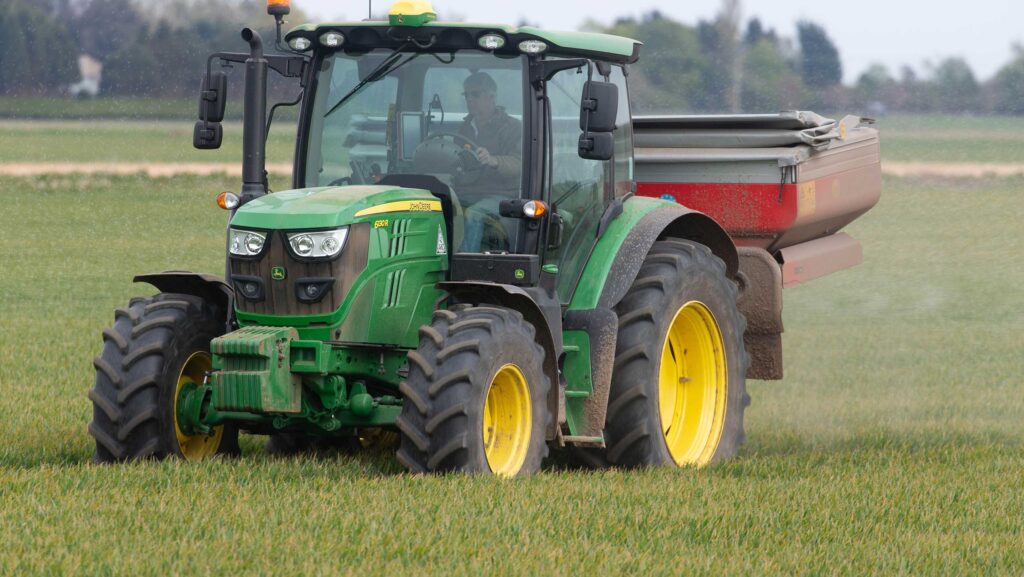 © Tim Scrivener
 I think we can agree that the golf club owner’s recent foray into Middle Eastern politics is stuck forlornly in the rough.
The man is so unpredictable that it would be most unwise to comment on his discourse in a magazine delivered by Royal Mail.
See also: Opinion – don’t expect you sprayer to provide post-BPS answers
About the author

Suffice to say that, at the time of writing, there is little indication that proceedings are going to end tomorrow and, even if they did, the implications for gas- and oil-driven derivatives such as diesel and fertiliser are not going to resolve themselves quickly, given the damage already inflicted upon production facilities and supply chains.
Much like the kicking-off of the war in Ukraine in spring 2022, the timing of Trump’s war has been somewhat fortuitous for northern hemisphere farmers.
Most of us sit down with our fertiliser reps in the autumn and winter to pre-buy our requirements for the following growing season.
Applied in the spring, those who use any quantity of fertiliser had already bought the majority of our requirements for the 2026 harvest.
Not so, however, for southern hemisphere farmers for whom seasonal phasing is six-months polarised and who are also much closer to the action. It will be our turn for the same conversations in a few short months.
At the outset of the Ukrainian war, fertiliser prices rocketed in Europe, but so too did grain prices in order to pay for it.
The fundamentals are different today than they were then when ammonium nitrate touched the heady heights of £900/t, partly because grain stocks are high, but also because the Arab states are not renowned grain exporters.
But nitrogenous fertiliser pricing – currently up 30-40% from its pre-war level and sitting today in the mid £500s for AN – is going to impact significantly on global production in the medium term.
The nitrogen response curve (freely available online) gives us an indication of what our economically optimum usage will be.
The following is an oversimplification but broadly for a winter wheat crop, the first 50kg/ha of N applied gives 2t/ha extra of grain, the next 50kg gives 1t/ha, the next 50kg/ha gives 0.5t, and so on and so forth.
There is a law of diminishing returns, and the economic optimum is the point at which the cost of the additional nitrogen is only just matched by the value of the additional grain it produces.
If you alter the ratio of fertiliser to grain pricing as seen recently, you also change the economic optimum rate of nitrogen.
Maybe not hugely on a farm or field scale, but globally the impact will be massive.
Compared to much of the grain-growing areas of the world, we live in a green and pleasant land where grain yields are relatively stable and we can be comparatively certain of our return in fertiliser applied.
If you farmed a prairie where rainfall is sparse and unpredictable, you would be taking a much harder look at your cropping decisions altogether.
So an optimistic note, then, for those arable farmers, like us, for whom the 2025 harvest accounts did not win us the green jacket.
Grain prices cannot remain in the doldrums forever while fertiliser prices stick where they are.
With crops appearing well going into the main growing season, we ought to be looking at harvest results par for the course at least.