

Opinion: UPFs and inertia are to blame for obesity crisis
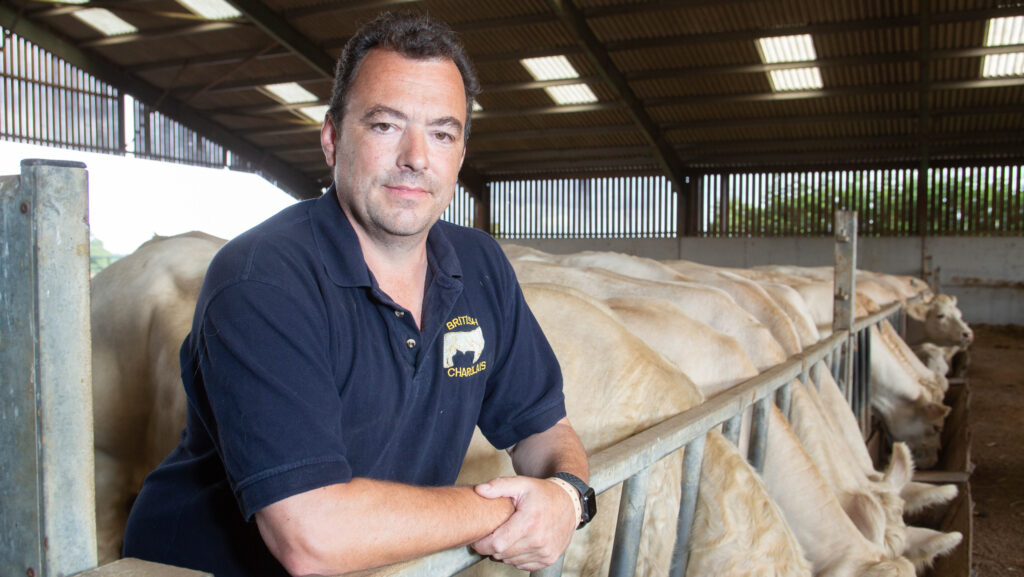 Ben Harman © Tim Scrivener
 Policy shouldn’t be complicated, but somehow even the simplest ideas end up strangled in red tape.
Take the straightforward notion that we should not be buying beef linked to deforestation.
We can all agree with that, and we all know this primarily refers to South America, particularly the Amazon.
See also: Opinion – fight against ‘cruel’ IHT policy isn’t finished yet
About the author

One might assume that the UK increasing tree cover from 13.2% to 13.5% over the past 25 years would be enough to demonstrate we are not clear-felling our way across the countryside to make more grazing.
Not so. The EU Deforestation Regulations (EUDR) will require geolocation data for every product to prove compliance: every steak or burger will have to arrive with its own set of co-ordinates.
This adds significant cost and vast complexity to the supply chain to address a problem that, while simple in principle, becomes far more difficult once global trade rules get involved.
Now consider something that is complicated from the outset: the obesity crisis and human health outcomes.
In the UK, successive governments have tinkered at the margins of this problem.
They adjust advertising regulations, tweak sugar taxes, and generally attempt to influence symptoms rather than causes.
I’m not someone who would normally lavish praise on the Trump administration, but in its sea of indiscriminate invective the occasional pearl can be found.
I praised the US policy shift at the City Food and Drink Lecture recently and was, I suspect, regarded as slightly eccentric
I’ve written before about my misgivings over the Global Burden of Disease (GBD) study, the Bill Gates‑funded work underpinning the EAT‑Lancet report, which in turn shapes health policy across many countries. It turns out I’m not the only sceptic.
I was in Nashville recently to hear US health secretary Robert F Kennedy Jr explain the rationale behind shifting the United States food policy away from the GBD model towards a simple but effective recommendation: eat real food.
We all instinctively know that’s right. Steak, chicken and pork are not the primary threats to human health in the developed world.
The real issue is ultra‑processed foods — products that look like food, behave a bit like food, but somehow leave us worse off for eating them.
We know them when we see them, but applying even a casual definition is tricky. Applying a legal one is like playing whack-a-mole with both hands tied behind your back, and with lawyers instead of moles.
The US approach avoids that trap by focusing on what it does want: more whole grains, more vegetables and more high‑quality protein.
Lab‑grown protein does not qualify (I struggle to apply the word “meat” to the dystopian synthesised mush hung on a microplastic scaffold to mimic a natural product).
I praised the US policy shift at the City Food and Drink Lecture recently and was, I suspect, regarded as slightly eccentric.
But I’m not suggesting RFK’s policy is perfect. I’m suggesting that perfect policy does not exist, and our current approach is failing.
Even with the rise of GLP‑1 weight loss injections, the nation grows more obese.
The diet that kept humans healthy for millennia is unlikely to be the cause of modern obesity.
Ultra‑processed foods – combined with a widespread reluctance to move more than necessary – are far more plausible culprits.