

Opinion: Why I don’t like the word ‘diversification’
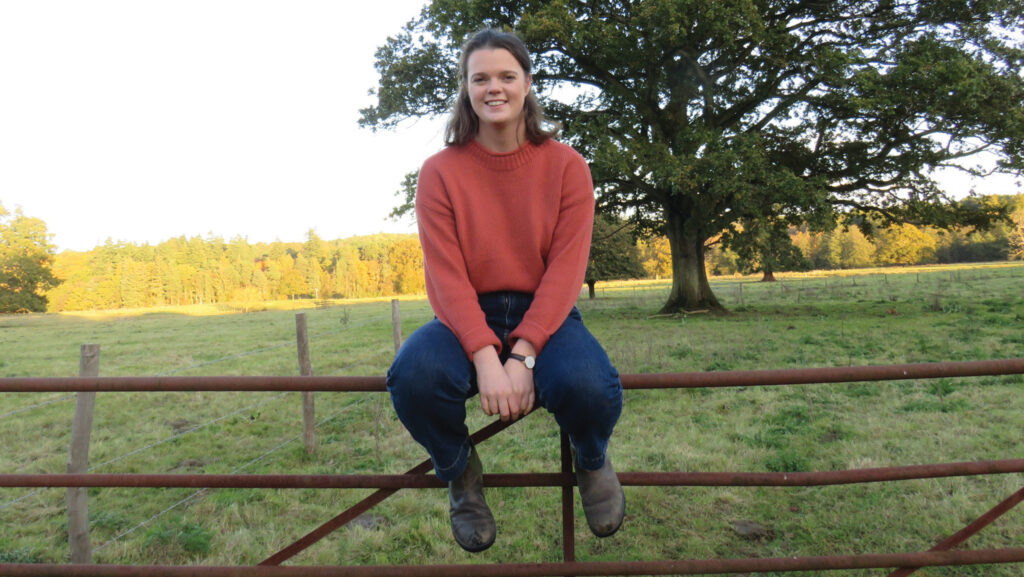 Molly Biddell © Molly Biddell
 “What do you farm?” is a question I find surprisingly hard to answer, which is a bit left field for a Farmers Weekly columnist.
I struggle because my response usually involves me reeling off a list a bit like this:
“We have a herd of beef cows that help restore habitats, host beef and venison parties, grow hops, manage woodlands, run a campsite, an events space, offices, retail, some houses, a bit of filming and our next project is an off-grid woodland sauna.”
See also: Opinion – we need to re-people the rural sector
And often my response will be met with a slight grunt and a comment like “Oh, so you’re heavily diversified then”.
Which leaves a lingering sense that we’re somehow failing at being “proper” farmers.
A feeling that it’s a shame we’ve had to resort to diversification to keep ourselves afloat rather than focusing on “serious farming”.
But in reality, as a sector, our “diversifications” are almost always some of the most exciting parts of our business, not to mention some of the most viable and consistent income generators (when we get them right).
For the public, it’s these “diversifications” that are the most relevant, relatable, accessible and engaging parts of a farm.
Many of the enterprises we call diversifications enable people to connect with food, nature and place – they aren’t add-ons or nice to haves, they are essential to a thriving landscape.
Clearly I believe in the concept of diversification.
But I have some serious problems with the word. Firstly, it’s incredibly bland. It doesn’t shout entrepreneurial or innovative. It sounds more like a painful dental procedure.
Compare diversification to the word start-up and it obviously falls short.
Secondly, diversification lumps anything that isn’t crop growing or livestock rearing into one very large category.
Bundling everything together, from paintballing to forest bathing to wine tasting (and many others), devalues the variety and integrity of enterprises our sector has to offer.
The word diversification does these enterprises a disservice.
These are individual, interesting, complex and context-dependent operations in their own right.
This is not a third “diversification” crop that we just whack in the ground when grain prices drop.
We need to better articulate the full breadth and depth of these on-farm enterprises. We need to use language that represents the knowledge, skills, time and energy that go into creating them.
And we’re going to need this language pronto, because as we know, to remain resilient and viable, we have to embrace multifunctionality.
This dive into linguistics raises a bigger existential conundrum, which is whether the term “farmer” is fit for purpose?
If we truly strive to be multifunctional businesses, do the words farm and farmer cover us? Technically, farming is defined by raising livestock and growing crops.
Lots of us are doing that and a bit more, so what other options have we got. Land manager? A bit clunky. Land steward?
Better, but a bit pretentious. Landowner? Deeply exclusive. Rural asset manager? Very dull.
We know that farmer is a good word – it resonates deeply, it evokes feelings of pride, purpose and hard work. Rather than replacing it, perhaps we should broaden the definition?
So, my double linguistic challenge – can we cancel the word diversification and is the word farmer fit for purpose? Answers on a postcard please.