

Upland farming held back by ‘top-down system’, review finds
 © Adobe Stock
 An independent review commissioned by Defra has highlighted deep, structural challenges facing England’s upland farmers, warning that meaningful change will require a shift away from a “top-down” system.
Led by Hilary Cottam and supported by Defra’s Policy Design Lab, the review brought together farmers, environmentalists, community leaders, academics and officials from across government.
It focuses on the pressures facing upland communities and identifies 19 insights aimed at enabling long-term, system-wide transformation.
See also: Thousands of commoners face SFI and CS exclusion
Its findings will directly inform new place-based work in Dartmoor and Cumbria, announced by Defra secretary Emma Reynolds at the Oxford Farming Conference in January 2026.
These initiatives will trial community-led approaches to reshape policy and delivery on the ground.
Published on 9 April, the report paints a stark picture of a sector under strain.
Farmers describe themselves as being “squeezed and squeezed” by policy, markets and declining rural infrastructure.
It concludes that upland farming is constrained by a fragmented, centralised system disconnected from local realities.
At the core is frustration with what farmers describe as a rigid “vertical” structure, where Defra and its agencies act as “judge, jury and paymaster”.
Complex schemes, coupled with fear of penalties, leave many feeling powerless.
A widening gap between policy ambition and practical farming is another key concern.
While most upland farmers see themselves as environmental stewards, current schemes often force trade-offs between food production and nature recovery – creating tensions described by some as a “civil war”.
The report argues “the best environmental work will be done around the fulcrum of good farming”.
It also highlights the erosion of local infrastructure – from abattoirs and vets to schools and transport – undermining farm viability and rural life.
Meanwhile, new entrants face major barriers, with land access limited and opportunities scarce.
Food supply chains are criticised for locking farmers into low-value supermarket systems, while access to higher-value local markets remains limited.
The report warns this could contribute to future food security risks, including potential price shocks.
Concerns are also raised about “industrialised environmentalism”, with large-scale carbon and biodiversity schemes sometimes displacing tenant farmers.
Despite these challenges, the review sets out a clear direction: empower local communities, support farmer-led networks, and treat food production, nature and rural economies as interconnected priorities.
A seven-year collaboration between government and upland communities, starting in Dartmoor this summer, with Cumbria to follow, will test this new approach.
Reaction
Commenting on the findings, Liz Staley, a third-generation tenant hill farmer based in Cumbria, said: “As an upland hill farming family, with the next generation looking to follow, we have real concerns about the future of upland farming and rural communities.
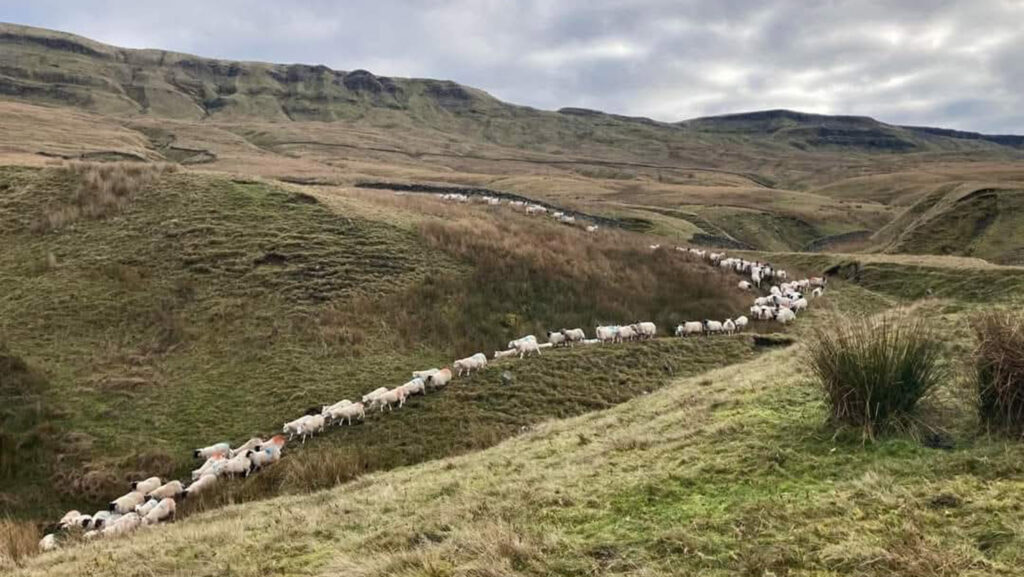
Upland farming in Cumbria © Liz Staley
“Hilary Cottam’s independent report is a reassuring and positive step, reflecting many of the long-standing challenges rural communities have worked hard to highlight.
“It’s encouraging to see these issues clearly recognised, but the focus now must be on turning this into clear actions and meaningful delivery on the ground.”