Large-scale investment key to tackling climate change, says expert
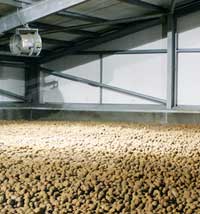
Large-scale changes, such as investing in modern, high-tech storage facilities and switching to electricity produced by renewable energy, were the main ways growers could cut carbon emissions when producing potatoes.
“Unfortunately there are no low-hanging fruit that will provide real reductions in emissions. Changing to low-pressure tractor tyres, for example, won’t provide any large changes,” Gareth Edward-Jones from Bangor and Aberystwyth Universities told growers at the Potato Council‘s potato storage event.
One study had suggested that cold-storing potatoes until the end of the season could account for around 50% of the pre-retail production carbon footprint, he said.
Most of that came from energy use, with machinery use in store and disposal of waste potatoes also contributing. Switching to a renewable source of electricity, such as wind, could cut farm and storage emissions by nearly 60%, he reckoned.
Size of store made little difference to the footprint, but analysis of the footprint of tomatoes in Holland showed newer glasshouses had lower emissions. “It is the same with potato stores and pack houses – better technology will mean a lower footprint. It is the big ticket capital items that can bring about change.”
That meant there was no excuse for not to invest in cutting edge technology when building new stores. “It has to stand the test of time.”
In fact, he said, radical storage design solutions were needed. “We need this [new] potato store to be obsolete in 20 years’ time to succeed.”
Growers had, however, to carefully evaluate the cost of storage when investing in new facilities, Jay Wootton of farm business consultants, Andersons said.
His calculations suggested that the write-off costs of a store were often higher than what many growers estimated, and make the operating costs of the store higher than average price increase gained from storing potatoes from October to March.
“You have to know what you need to get a return on your investment,” he said.
But he agreed sophistication was the key word for the future. “It is critical – it is terribly easy to specify yesterday’s technology, but there are lots of more innovative ways of kitting out a store.”
And spending more on the initial investment could lower the long-term operating costs, he said.
FWI FACT Studies suggest that over 50% of the carbon footprint of potatoes comes when they used, with boiling using the greatest amount of carbon.
Pesticides provide greatest output for carbon use
Pesticides gave by far the greatest return per unit of carbon used in potato production, David Nelson of Branston said.
According to the typical carbon footprint of a 50t/ha ware crop stored for eight months with a supermarket packing quality, pesticides only accounted for 1.3kg/t of carbon dioxide – or just 0.2%.
That compared with 38kg/t of carbon dioxide from fertiliser and more than 300kg/t from cold storage when the potatoes were stored for the full eight months.
And when those figures were attributed to the marketable yield benefits each input brought, it suggested that pesticides used only 0.05kg of carbon dioxide for each tonne of marketable yield increase.