Cuts to support for solar and wind announced
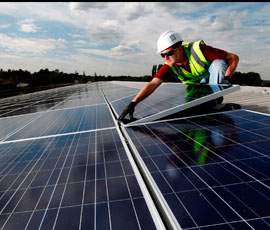
Wide-ranging changes to Feed-in Tariff support for all types of renewable energy technologies have been unveiled by the government today (9 February).
The reforms propose further significant reductions to the tariffs for solar installations and also cuts to support for wind power (see table below). Some small cuts to FiTs for hydro have been proposed, while rates for anaerobic digestion have been left unchanged and Combined Heat and Power could see a slight increase.
But it is the cuts to solar support that have grabbed much of the attention, with both large-scale and domestic installations affected.
A tariff of 21p/kWh will take effect from 1 April this year for domestic-size solar panels with an eligibility date on or after 3 March 2012 and other tariff reductions will be applied to larger installations.
DECC had already confirmed cuts to solar tariffs from 1 April for installations with an eligibility date from 3 March, but today’s announcement has attached further conditions to these tariffs to deal with energy efficiency and multiple installations and proposed new PV tariffs to take effect from 1 July 2012.
It said tariffs should be set at a level that would deliver returns of 4.5-8%, although the exact payment could depend on actual levels of deployment of new installations in March and April. Three different tariff scenarios have been proposed, as shown in the table below.
• Option A: Targeting average rates of return of 5-8%, with around 5% for domestic installations.
• Option B: Reducing tariffs by around 25% from the 1 April levels by 1 July.
• Option C: Making a cut of around 21% from April.
DECC also proposed a new system of degression that could peg the subsidy levels to cost reductions and industry growth.
Climate Change Minister Greg Barker said the plans would see almost two-and-a-half times more installations than originally projected by 2015, which was “good news for the sustainable growth of the industry”.
“We are proposing a more predictable and transparent scheme as the costs of technologies fall, ensuring a long term, predictable rate of return that will closely track changes in prices and deployment.”
But Renewable Energy Association chief executive Gaynor Hartnell said the new tariff rates would be “very challenging as the reductions seen over the past 12 months are unlikely to be repeated, because of global trade trends”.
“The FiTs have an important role in tiding us over to the point where solar panels no longer need subsidy. On present trends this won’t be far away, but it will be delayed if we go backwards and starve the industry by reducing the tariffs too fast.”
The consultation on proposed solar PV tariffs will be open for eight weeks from 9 February and closes on 3 April. The consultation for non-solar support will be open for 12 weeks from 9 February and closes on 26 April.
• More detail and reaction to the proposals to follow. The consultation documents can be accessed on the DECC website.
Proposed changes to Non-solar tariffs (from Oct 2012)
Changes to solar tariffs (from 1 April 2012)
Proposed changes to solar tariffs (from 1 July 2012)