

Producing best quality silage
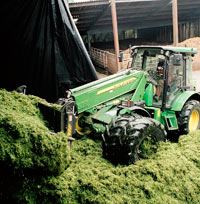
Farmers should consider making more use of baled silage and staggered field closures to produce the best quality silage this year, according to the Silage Advisory Centre.
The common approach of closing all silage fields at the same time for a big cut runs the risk of poor D-value silage, says Dave Davies, IBERS.
“Putting all your eggs in one basket by harvesting at the same time, means you are at the mercy of the weather, possibly leading to delayed harvest and lower D-values which could impact on profitability.”
Having more than one harvest window will ensure at least a proportion of silage is of good digestibility value.
“Closing fields as grass gets ahead of grazing will also help maintain high quality of grazed grass which is the cheapest form of feed on grassland farms,” says Dr Davies.
Studies have shown the difference between 65 D and 70 D silage is worth 1.25 litres of milk a cow a day, 0.2 kg liveweight gain in beef cattle and 0.1 kg liveweight gain in sheep.
“Although one big cut is required to fill a clamp effectively, farmers who want the best from their forage could consider using baled silage alongside traditional clamp approach,” he says.
“Using bales will allow farmers to make some high quality silage from smaller land acreage and allow harvesting at time when the weather suits.”
More advice on silage and grassland management can be found at www.silageadvice.com