

Advertiser content
5 insights from UK farmers on the future of smarter farming
From reducing repetitive tasks to making better use of farm data, technology has the potential to make farming simpler, more connected and better informed.
Two UK farmers share what smarter farming means to them and where technology could make the biggest difference.
For farmers, smarter farming is not necessarily about having the latest gadget or replacing people with machines.
Often, it is about something much more practical: saving time, connecting information and making it easier to make informed decisions.
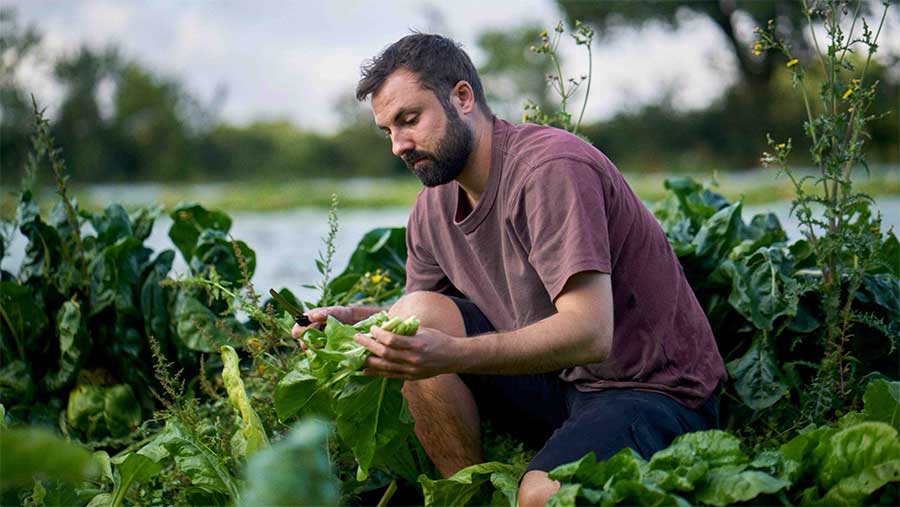
© TELUS Agriculture
Speaking at Cereals 2026 as part of the Meet the Farmers podcast, UK farmers Becky Roper and Ed Horton shared their perspectives on how technology is already changing their businesses and what they would like the smarter farm of the future to look like.
Here are five ways smarter farming could help UK farmers work more efficiently.
1. Take repetitive tasks out of the working day
Farmers have no shortage of jobs competing for their attention. But not every task requires their time and expertise.
For Becky Roper, who runs a mixed farming operation in Herefordshire, smarter farming is about reducing the time spent on routine tasks so she can focus on the bigger picture.

Smart farming means taking the nitty gritty out of my day-to-day job so that I can get on with the more important things
That could mean automating simple, repetitive checks or making it easier to see at a glance that everything is running as it should.
The goal is not technology for technology’s sake. It is about giving farmers more time for forward planning, problem solving and running the business.
As Becky explains, taking some of the “monotonous stuff” out of the working day could be a “huge game changer.”
2. Connect technology so information flows more easily
Many farms already use a range of digital tools, machinery and data systems. The challenge is often getting them to work together.
Becky describes the current reality as “a lot of connecting dots”, with information sometimes needing to be exported from one system and manually transferred to another.
Her vision for smarter farming is straightforward:
It needs to be a lot more integrated. Simpler. Easy for farm staff to run on a day-to-day basis
Better integration could reduce the need for farmers to act as the link between every person, machine and system on the farm.
For Becky, that could mean information flowing more easily between advisers, farm management systems and machinery, without the farmer having to manually move files or make sure everything reaches the right place.
If technology could be a lot more integrated in working together, the opportunities to save time and, ultimately, costs are huge
As farms generate more data, making that information flow easily between people and technology could become just as important as collecting it in the first place.
3. Turn farm data into better decisions
Farms are generating more data than ever, from machinery and field operations to costs and business performance. But collecting data is only the first step. The real opportunity lies in turning it into useful information.
For Ed Horton, a mixed farmer based in Cotswolds, smarter technology can help farmers draw stronger conclusions from the information they already collect.
Rather than simply storing data in spreadsheets or individual systems, technology can help bring information together, identify patterns and provide a clearer picture of what is happening across the business.
But Ed is clear that the role of technology is not to take decision-making away from the farmer.
It’s not making better decisions for us, but helping us to make the right decisions within the context of our own business and what we want to achieve
That distinction is important. Every farm is different, and the same data may lead to different decisions depending on the farm’s priorities, system and circumstances.
The value of smarter farming therefore lies not simply in collecting more information, but in making existing data easier to understand and act on.
4. Make compliance and record-keeping simpler
Farm businesses already hold huge amounts of information. The challenge is that it may be spread across different systems, computers, paperwork and, as Becky puts it, sometimes stored in the farmer’s head.
That can become particularly challenging when information is needed for an audit or assurance scheme.
We’ve got so much data, but it’s all stored either in my head or on the computer
For Becky, the opportunity is to make it easier to pull the right information together in the right format when it is needed.
A more connected approach to farm data could help make record-keeping part of everyday farm management rather than a time-consuming preparation exercise when an audit approaches.
The smarter farm of the future could make it easier to find the right record, demonstrate what has happened in a field and provide the information required for audits and assurance schemes without searching across multiple systems.
It’s just making sure that for that one day, I’ve got exactly what I need. And it doesn’t take me a month to prepare for it.
5. Use automation where it adds the most value
The future of smarter farming is often associated with autonomous tractors and machines replacing people. But for Ed, that is not necessarily where automation can deliver the greatest benefit.
He still sees an important role for skilled operators who understand the farm, the conditions and the wider context behind a decision.
I still believe we need an operator who understands what they’re doing
Instead, there may be greater opportunities to automate some of the repetitive monitoring tasks that take up valuable time.
Ed gives the example of grain storage, where regular checks of temperature, moisture and quality can require significant time. Better monitoring and connected data could make that process more efficient while providing a clearer picture of what is in store.
That information could then support decisions about which grain to allocate to different contracts, while also making compliance and traceability easier.
It is a useful reminder that smarter farming does not have to mean removing people from the process. It can mean using technology to take care of repetitive work while giving people better information to make decisions.
Helping farmers make smarter farming a reality
For Becky and Ed, smarter farming is not about technology for technology’s sake. It is about solving practical challenges: spending less time on repetitive tasks, connecting information more easily, getting greater value from farm data and having the right records available when they are needed.
Becky and Ed’s vision of a highly integrated, stress-free farm isn’t a futuristic dream. It’s what we’ve been building at TELUS Agriculture & Consumer Goods for over 30 years. We believe technology should work for the farmer, not the other way around.
TELUS’ solutions for farm business management are designed to help farmers bring together the information they need to manage their farms and businesses more effectively. From planning and recording field operations to managing farm accounting and payroll, TELUS solutions help make everyday farm management simpler and give farmers greater visibility across their operations.
By keeping important information organised and accessible, farmers can spend less time searching for records or managing disconnected processes and more time focusing on the decisions that move their businesses forward.
And because smarter farming is not about replacing the farmer, the goal is not to make decisions for them. It is to give farmers and their teams the tools and information they need to make those decisions with greater confidence.
Provided by
TELUS Agriculture & Consumer Goods is a leading global provider of digital solutions and data insights that help connect food and consumer goods producers to consumers. With a global team, we serve customers in over 50 countries, offering integrated solutions for analytics, data, supply chain management, trade promotion, and farm and livestock production management.