Scottish spring barley: Lessons for farmers in 2026
 © Tim Scrivener
 High screenings and variable nitrogen levels were an unwelcome feature of the Scottish malting crop last year, with growers reporting a £70/t hit on failed grain and the country awash with feed barley.
Due to dry spring weather, secondary tillers didn’t have time to fill, and nitrogen fertiliser was taken up late by stressed plants.
This resulted in screenings reaching more than 40% in some situations.
See also: Growers advised to test home-saved spring bean seed
Avoiding a repeat in 2026 will depend on future weather patterns and sufficient spring rainfall, believe commentators.
They stress that all varieties were affected and most regions had issues – with light land and late-drilled crops being the hardest hit.
More worryingly is that it came at a time when the malting industry is in a period of consolidation, with distilleries closing and malting barley contracts harder to come by.
Neil White © Joe Somerville
Market downturn
As cost pressures mount, the news that Baird’s is closing its Pencaitland Maltings early next year is a blow for south Scotland barley growers.
The wider picture is one of a general downturn across the brewing, malting and distilling industries.
Simpsons Malt is also scaling back its operations and Diageo has halted production at its Roseisle Maltings until at least June 2026.
Many buyers are well-stocked and intent on balancing capacity with current demand; with economic pressures, trade tensions and shifting consumer habits being blamed.
In an already subdued market, barley use has dropped by 18% in a year to 115,000t, according to AHDB figures.
While the weather might be more in spring barley’s favour for the year ahead, weaker market demand is expected to remain.
Grower experience
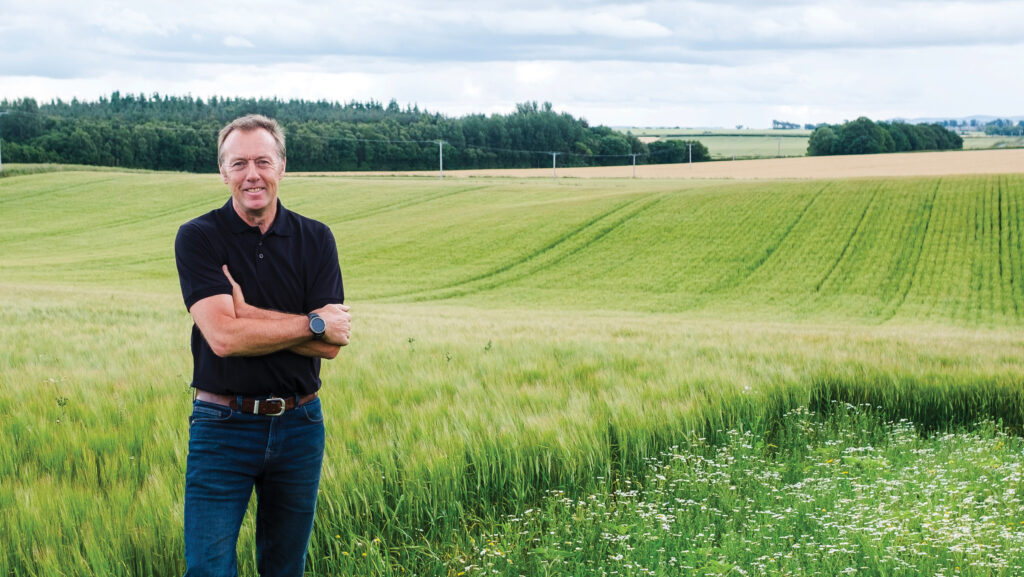
A very conservative estimate is that 30% of malting barley grown in Scotland did not hit specification this year, reports Berwickshire grower Neil White and former Farmers Weekly Arable Farmer of the Year.
Neil had two crops on contract last year – high-nitrogen Asteroid and low-nitrogen Diablo.
“Yields weren’t too far off what we expected, but six weeks of no rain at a critical time meant that nitrogen levels were on the high side and a fair bit of dressing had to be done.”
Deductions when the top line isn’t too exciting are a blow, he continues.
“The weather is a massive factor, but there is a wider issue in Scotland in that the tonnage required by maltsters is falling, so the timing couldn’t have been worse.”
Neil adds that the balance of risk and reward in the malting barley supply chain is out of kilter and that something needs to change.
“The irony is that some of these malting barley contracts now focus on sustainability – but growing the crop is becoming unsustainable for growers at the prices they are offering.”
Case study: Dupplin Estate
© Tim Scrivener
Velcourt farm manager William Wombwell of Dupplin Estate in Perthshire, a very bad experience with spring malting barley in 2025.
Together with the market downturn, means that he will not be growing the crop in 2026.
Screenings of between 18% and 23% following secondary growth in the crop, together with brackling and lodging after high winds in July, made harvesting very difficult and an experience he doesn’t want to repeat.
“We didn’t see as much variation in grain nitrogen as some. Although our screenings were high, we heard of far worse,” recalls William.
“As a result, more of our crop made malting than went for feed, but yields were appalling.”
In a first for the farm, the oilseed rape crop yielded 0.5t/ha more than the spring barley, he adds. “Some of the grains were tiny, more like needles.”
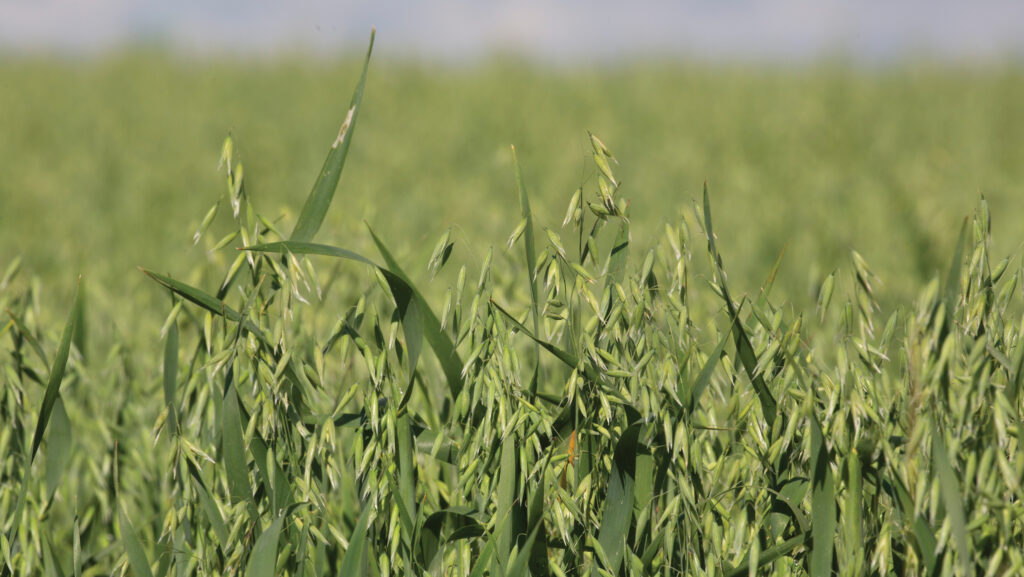
As a result, his is replacing 220ha of spring barley with spring oats in 2026, having been able to secure a contract that makes financial sense.
He is also growing more winter malting barley than before, opting for Buccaneer.
The winter crop doesn’t have the same establishment and weather risk as spring barley and still gives enough time for a following oilseed rape crop to be established.
“Prices and premiums are down, there’s a glut of malting barley and it doesn’t seem as though that is about to change,” points out William.
“There’s no point growing a crop that isn’t wanted by the end market; it would make more sense to fallow that land and put a cover crop on it.”
Like many other growers, he is still waiting for some of his 2025 crop to be moved.
“The buyer is being very slow in picking it up, which is another headache we could do without.”
Malting firm Crisp launches Field Forward
© Chromorange/Alamy Stock
Sustainable farming practices are the focus of a new initiative from malting company Crisp, which aims to improve the sustainability credentials of brewing and distilling supply chains.
In a move designed to secure long-term barley supply, Crisp Malt has launched Field Forward to transform how barley is grown, using a data-driven approach to track farm progress and build resilience.
It will be rolled out in partnership with Crisp’s Scottish grower group, whose members have already been surveyed on their farming practices and are submitting data via the Map of Ag data platform.
The group has established a baseline, in a process where achievements were revealed, higher risk areas identified and opportunities highlighted.
They will work in partnership with growers to achieve continuous improvement in four key impact areas – soil health, water use, biodiversity and greenhouse gas emissions.
This will be done through a process of data collection, knowledge sharing, collaborative goal setting and continuous monitoring.
Third-party verification is being provided by the SAI Platform’s Regenerating Together Programme.
Developed through Crisp’s 200-strong ABC grower group, Field Forward is the framework for gathering, analysing and sharing data, before agreeing targets and driving improvements.
As Ellie Wood, Crisp’s sustainability co-ordinator explains, the principles behind Field Forward are simple.
“We are working in partnership with malting barley growers to understand where we are with farming techniques, agree where we want to be and help the malting industry become more sustainable through the use of better practices.”
Soil type, topography and local growing conditions will have a bearing on what can be achieved, she accepts.
“The information allows us to see which are the most successful techniques in different locations, so that we can then set realistic targets for regional groups.”
Crucially, farmers will make their own decisions on how to meet them, she adds.
“The data provided will help them to make the right choices – it’s continuous improvement that everyone is working towards.”
Ellie stresses that Field Forward is not about ticking boxes. “It tracks the same farms, year after year, to show progress over time and help build resilience.
“That will help secure the supply chains of our brewing and distilling customers and deliver meaningful outcomes.”