

Early reports of severe chocolate spot in winter beans
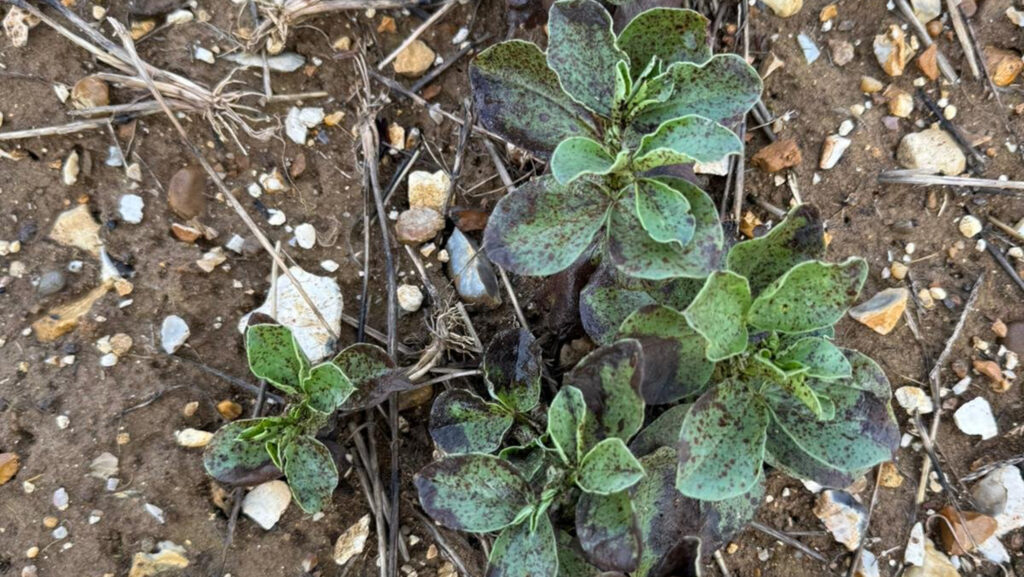 © PGRO
 Winter bean growers are being urged to check their crops for signs chocolate spot, as there are increasing early reports of severe infections of the fungal disease in some crops.
The Processors and Growers Research Organisation (PGRO) says this has developed rapidly in the continued wet and relatively mild conditions experienced in January and February.
“Foliage has remained wet with no extended drying periods, and hence disease has had good conditions for development,” says the organisation.
See also: Home-grown pulse incentive required to replace soya imports
Crops that were drilled early (late September into mid- to late October) are likely to be affected more severely, especially if planting density is high.
In some cases, crops are severely infected with high levels of necrotic tissue in the plants.
Early applications of fungicides may be necessary to prevent further disease development, and none of the approved products are curative.
It is, therefore, important to prevent infection developing in crops while weather remains unsettled.
“We urge growers and agronomists to check crops as a priority, early signs of infection may look similar to the following images, which are the two sides of the same leaf.”
Chocolate spot advice
The disease develops as small, circular, chocolate coloured spots on the lower leaves. These become larger and may coalesce to form a greyer coloured lesion extending over the leaf surface.
Stems and pods can also develop a covering of spots or flecks. Severe infections can result in defoliation.
Protectant fungicides should be applied at first pod if spotting is seen on the leaves. If severe spotting is seen earlier in the season, the first spray should be moved forward.
A second spray should be applied three to four weeks later if spotting continues to develop on the upper parts of the plant.
A third spray is seldom required as sprayer damage can cause more yield loss than late infection of chocolate spot.