Endophytic grass shows promise against sugar beet aphids
 © GNP
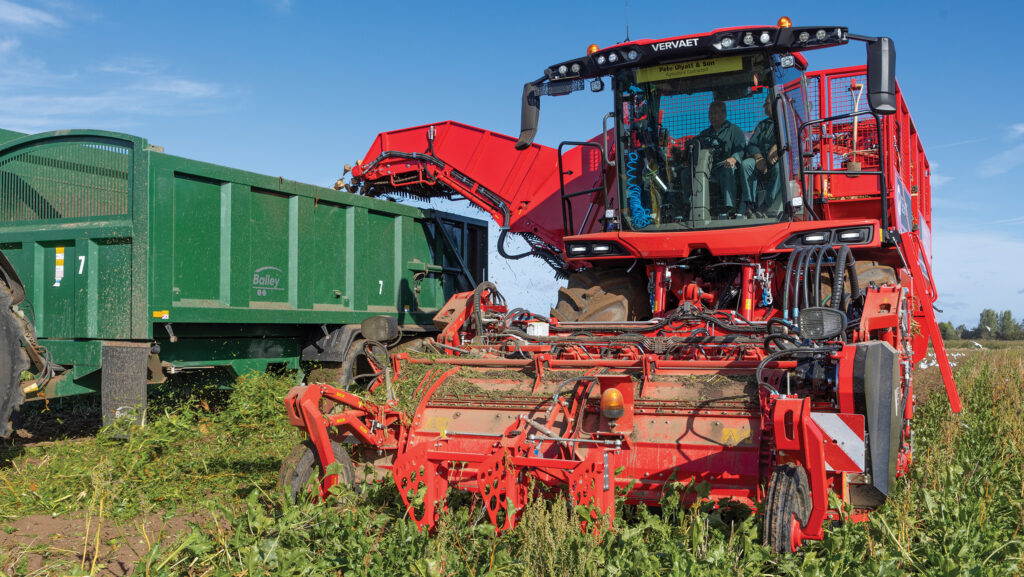
© GNP Using endophytic grasses to manage virus yellows infections in sugar beet is showing promising results from an Adopt project involving Morley Farms and the British Beet Research Organisation.
Endophytic grasses contain a beneficial and symbiotic fungus that produces alkaloids which deter insects from feeding, reducing the need for chemical control.
See also: 6 new varieties added to 2026 sugar beet variety list
The grasses, such as Barrier meadow fescue from CropMark Seeds containing the endophyte Epichloe uncinate, have become popular in New Zealand for protecting grazing pastures from various root- and top-feeding insect pests.
That attracted interest from BBRO as a potential alternative method of managing aphids transmitting virus yellows in sugar beet. But the challenge was working out how best to use it.
In previous research projects various tactics have been tested, including grinding the grass seed into a meal and incorporating into the soil or growing the grass as an overwinter cover crop.
It’s the latter that is being tested in the Adopt project, explains BBRO head of crop protection Dr Alistair Wright. The key, as for most cover crops, is getting it established as soon after cereal harvest as possible, he says.
Dr Alistair Wright © Mike Abram
“You want to get as much biomass as possible – the more biomass, the more the endophyte will reproduce in the grass.”
Once established, the grass needs to be attacked in a way that simulates predation, he says.
“The whole point of the endophyte is to protect the grass, so if it thinks it is being grazed or damaged it will ramp up alkaloid production.”
Norfolk trials
In the trials at Morley, this has been achieved by rolling the cover crop in October, before spraying it off in early winter with glyphosate.
Strip tillage was used to maintain some of the grass cover when the sugar beet crop was drilled in March, with approximately 60% of the dying grass left undisturbed.
“As the grass starts to break down, the alkaloids leach out into the soil to be taken up by the next plant or crop,” Alistair explains. “They are very water soluble.”
Samples of the sugar beet have been taken to confirm how much alkaloid is in the leaves of the beet crop, while the impact on sugar beet will be monitored.
Aphid counts taken in late May have shown an encouraging reduction in the number of aphids – down to just 0.3 per plant compared with an average of 5 aphids per plant in sugar beet grown after the farm’s standard overwinter cover crop.
“We also didn’t see big colonies forming at all,” reports Alistair.
“That suggests the beet plants are less palatable, and if they don’t stay as long that might have the knock-on effect of transmitting less virus.”
The impact on virus yellows levels and yields will be monitored during the season, as will the effect on soil quality.
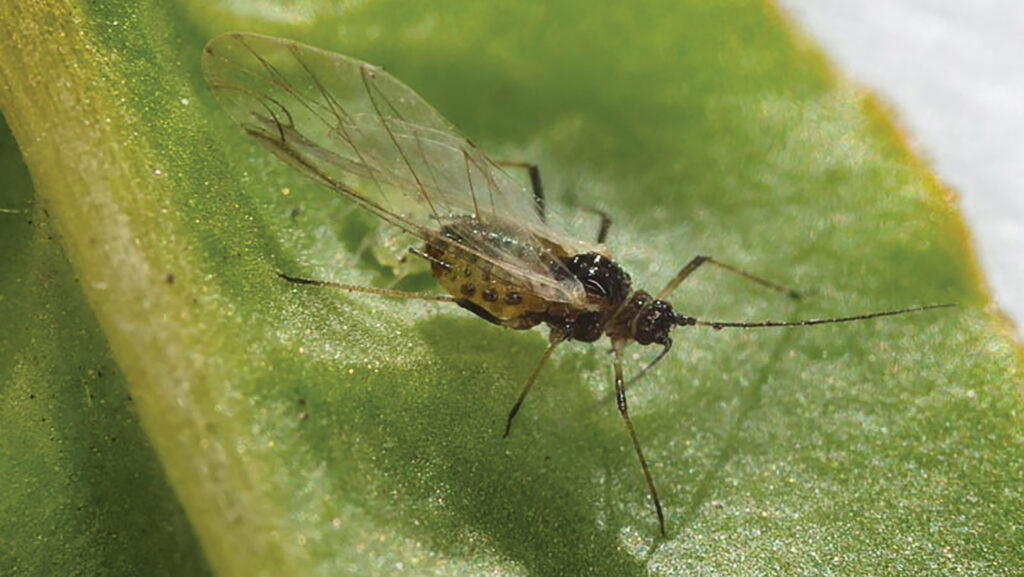
The endophytic grass deters insects from feeding © Blackthorn Arable
“Can we leave the grass in situ – does that mean the harvester travels better in the autumn? On a heavier soil type, that’s often under scrutiny, so we’re looking at that with the clay-loam soil at Morley susceptible to compaction and then see what the knock-on effect is with the following barley crop.”
Further refinements to the system will be needed, though, he admits, with reductions in sugar beet canopy growth seen this spring.
“We need to refine the nutrition because when the fertiliser was broadcast, a lot of it went straight on the dying grass and probably didn’t make it to the beet crop. But that’s an easy fix hopefully,” he adds.
Nematode control
It’s not just aphids the Barrier grass might be helpful against. As part of the project, Lugden Hill Farm, just outside of Docking in Norfolk, is carrying out on-farm strip trials looking at the influence of the grass on plant parasitic nematodes that cause Docking disorder.
Soil samples are being taken to analyse for nematode levels in various different cover crop strips that are reported to reduce stubby root knot nematode levels, as well as the farm standard cover crop mix and a fallow control.
A third farm at Brettenham, near Thetford, is growing the grass to assess the viability of producing seed for the grass in the UK. FW
New ranking system for virus yellows tolerant varieties
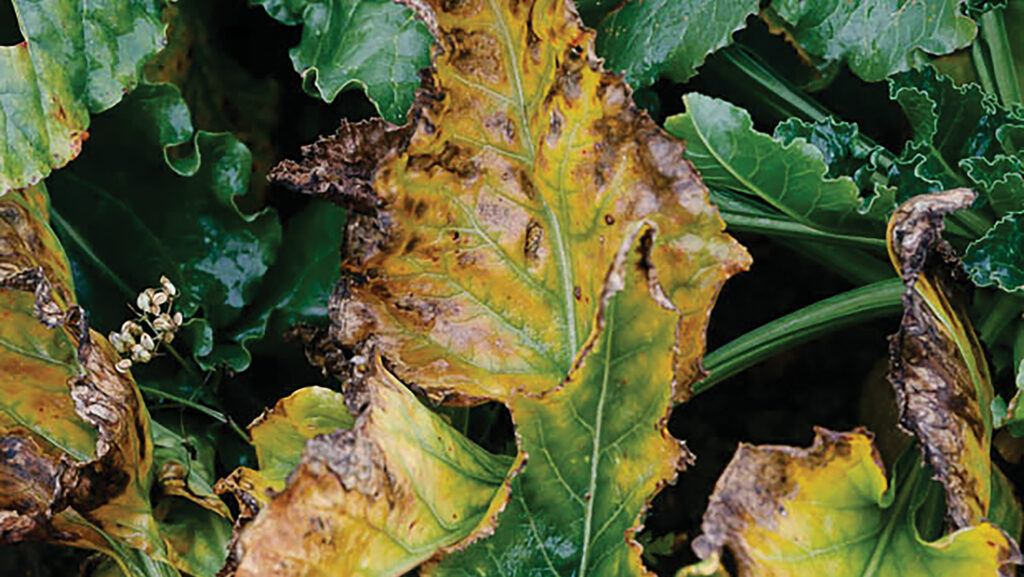
There are three varieties on the RL with virus yellow tolerance claims © Blackthorn Arable
A growing portfolio of varieties with claims for virus yellows tolerance has prompted BBRO to plan for the introduction of a new ranking system that classifies varieties based on projected yield loss to individual viruses within the virus yellows complex.
Currently there are three sugar beet varieties on BBRO’s Recommended List with a claim for virus yellows tolerance, which will increase to four on the 2027 list, says Dr Alistair Wright.
“Many growers will assume that claim means it is a good variety against all three different viruses, but unfortunately without any major sources of resistance that has been difficult to achieve.”
BBRO’s Goliath virus yellows screening project has supported breeders since 2019 by testing new varieties in large-scale inoculated trials.
Each beet plant is hand inoculated with aphids carrying one of the three viruses – beet mild yellowing virus (BMYV), beet chlorosis virus (BChV) or beet yellows virus (BYV), creating a worst-case situation.
The project’s results have shown that varieties have different strengths and weaknesses against different viruses, but to ensure reliability, two years’ worth of yield data collected within that project will be the source for the new ranking system, Alistair explains.
“The system will rank varieties on an A+ to susceptible (S) scale for each virus type.”
An A+ ranking will likely signify zero yield loss from a 100% inoculated virus plot compared with uninfected plots, with an A meaning under 10% yield loss, although the exact classification is still being determined.
Susceptible varieties are those with more than 40% yield loss.
While it’s a blunt tool compared with the data collected in multiple Recommended List variety trials, the idea is to give growers an understanding of the level of yield loss they will face when growing a particular variety, Alistair says.
“It will be up to a grower whether they choose to take a risk with a susceptible variety based on their experience and potential yield,” he says.
“What we are really hoping for in the future is that all varieties will have A+ or A rankings for all viruses. That will likely require precision breeding,” he concludes.
New insecticide in development
BASF is developing a new insecticide from a unique mode of action group to target aphids that transmit virus yellows.
The active ingredient, dimpropyridaz, marketed as Axalion, stops aphids feeding within a couple of hours, halting virus transmission.
How it works
It works by disrupting the organs that play a key role in providing the information that enable insects to co-ordinate and move.
Within the group of insecticides that act in this way, Axalion has a unique target site and its own mode of action classification.
In 32 trials across Europe, it provided an average peak control of aphids in sugar beet of 88%.
“It performs better than other products currently available, while supporting the role of beneficial insects in integrated pest management,” says the firm’s Lisa Hulshof.
Market availability
BASF is hoping the product will be registered within the next two years in the UK, with the potential for two applications per season.
A very targeted mode of action means it has a good profile against beneficial insects, which could see it being used in combination with its recently launched beneficial insect attractant, Apthena.
Content for this article was collected during the International Institute of Sugar Beet Research’s 80th Congress held in Cambridge in July.