Key sugar beet disease forecasts a moderate to high risk
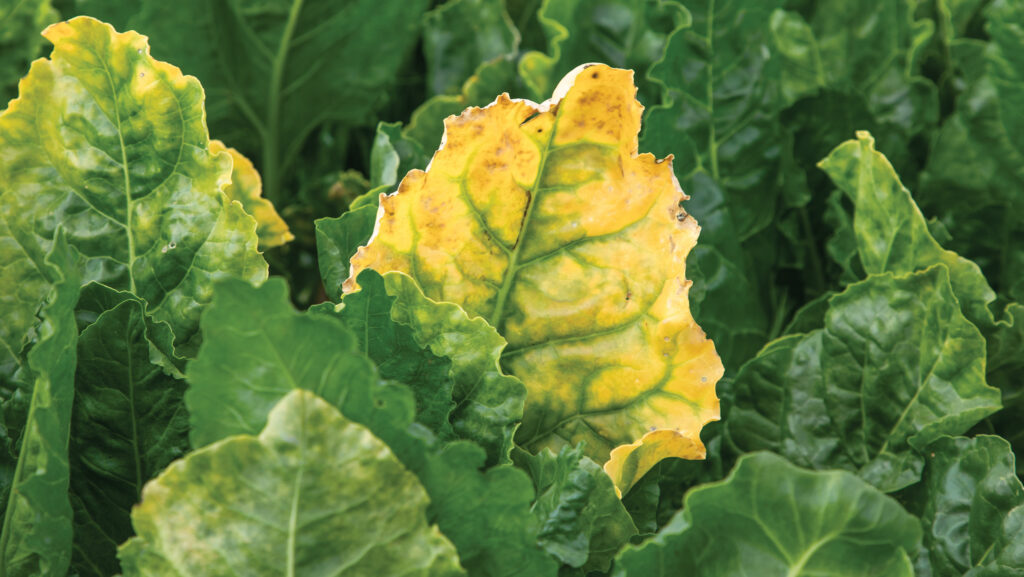 © GNP
© GNP The virus yellows forecast suggests moderate to high infection risk in 2026, particularly in eastern factory regions.
Carried out by Rothamsted Research, the models based on January-February temperatures indicate earlier aphid migration and significant potential infection levels without control measures.
See also: What an IPM approach to virus yellows in sugar beet could look like
Therefore, the British Beet Research Organisation says growers and agronomists will need to monitor crops closely and be ready to act quickly this spring.
The East
Across the eastern factory regions, the aphid migration is predicted to begin on 22 April.
Assuming a 30 March sowing date, the model is estimating 62% of the sugar beet crop could become infected with virus yellows (in the absence of any control measures).
This risk to crops is higher than 2025, which saw colder temperatures in January and February, and is similar to 2023 and 2022.
Newark area
The aphid migration is predicted to begin on 2 May across the Newark factory region.
Assuming a 30 March sowing date, the model is estimating 49% of the sugar beet crop could become infected with virus yellows (in the absence of any control measures).
Again, the risk to crops is higher than 2025, but lower than other recent seasons.
Control relies on insecticide sprays crops reach a treatment threshold of one green wingless aphid for every four plants up until the 12 true-leaf stage.
Available options include flonicamid (Teppeki or Afinto), acetamiprid (Insyst) and flupyradifurone (Sivanto Prime).
Virus yellows forecast for 2026 |
||||
|
Location |
Drilling date |
Mean temperature (Jan-Feb) |
||
|
15 March |
30 March |
15 April |
||
|
East: (Bury, Cantley, Wissington) |
50% |
62% |
77% |
5.6C |
|
North: (Newark) |
36% |
49% |
67% |
5.0C |
|
Source: Rothamsted Research |
||||