Research on historic wheats disease resistance gets grant
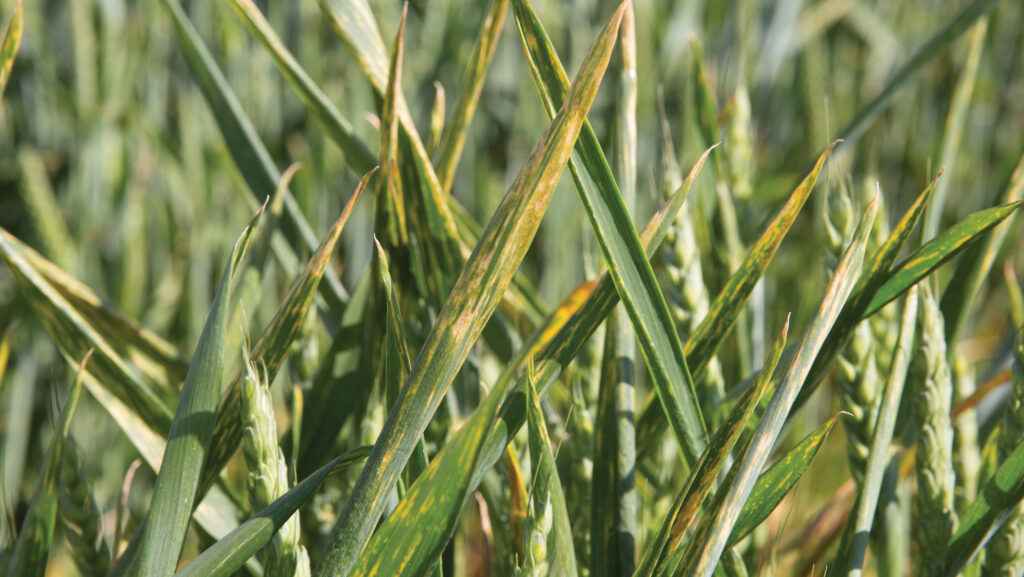 Yellow rust © Tim Scrivener
 Historic wheat collections could hold the secret to tackling the newly identified strain of yellow rust pathogen which overcame the Yr15 resistance gene in winter wheat last year.
The breakdown of this gene leaves more than 50% of the UK’s wheat area vulnerable to infection from the fungal pathogen.
This includes the top three selling varieties, which alone account for one-third of the UK wheat market.
The race is now on to find new resistance genes to breed into modern wheat varieties.
See also: Fungicide-resistant late blight strain detected in UK for first time
In response, the UK Research and Innovation (UKRI) and Defra have announced the award of a Rapid Response grant to crop-research organisation the John Innes Centre.
The research will draw on the genetic diversity found in the historic AE Watkins collection of wheat landraces.
The collection contains wheat germplasm collected nearly a century ago from 32 countries around the globe.
Researchers at the John Innes Centre have already shown the collection contains genetics that can confer resistance to the new yellow rust strain.
This project will harness the latest genomic tools to unlock these resistance sources for breeders to incorporate into modern wheat varieties.
Prof Anne Ferguson-Smith, executive chairman at the UKRI Biotechnology and Biological Sciences Research Council, says:
“We are empowering British scientists to ‘mine’ the historic Watkins collection for new, natural defences.
“By unlocking the genetic secrets of these 100-year-old seeds, we can help provide farmers with resilient wheat varieties, safeguarding food security.”
Prof Diane Saunders, group leader at the John Innes Centre, adds: “Witnessing such a large-scale breakdown in yellow rust resistance in 2025 was unprecedented.
“The recently unlocked diversity in ancient wheat seeds provides the research community with a fantastic resource of unutilised genetic disease resistance.
“We can now mobilise this untapped genetic resistance to rapidly respond to this emergent threat and, ultimately, protect the UK’s wheat harvest.”

Staying sharp shouldn't be a chore