Septoria fungicide gives grower good returns in high-risk year
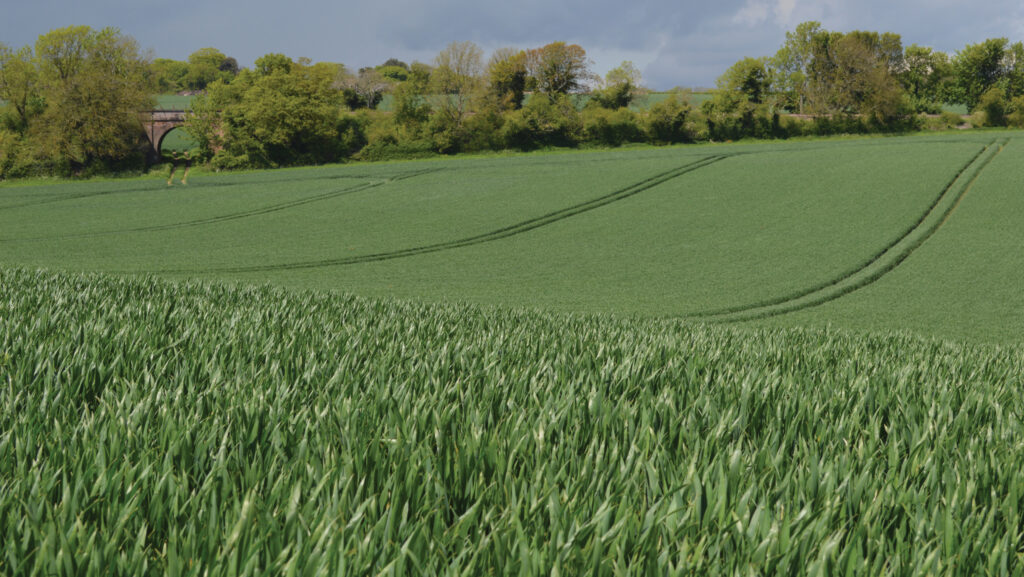
© David Jones
Chris Baylis is seeing a clear yield benefit in using a relatively new septoria-specific flag leaf fungicide on his winter wheat in high-disease pressure seasons, and is planning to use it again this spring.
He saw a 0.3t/ha yield benefit in the high septoria year of 2024 from using Miravis at the T2 stage in May giving him the confidence to use it again in the right situation and on the right wheat variety.
Chris is the director of farming on a 3,800ha estate based in the Lincolnshire Wolds, where septoria is an ever-present concern and yellow rust is becoming an increasing problem in winter wheat crops.
The estate grows 1,200ha of winter wheat. He first used the fungicide in May 2024 over 120ha of winter wheat, and the extra yield more than paid for the extra expense over his standard T2 programme.
See also: How McCain is using a demo farm to reach its regen targets
“In our first year – which was a high disease year – it gave a margin over input costs, which gives us the confidence to use the product again, but not on every wheat variety,” he says.
Chris used the fungicide again in 2025 over 10-15% of his wheat crop, but it was difficult to see a clear yield benefit in such a hot and dry low disease year, although it worked successfully in hybrid winter barley.
Group 2 milling wheats and Group 4 hard feed wheats are grown on the estate of Sir Richard Sutton Ltd, based at Stainton le Vale, near Market Rasen, and nearly 20 miles north-east of Lincoln.
Soil types range from light chalky Wold soils rising up to up an elevation of 185m to below sea-level heavy clays near the River Humber.
The fungicide – Miravis Plus + Era – was cleared for use mid-spraying season in early April 2024, and contains a new third-generation SDHI pydiflumetofen or Adepidyn (Miravis Plus) in a twin pack with the widely used azole prothioconazole (Era).
Chris used the fungicide in May 2024 largely on the septoria-susceptible variety Skyscraper at the advised rate of 1.5 litres/ha of Miravis with 0.5 litres/ha of Era at the T2 flag-leaf stage.
Skyscraper had the lowest septoria rating of any wheat variety at 5.0 in the AHDB Recommended List (RL) of 2025-26, and was dropped for the current 2026-27 list.
The AHDB RL rates varieties on a 1-9 scale for disease resistance, where 9 shows high resistance and 1 is very susceptible.
Chris was impressed with the effect of the new T2 spray as it enhanced the greening of the crop by five to 10 days. It also delayed senescence, and more than paid for itself with the 0.3t/ha yield advantage compared with his then standard T2 treatment.
Current season
Skyscraper has been dropped from his wheat area, which this season sees two-thirds down to Group 2 varieties such as Extase, Siskin, Arnie and Palladium, and one third down to Group 4s such as Champion, Dawsum, Beowulf and Scope.
His five-year average yield of first wheats is an impressive 10t/ha over his wide range of soil types, but in 2025 the dry summer pushed average yields down to 9.6t/ha.
His independent agronomist Chris Harrold, who covers East Yorkshire and north Lincolnshire, says Miravis is set to have a potential role this season as the mild, wet winter and early spring weather is likely to result in plenty of septoria.
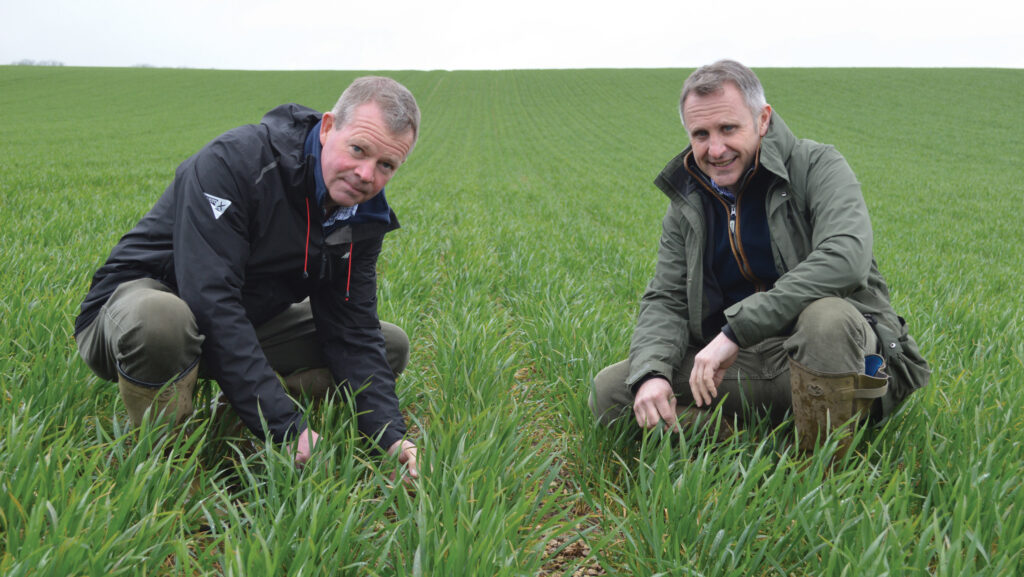
Chris Harrold (left) and Chris Baylis © David Jones
“This year, with a lot of early-sown wheats carrying a lot of septoria, I can see using Miravis on high-risk crops if they have a high-yield potential,” he says.
On the estate, yellow rust was seen in Champion early in the season, and this variety was treated before the T0 stage in March with the azole tebuconazole.
The variety contains the resistance gene YR15, which was shown to have been overcome by a new race of yellow rust in 2025.
The yellow rust resistance rating of Champion was downgraded to a 4 from a previous 8. Other popular feed wheat varieties with the YR15 gene were also downgraded.
Dawsum and Typhoon were both reduced to 5s from 9s, and Beowulf to a 4 from a 9. Some varieties without YR15, such as Extase, were unaffected and remained on a 7.
Chris’s approach to early T0 fungicide sprays is that clean varieties such as Palladium (yellow rust score of 6) will have no T0.
Those with a slightly greater risk will be sprayed with tebuconazole, while risky, dirty varieties – and especially second wheats – will have a tebuconazole plus strobulurin azoxystrobin spray.
His T1 plan is for varieties clean of major septoria infections to receive Elatus Era (SDHI benzovindiflupyr or Solatenol plus azole prothioconazole) as the SDHI is particularly strong on yellow rust.
Key winter wheat fungicides
- Elatus Era SDHI benzovindiflupyr or Solatenol plus azole prothioconazole.
- Miravis Plus + Era SDHI pydiflumetofen or Adepidyn in a twin pack with azole prothioconazole .
- Revystar SDHI fluxapyroxad or Xemium plus azole mefentrifluconazole.
- Univoq Picolinamide fenpicoxamid plus azole prothioconazole.
But for more septoria-dirty varieties he is likely to go down a Revystar (SDHI fluxapyroxad or Xemium plus azole mefentrifluconazole) route, adding in a multisite such as folpet or sulphur in a very high disease year.
He stresses that application timing is critical at T1, and that a lot a plant dissections take place to find the right timing to protect the newly emerged leaf three.
“It’s not so much about the product in the tank as about the timing,” he says.
The plan is to try and control yellow rust at the T0 and T1 stages, before the focus of attention switches to septoria at the T2 flag leaf stage.
Three blocks
Although Chris has 1,200ha of wheat to spray – which can take his two sprayers three days to cover – he drills his wheat in three blocks in terms of sowing date, which is dictated by blackgrass control.
An early-drilled wheat block, largely on the lighter Wold soils, is sown in late September, the medium-risk blackgrass fields in mid-October, and the fields with potentially bad blackgrass are drilled in late October.
“A lot depends on the weather in April in terms of disease risk. If the weather is dry, then crops will have great potential. But if we see a wet and cold April, there will be a lot of pressure on T1s and T2s,” he says.
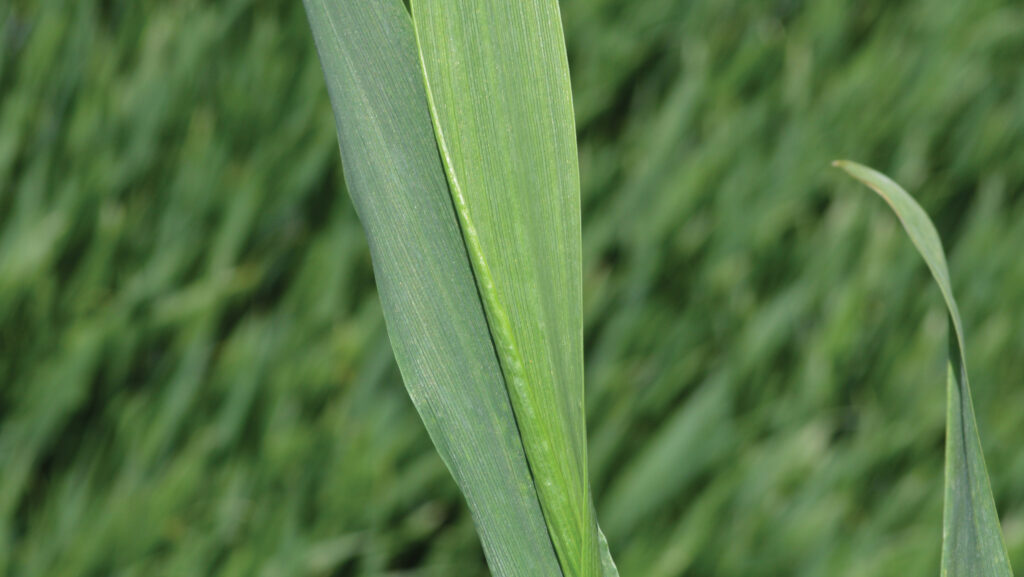
Winter wheat at the T2 flag leaf stage © David Jones
His selection of a T2 is likely to be between Miravis, Univoq or Revystar, depending on the risk of disease – with the most at-risk crops from septoria likely to get Miravis.
If yellow rust is still a big concern at T2, then he is likely to add tebuconazole to the mix, rather than a strobilurin. As strobilurins can only be used twice in a season, he tends to keep them for use at T0s and T3s.
The active Adepidyn is rated as the top single product for septoria control in AHDB trials As the active has no control of yellow rust on its label, the mixed product is relying on prothioconazole for yellow rust – hence tebuconazole adds a bit more control.
His T3s tend to be a prothioconazole-strobilurin mix, aimed at any late brown rust and fusarium threat, and also for the greening effect from the strobilurin.
Hybrid barley
Last season, Chris Bayliss was particularly impressed with Miravis on the hybrid winter barley variety Kingsbarn.
It produced a yield of 11.68t/ha in 2025 and showed good control of wet-weather diseases rhynchosporium and net blotch, and also ramularia.
“This was the highest-ever hybrid winter barley yield we have seen on the farm, and it came in a very challenging year,” he says.
Chris says that the early-maturing winter barley had its yield set by June before the hot, dry weather of 2025 started to take its toll on other crops.

Staying sharp shouldn't be a chore