

Advice on fungicide applications for profitable wheat
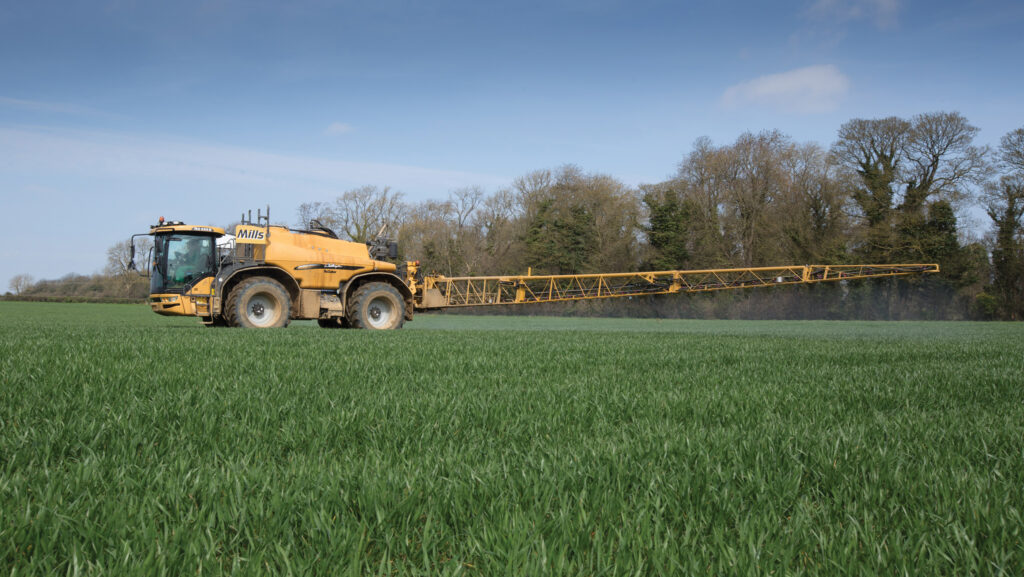 © Tim Scrivener
 Extra focus on fungicide investment will be required this season, as budgets for a £170/t feed wheat price look certain.
Despite suppressed grain markets, fungicides remain a significant investment in conventional cropping systems, notes Hutchinsons agronomist David Howard.
“Fungicides are often flexed and changed according to disease pressure each season, but they’re a relatively safe bet in terms of investment.
“They are the second biggest returner after nitrogen,” he says.
See also: Wheat dwarf virus widespread in UK, finds survey
At a wheat price of £160-£170/t, we’re looking at a fungicide return of £346-£368/ha (see graph below).
“Even at a grain price of £90/t – and I hope we don’t get there – we still see the average return from a fungicide programme being £195/ha,” says David.
With margins squeezed and grain prices looking unlikely to rise, it is set to be a tricky year in terms of investing.
“This is certainly not a year for the same fungicide programme across everything.
“Every field must be looked at on a field-by-field basis.
“Different varieties, drill dates, or nitrogen rates need to be considered,” says David.
Disease pressure
“So, the million-dollar question is what is the disease pressure going to be?
“All we can do is look at the risk factors,” notes David.
The crop in the ground this year is very different to last.
Favourable autumn weather conditions meant much of the UK winter wheat crop was planted two weeks ahead of usual.
The recent cold snap may delay the onset of disease development, buying growers time when it comes to early fungicide timings.
The true risk will be dependant on February and March weather.
The good news is crops are looking healthy, coming out of winter with significant biomass and nitrogen reserves.
There is scope for growers to trim back rates of early N applications by about 20kg N/ha to make efficiency savings.
“Because of the dry weather last year, a lot of nitrogen struggled to be taken up by the plant, so there are plenty of reserves in the soil.
“It makes you think: do we need to come in quite so heavy with early nitrogen?”
Early drilled crops
Last year saw one of the lowest disease pressures in the past decade, which resulted in generally lower than usual inoculum levels.
However, early drilled crops are at risk of higher disease pressure for two main reasons: exposure and capture.
The earlier the drill date, the greater period the plant is exposed to spores, and the larger the biomass that can intercept pathogens.
Early drilled crops tend to have slower leaf emergence, with a larger phyllochron length (the intervening period between leaf emergence).
This often means the window between the T1 and T2 timing will be wider, making fungicide timings challenging to hit.
When it comes to yellow rust control, this means a T1.5 spray would be useful, explains David.
“This means keeping our gaps tighter.
“Growers should not miss or stretch timings, with a max of three weeks where rust pressure is high,” says David.
“Yes, an extra pass does add cost, but I think we have to look again at what efficiencies can be drawn across the entire farm rather than one specific area,” he says.
“The conventional T1 and T2 timings are designed for septoria where there is 360-day degrees between the disease landing on the leaf and expression.
“For yellow rust, this is 180-day degrees, meaning the disease moves at twice the speed and control is trickier.
“Because we’ve drilled crops earlier, this makes it more of an issue,” he says.
The impact of early drilling on septoria resistance
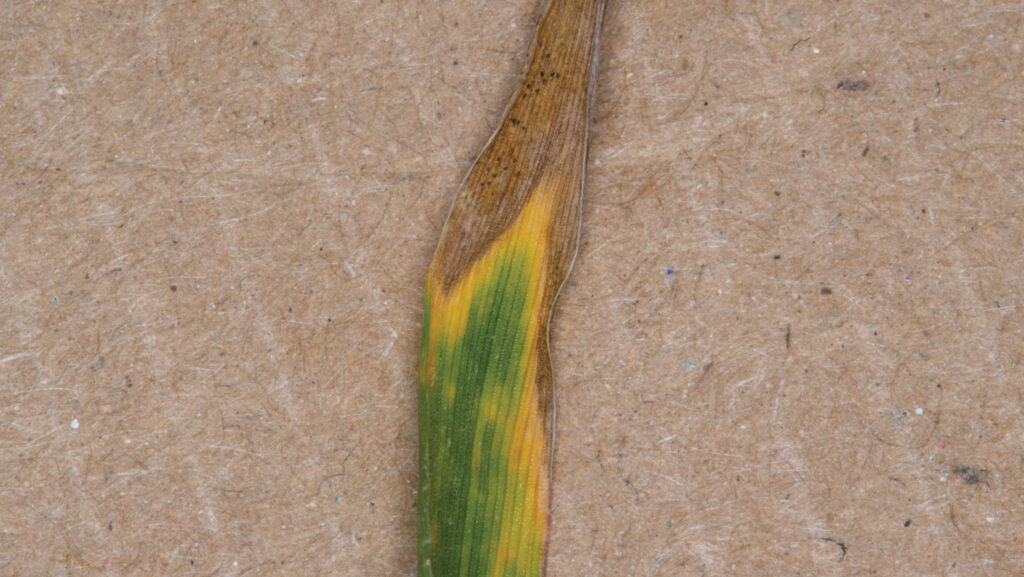
Septoria in winter wheat © Tim Scrivener
Research shows for every week drilling takes place before the Recommended List (RL) drill date of 7 October, variety resistance scores are knocked back by 0.3.
“With the UK wheat crop drilled, on average, two weeks earlier ahead, we’re looking are knocking 0.6 off that score.
“If you’ve got a variety with a septoria rating of 7 we can prepare ourselves, but where you have a 5 or less its looking a lot more challenging.
“Looking at the selected varieties and when they were drilled is a good starting point on identifying what the disease pressure is likely to be,” says Hutchinsons’ David Howard.
What does the resistance breakdown mean for this season?
The major breakdown of the YR15 resistance gene in UK and Europe means growers will need to pay extra attention to leaf emergence, particularly in susceptible varieties.
“Growers were likely saved from significant yellow rust problems last year because of the weather and reduced disease pressure.
“This year, it is expected to become endemic in UK and Europe,” says Hutchinsons agronomist David Howard.
Growers and agronomists should, therefore, spread chemistry for best longevity of protection and utilise ellicitors, azoles, strobilurins and SDHIs to their best effect.
David advises against an over reliance on azoles, as reduced sensitivity is already being identified overseas.
Yellow rust resistance ratings following YR15 breakdown |
|
|
Highly impacted varieties |
Yellow rust resistance rating |
|
Cheer |
-2 |
|
Newbie |
-2.7 |
|
Palladium |
-2.5 |
|
Mayflower |
-4.6 |
|
Solitaire |
-1.8 |
|
Bamford |
-1.9 |
|
Astronomer |
-1.4 |
|
Blackstone |
-3.8 |
|
Bairstow |
-1.2 |
|
Scope |
-2.4 |
|
Champion |
-4.9 |
|
Beowulf |
-4.6 |
|
Dawsum |
-4.2 |
|
Typhoon |
-3.8 |
|
Medium-impacted varieties |
|
|
Almara |
-0.7 |
|
Redwald |
-0.9 |
|
Crusoe |
-0.6 |
|
Shergar |
-0.6 |
|
Ultimatum |
-0.9 |
Case study: Mark Means, Terrington St Clement, Norfolk
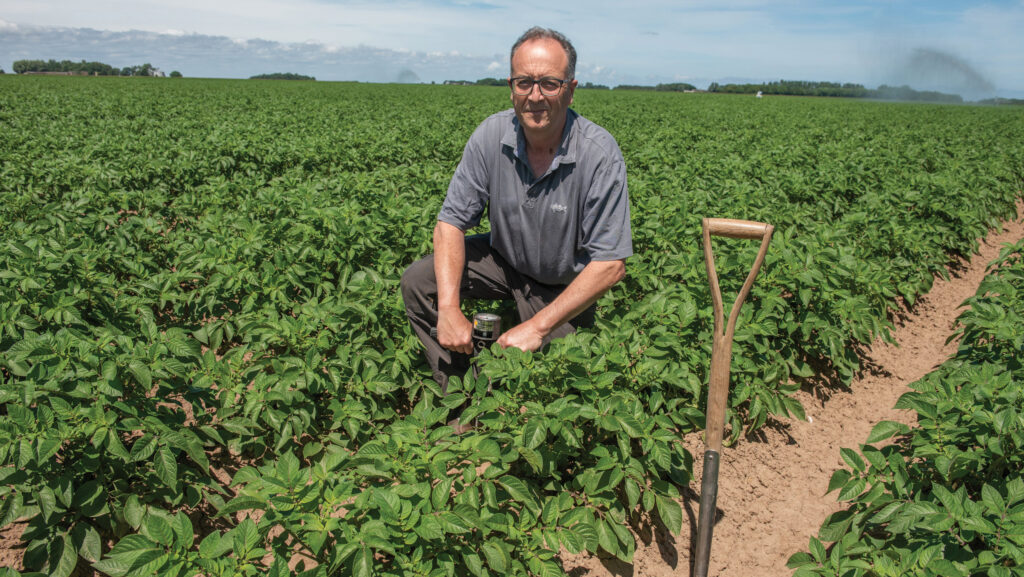
Mark Means © Richard Weedon
Norfolk farmer Mark Means is budgeting £110/ha on fungicide expenditure this season, assuming a milling wheat price of £200/t.
The spray programme covers a full T0, T1, T1.5, T2 and robust T3 ear wash spray.
“We might tweak it down a touch,” says Mark.
“There’s scope to drop back expenditure by about £20/ha if needed, depending on how the season develops.”
Wheat crops are currently looking strong.
As a result, canopy management is already front of mind, and plant growth regulators have been ordered.
“We don’t want too much biomass,” Mark explains.
“Keeping the crop standing and balanced is going to be important.”
A key theme this season is greater precision in fungicide choice, thinking about what specific active can target specific diseases.
“How can we get the biggest yield from the least amount of spend?
“That’s the question we’re constantly asking.”
While fungicides are seen as essential for protecting yield, Mark is clear that nitrogen remains the biggest driver of performance.
“The biggest bang for your buck is nitrogen,” he says.
“Fungicide applications are about protecting that yield once you’ve built it.
“We want to look closely at the canopy and really target nitrogen requirements.”
Mark continues to place strong emphasis on soil health, including the use of poultry manure and digestate where appropriate.
“Investment in the soil is huge,” he says.
Soil testing is being used to account for soil-derived nitrogen, helping fine-tune fertiliser decisions.