Yellow rust resistance blamed on dominant wheat varieties
 © Tim Scrivener
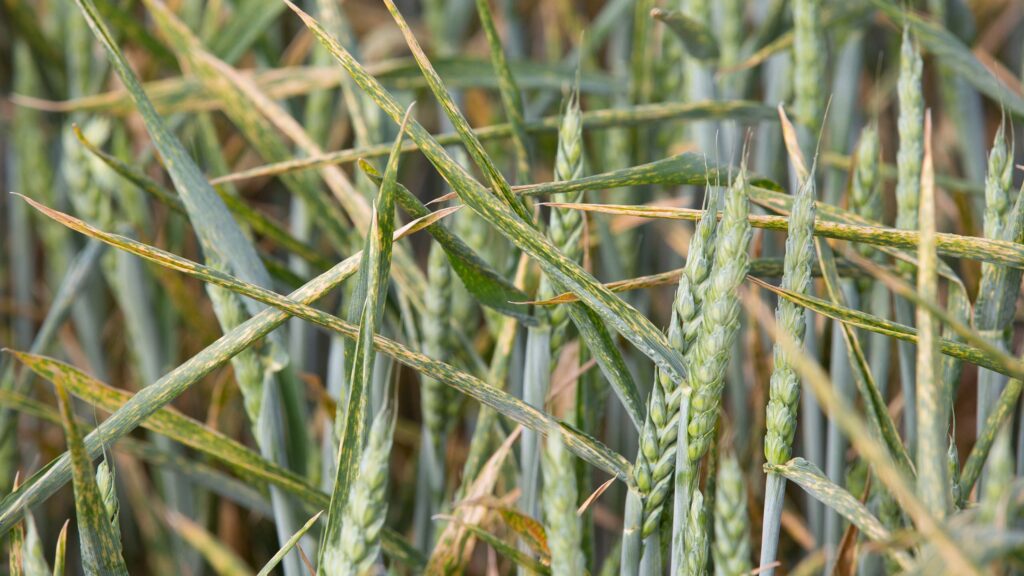
 The large area of wheat varieties carrying the Yr15 resistance gene created the selection pressure that resulted in last year’s major varietal breakdown to yellow rust.
Sampling carried out by the UK Cereal Pathogen Virulence Survey (UKCPVS) in the challenging 2025 season confirmed that the high levels of yellow rust in varieties with good resistance ratings of 8 and 9 were due to new strains that overcome the gene.
Introduced to breeding programmes in the 1990s, the Yr15 gene was present in more than half of the wheat varieties grown in the UK last year.
The continuing market dominance of a small number of varieties means 50% of the crop in the ground this year is vulnerable to yellow rust, warn experts, who add that about 40% of candidate varieties also carry Yr15.
See also: Advice on fungicide choice to slow wheat disease resistance
Some 257 samples of yellow rust were received by UKCPVS in the 2025 growing season, the first time the Yr15 breaking isolates were found, confirms Dr Charlotte Nellist of UKCPVS. These included 36 different wheat varieties collected across 28 counties.
Early season isolates obtained from infected plants were similar to a previously identified genetic group of yellow rust strains. This meant it was likely to be a locally evolved variant rather than from further afield.
“We know Yr15 breaking strains have evolved from what used to be called the Warrior race, so they are not non-native,” says Charlotte. “They were first detected in the UK, and since confirmed in Denmark, Belgium and the Czech Republic.
“We will remain vigilant and see what happens this year. The good news is that another four strains of yellow rust tested were not virulent, which meant disease was not seen on wheat plants.”
There are a number of resistance genes that are still effective, and she predicts that varieties containing those will become more prominent as problems persist.
As the first yellow rust outbreaks were found in the North East last year, some areas further south didn’t see unexpected disease outbreaks.
UKCPVS samples
The UKCPVS monitors changes in cereal rusts in the UK, with funding from Defra and the AHDB and managed by Niab.
“We are keen to receive yellow rust samples this year, in paper envelopes and with a sampling sheet enclosed, which can be downloaded from the Niab website,” says Charlotte.
Samples should be sent by mail addressed to Freepost UKCPVS. For 2026, there is a new email address – ukcpvs@niab.com – for queries.
What is the future for yellow rust resistance?
The yellow rust population in Europe is very diverse, says Dr Clare Lewis of the John Innes Centre, who adds that the 2025 picture of known strains looks very different to previous years.
Long-term research is being carried out to identify new resistance sources.
The Watkins landrace collection of wheat varieties, assembled in the 1920s and 1930s, contains untapped genetic diversity. There are 33 lines from the collection which have been identified as resistant to Warrior isolates of yellow rust.
“What we’ve found in our trials is that 32 of those 33 lines are also resistant to the Yr15 isolates. So, watch this space,” says Clare.
Avoiding a repeat of the 2025 situation needs more transparency from plant breeders and the inclusion on Recommended List (RL) committees of genetics expertise, she says, as well as greater diversity of varieties on farm.
The first two developments should ensure varieties susceptible to disease are screened out before recommendation, while the latter should safeguard genetics.
Currently, RL disease resistance ratings are based on field observations, says manager Paul Gosling at the AHDB, as the genetic basis of resistance isn’t always provided by breeders and the parentage of varieties may be unknown.
“We have limited expertise to interpret genetic information so can’t influence the direction of breeding, especially if we don’t have the necessary detail,” he says
Paul adds that the importance of disease is always considered: how common it is, yield impact, ease of control, and genetic variation. Minimum standards are applied.
Nick Bird of KWS says the intention is always to have a long-lasting, robust disease package in any variety, but reality can be different.
“Major genes are far easier to deploy in a breeding programme, but they can mask the activity of other genes,” he says. “The time taken to track them can mean the resistance is ineffective by the time a variety comes to market.”
More than 50 characteristics must be assessed by breeders before any variety is progressed through the system, he adds. “The process takes around 10 years, so it’s not always possible to get everything right.”
With just 10 wheat varieties accounting for 75% of the national wheat area, farmers and seed companies also have a part to play in protecting genetics and minimising selection pressure. Growing a wider selection of varieties will promote genetic diversity.