Neonicotinoids blamed for decline in farmland birds
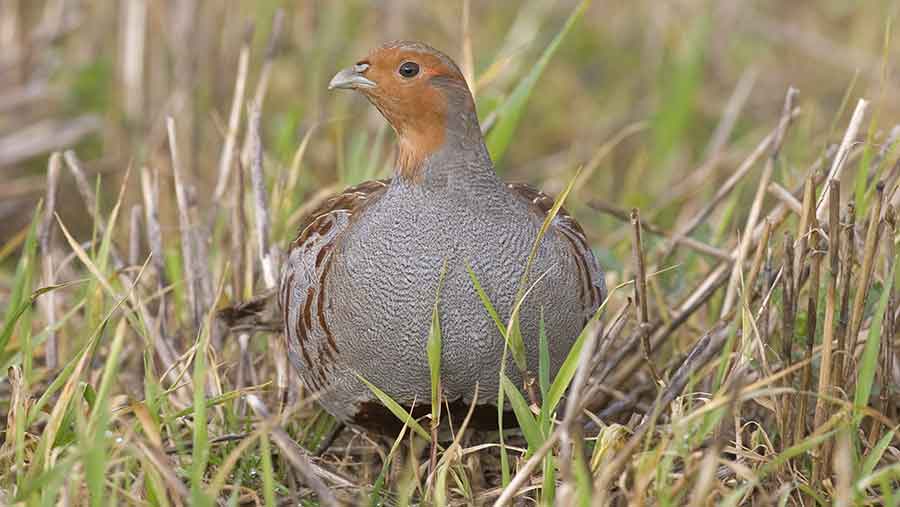 Grey partridge © Roger Tidman/FLPA / imagebroke r/Rex/Shutterstock
Neonicotinoid pesticides linked to a decline in bees could also be killing farmland birds, claim scientists.
The European Commission has banned neonicotinoids for use on flowering crops, such as oilseed rape and sunflowers, after studies found they could be responsible for a decline in bee populations.
The RSPB has called for the neonicotinoids ban to be extended to cover all agricultural uses, not just flowering crops.
See also: Growers desert oilseed rape amid neonicotinoids ban
Before the ban, seeds coated with neonicotinoid pesticides were commonly used on crops such as wheat, oilseed rape and barley, to control pests.
Research has found that although farmers were drilling seeds according to guidelines, some seeds can be left on or near the surface by accident where birds forage.
Writing in his new book “Dead Zone”, Philip Lymbery, who is chief executive of Compassion in World Farming (CIWF), claims that seed-eating birds like sparrows and finches can die if they eat just a few treated seeds.
Foraging birds
He points to research by Dave Goulson, a professor of biology at Sussex University, who warned in a 2015 study that 1% of chemicals treated with seed may be accessible to foraging birds after planting.
“Every hectare sown can contain enough to provide a fatal dose for 100 grey partridge,” said Mr Lymbery.
“(The grey partridge, a now rare but prized gamebird, only needs to eat a small number of neonicotinoid-treated seeds to get a fatal dose: five maize seeds, six beet seeds or 32 oilseed rape seeds).”
Mr Lymbery also suggests that birds of prey, such as peregrines, could be inadvertently affected by eating small birds which have digested treated seeds.
The Crop Protection Association (CPA) said it was unfair to single out neonicotinoids for the decline in farmland birds, which began more than 40 years ago before these pesticides were introduced.
“It is a complex with multiple factors,” said a CPA spokesman. “To cite one example, the UK government identifies the changes in farming practices that begun in the 1950s and 1960s as by far the most important factor.”
Stringent approvals
The CPA said crop protection products are subject to one of the most stringent approvals process in the world.
“The potential risks pesticides may pose to invertebrates and birds are thoroughly assessed as part of the regulatory approvals process.
“It currently takes over 11 years, requires an average of 200 scientific studies and costs more than £180m to bring an active ingredient to the UK market, ensuring that products are safe.”

Staying sharp shouldn't be a chore